
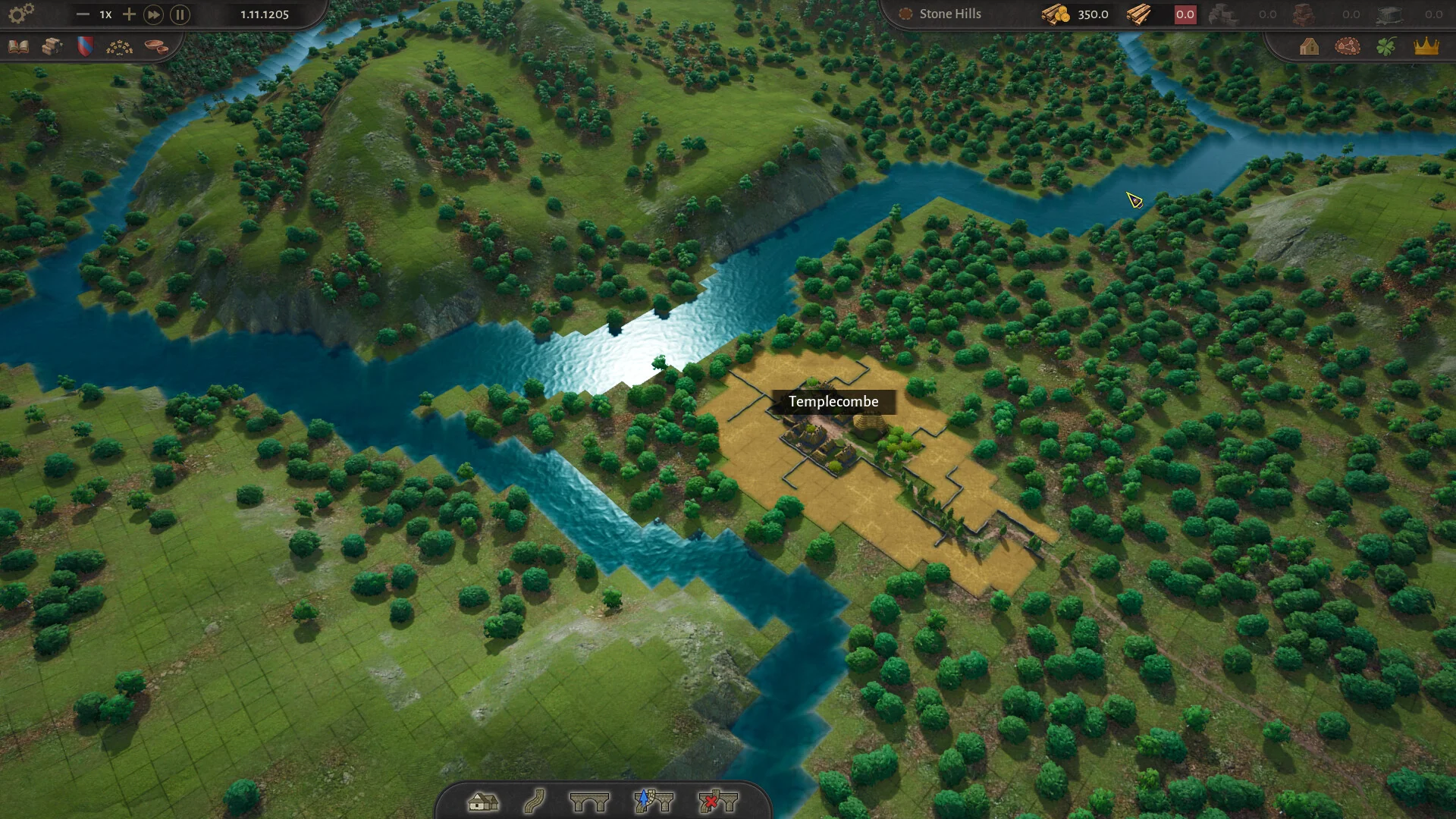
County of Fortune: a medieval city builder about trade and politics
Playable in Early Access on Steam. A promising patch of land is also a trade-route decision in County of Fortune.

Official Steam screenshot. Nepos Games / Aquila Interactive.
A promising patch of land is also a trade-route decision in County of Fortune. Nepos Games’ builder has you establish several settlements across a medieval region, then connect the things each can produce.
- Release
- 5 November 2026
- Launch type
- Early Access launch
- Platforms
- Windows; Linux (Steam)
- Developer
- Nepos Games
- Publisher
- Aquila Interactive
A city builder for an entire medieval county
You take the role of a lokator, founding settlements across a region and deciding what each place contributes. Geography shapes the plan: terrain, resources and navigable rivers influence which industries make sense and how goods can move. Each settlement develops on a medieval grid, while the wider county links those towns together.
The regional economy is the point of the scale. A village does not have to supply everything it needs by itself. The developer’s demo explanation specifically says that specialization and limited building space are intended to push you toward other settlements as needs grow.
Building space is not just a fixed cap. In the official demo FAQ, supplying equipment opens additional slots; wooden chests or wool tunics are the examples for peasants. Meeting both food and equipment needs lets a settlement level up. The demo stops at level two, so that limit should not be read as the ceiling for the full Early Access game.
Connect production and check where deliveries break down
The official demo FAQ explains that roads must join the town centres, with bridges built separately where needed. Once connected settlements are set to accept a food recipe or equipment, vendors distribute the required products automatically, provided enough goods are available. A delivery problem can therefore come from the connection or the supply, not only the destination building.
The same FAQ distinguishes local distribution from trade between regions. Markets and raft ports support regional routes; the demo’s rafts move downstream, and heavy goods such as stone or logs need river transport. These are useful demo logistics examples, rather than a promise that every transport limit will stay unchanged through Early Access.
Move settlements instead of starting the county again
The recent feedback diary says you can move a founded settlement without a cost or penalty, as long as it stays reasonably close to its original site and within the same region. A village placed slightly too far from a resource or the shore is therefore not necessarily a permanent mistake.
The team has also made construction points more visible. The main bar shows the available types, greys out the irrelevant one and warns when a supply reaches zero. Expanded tooltips explain the production chain and where its output is being made. These changes were already available in the updated demo, according to the diary.
County of Fortune screenshots
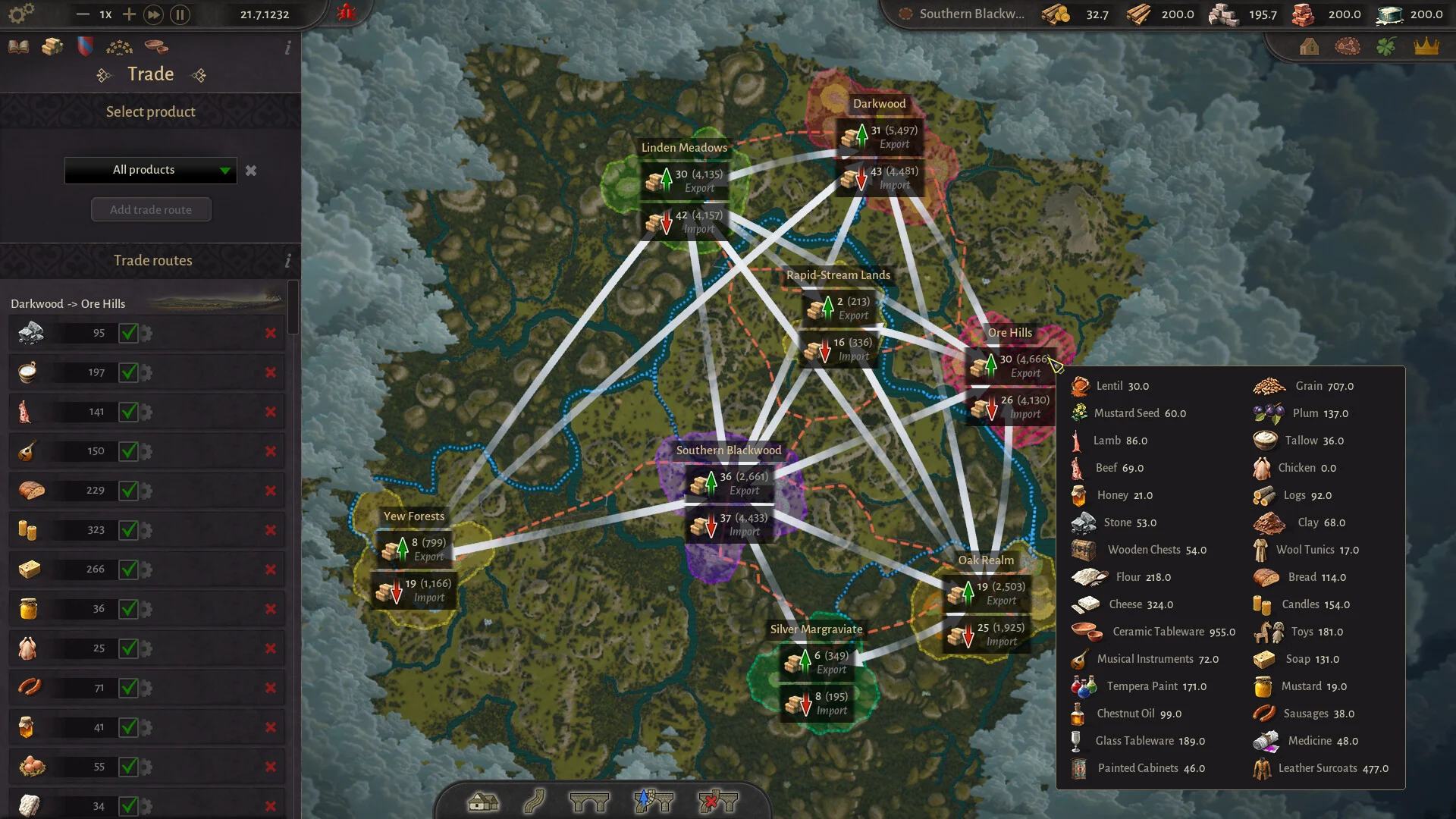
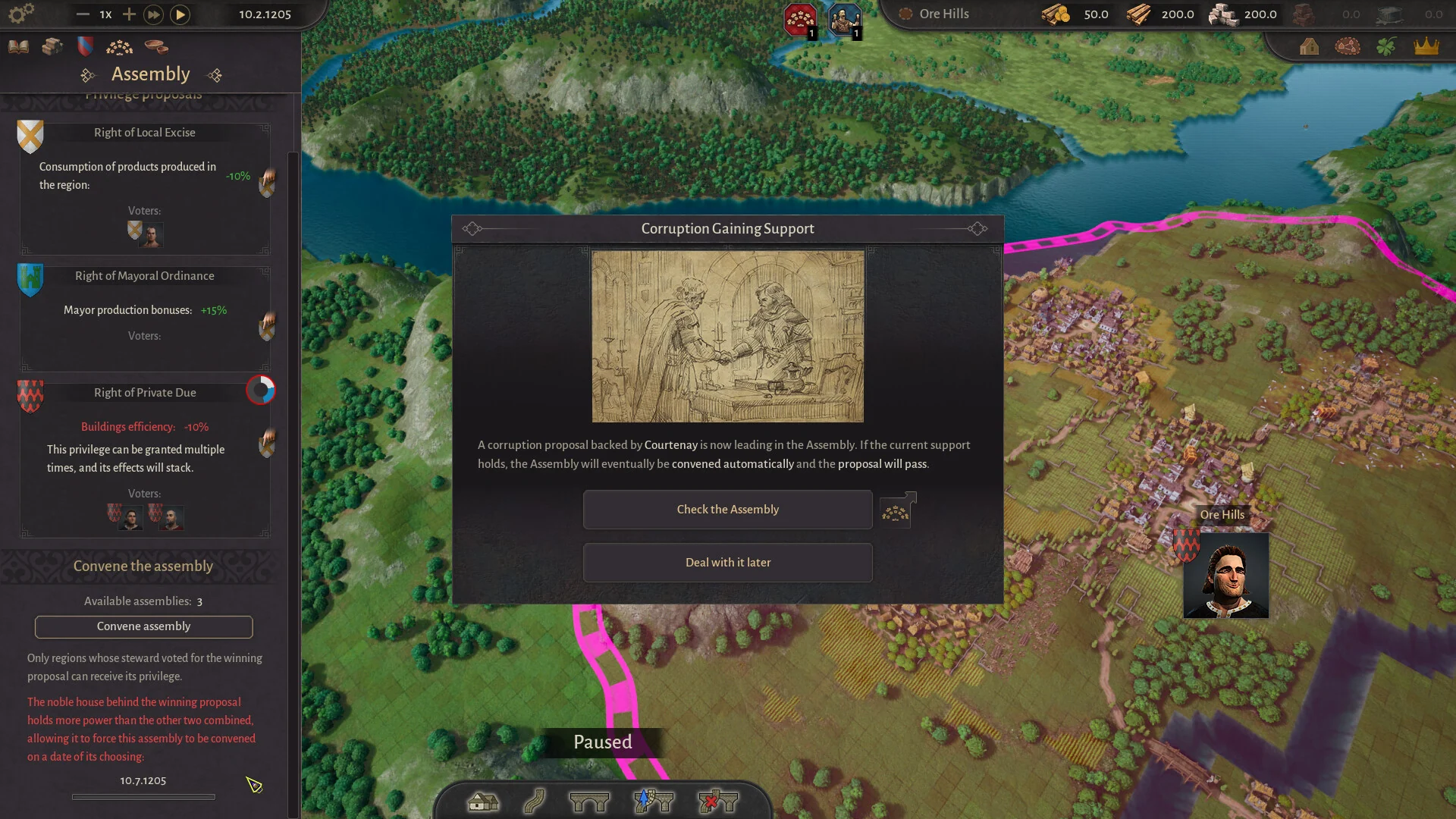
Official Steam screenshots. Images: Nepos Games / Aquila Interactive.
Mayors and noble houses shape regional politics
Each settlement has a named mayor associated with a noble house. The feedback diary reports that negative mayor bonuses and the penalty for swapping mayors have been removed. New candidates and existing mayors now share a window, making it easier to compare appointments as a settlement’s industry changes.
The Assembly adds another decision above town management. Each noble house proposes a regional privilege, and stewards vote. Benefits can include extra traders, lower maintenance or better efficiency in a regional capital. After the vote, you choose a recipient from regions whose stewards supported the winning proposal.
You can see the expected outcome and decide when to call the Assembly. Completing the King’s tasks unlocks more opportunities. But a house stronger than the other two combined can convene its own Assembly and impose harmful corruption privileges. House relationships and the balance of power matter alongside the production network.
Cultures specialize through Traditional Products
The reworked culture system lets you choose Traditional Products instead of assigning broad groups of goods to each culture. A product is eligible when that culture was its largest producer over the previous twelve months. The choice connects a cultural bonus to what its people actually produce.
Culture Traits create synergies between products, including ingredients used in the same recipe or goods at opposite ends of a production chain. The culture’s share of a region’s population affects the strength of those bonuses. That gives you another reason to consider how industries and populations fit together across the county.
Early Access date and what remains in development
County of Fortune entered Steam Early Access on 5 November 2026. Nepos Games develops the game and Aquila Interactive publishes it for Windows and Linux.
The studio estimates six to nine months in Early Access. Its stated foundation covers settlements, regional development, production, logistics, trade, cultures and noble houses; more content, system development and visual improvements are planned. This is not a confirmed full-release date or a hands-on verdict on the launch build.
The demo discussions and feedback diary show why older impressions need a version attached: settlement relocation, construction information, mayor penalties and cultures have already changed. Requests made by players are not automatically available features, and the wider economy still needs evaluation over a longer game.
Information checked 5 November 2026. Future release dates may change.