
Fantasy World Manager asks you to build the world before watching its history unfold
The important question in Fantasy World Manager is how much of the world you want to build yourself.

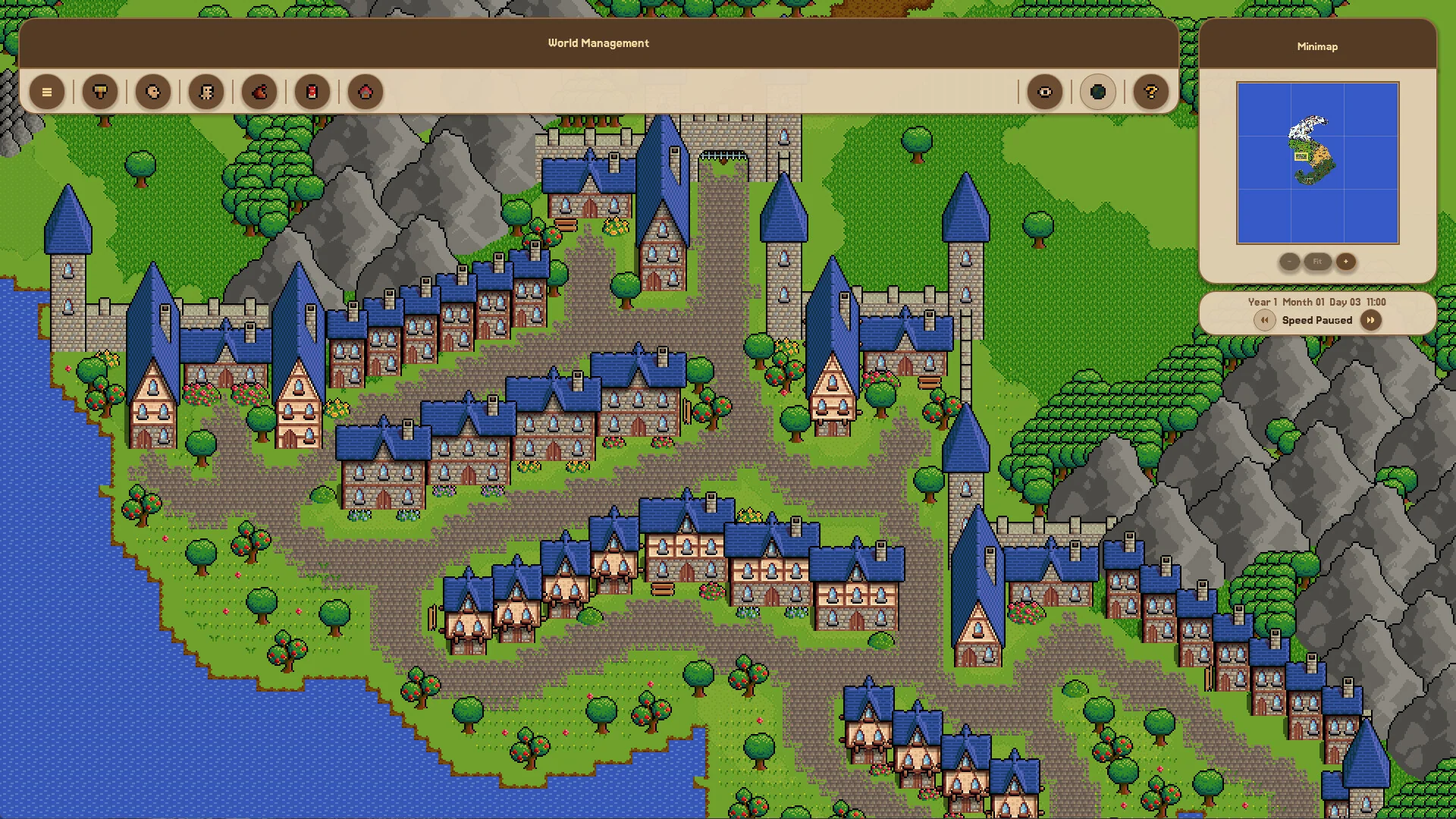
Official Steam screenshot. Florian Alushaj / Legendary Pixels.
The important question in Fantasy World Manager is how much of the world you want to build yourself. Florian Alushaj’s fantasy simulation lets you create places and shape their inhabitants, then follow the stories and conflicts that develop.
- Release
- 28 October 2026
- Launch type
- Early Access launch
- Platforms
- Windows (Steam)
- Developer
- Florian Alushaj
- Publisher
- Legendary Pixels
Build your own fantasy world with editors
Fantasy World Manager gives you tools for designing the setting and its inhabitants before observing what happens there. The current Early Access foundation includes map, zone and point-of-interest editors alongside editors for races, cultures, religions, factions, people, animals, monsters and equipment. These let you shape the rules and contents of a place rather than only choose where to drop a settlement.
The Steam description lists 18 classes and 21 biomes in the current version. Heroes, creatures, quests and events are part of its fantasy-world concept, with overworlds, interiors and dungeons providing different settings. The important distinction is the amount of creation involved: this is aimed at people who want control over what their simulation contains.
Follow history, families and the people behind events
The Day 2 Simulation Update adds three views to World Overview. Happening now keeps current wars, food shortages, faction plans and noble disputes available after their notifications disappear. Chronicle arranges recorded events by year, with yearly and decade summaries. People & houses helps you find the residents and noble families involved.
You can follow people, houses and factions, filter reports, inspect the names in a story and visit their locations. Connected reports make it easier to trace a political decision or family dispute over time. That is a more useful way to watch a living fantasy world than relying on a stream of messages you might miss.
Family trees cover ordinary residents, soldiers and heroes as well as nobles. They show known parents, partners, children and grandparents, including whether someone is alive, dead or missing. The update also gives ordinary people development through work, combat and leadership; changing their role preserves their identity and family connections.
Fantasy World Manager screenshots
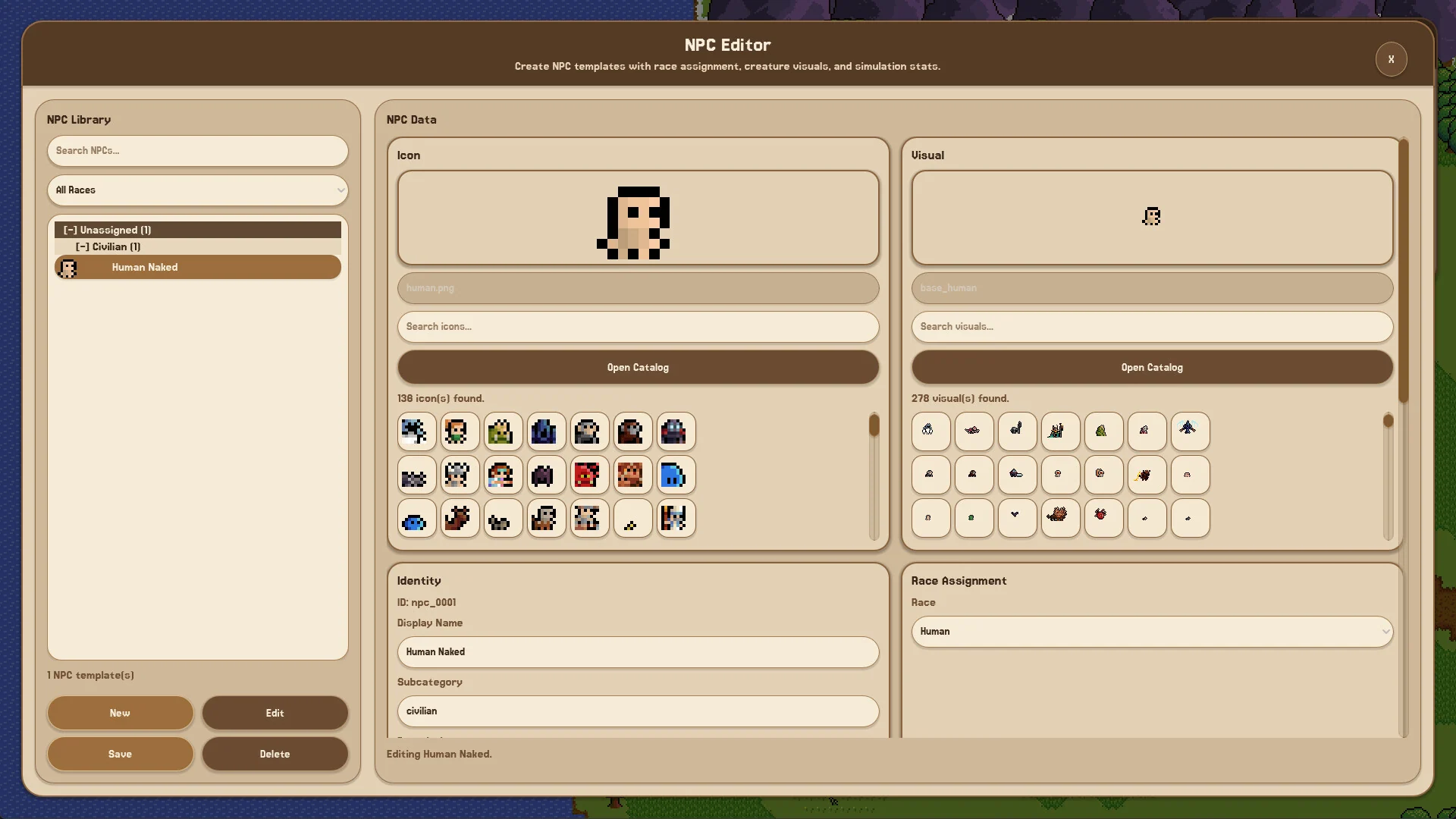
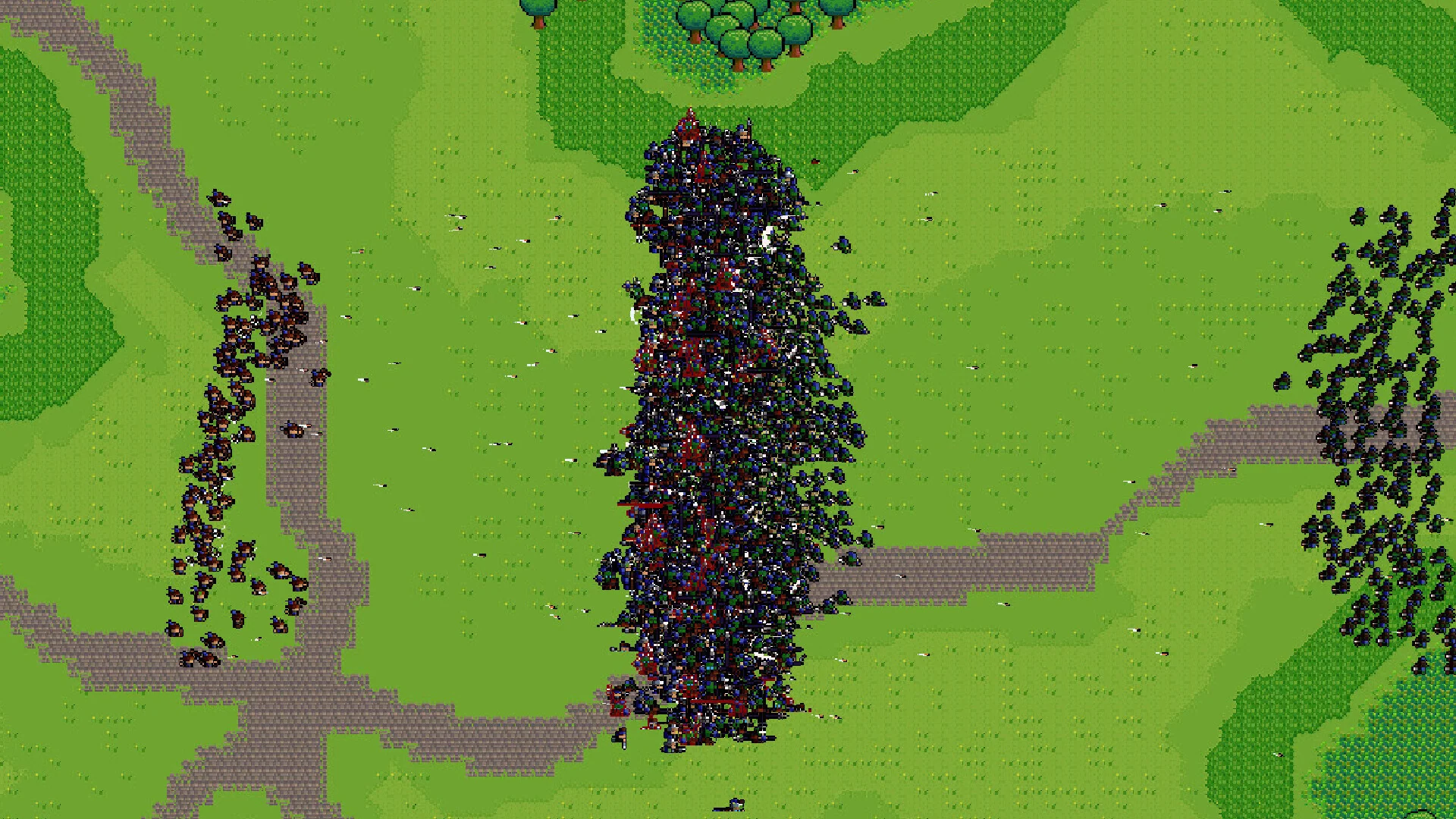
Official Steam screenshots. Images: Florian Alushaj / Legendary Pixels.
Wars, recruitment and the cost to civilian life
The simulation update also ties population growth to food, suitable city housing and family circumstances. Children grow into adults rather than losses being replaced with free inhabitants. Population information shows births, adulthood transitions and old-age deaths, so expanding a civilization depends on living conditions as well as the space you design.
According to the same update, factions train soldiers from their existing residents. Unemployed adults are considered first, while prolonged wartime shortages can also draw employed people into service. Essential civilian work has protections, and temporary conscripts return after their wars have ended and their journey home is complete.
That makes an army part of the population rather than a separate supply of free units. Taking workers away can affect the economy. Factions also pursue goals such as food security, trade, territorial protection and rebuilding armies, with inspectors showing plans, progress and obstacles. The developer reports improvements to battles and defense against monsters; these are patch-note claims rather than results of a playtest here.
Box mode is planned for Q1 2027
The autonomous Box mode is not available in the current game. The latest developer post still targets Q1 2027 for its first major update. Its planned loop is to create a world and watch settlements emerge, civilizations grow and characters interact with less manual construction, while retaining ways to intervene.
The main mode will keep its focus on player-designed worlds, even as repetitive tasks gain automation. On PC, Box is planned as part of Fantasy World Manager. A separate mobile release with free and premium versions is also planned. Development previews of terrain, fire or disasters do not establish that these systems are ready to play now.
Early Access feedback is changing the development priorities
In the first-week update, Florian Alushaj acknowledges negative reviews, refunds and confusing parts of the experience alongside positive feedback. The announced priorities for the rest of 2026 are a redesigned interface, a rebuilt tutorial with help for each major editor, simulation improvements, performance and stability work, and more editor content.
Tools to generate whole cities inside selected zones and a tile editor for custom objects and houses are also on that list. These are planned improvements. If your main interest is an effortless, automatically expanding world, the current creation workload remains a reason to wait rather than buy on the strength of the roadmap.
Windows release and plans for the full version
Fantasy World Manager entered Steam Early Access on 28 October 2026. Florian Alushaj develops it and Legendary Pixels publishes it. The Steam version is single-player, with English and German among its interface languages. The listed minimum hardware includes an Intel Core i3-6100 or equivalent, 4 GB RAM, Intel HD Graphics 530 with a Vulkan 1.0-compatible driver and 4000 MB of storage; these are requirements, not a performance guarantee.
The developer estimates about a year in Early Access. Plans for the full version include additional classes, more editors and customization, and deeper interactions between simulation systems. That estimate and the scope can change with development and community feedback. The available version should therefore be judged by its current tools and limitations.
Information checked 5 November 2026. Future release dates may change.