Grimoire of Blanks lets you write the spell your hand is missing
Build spells from word cards, lend the missing piece to a friend and see how player feedback shaped this solo-developed deckbuilder.

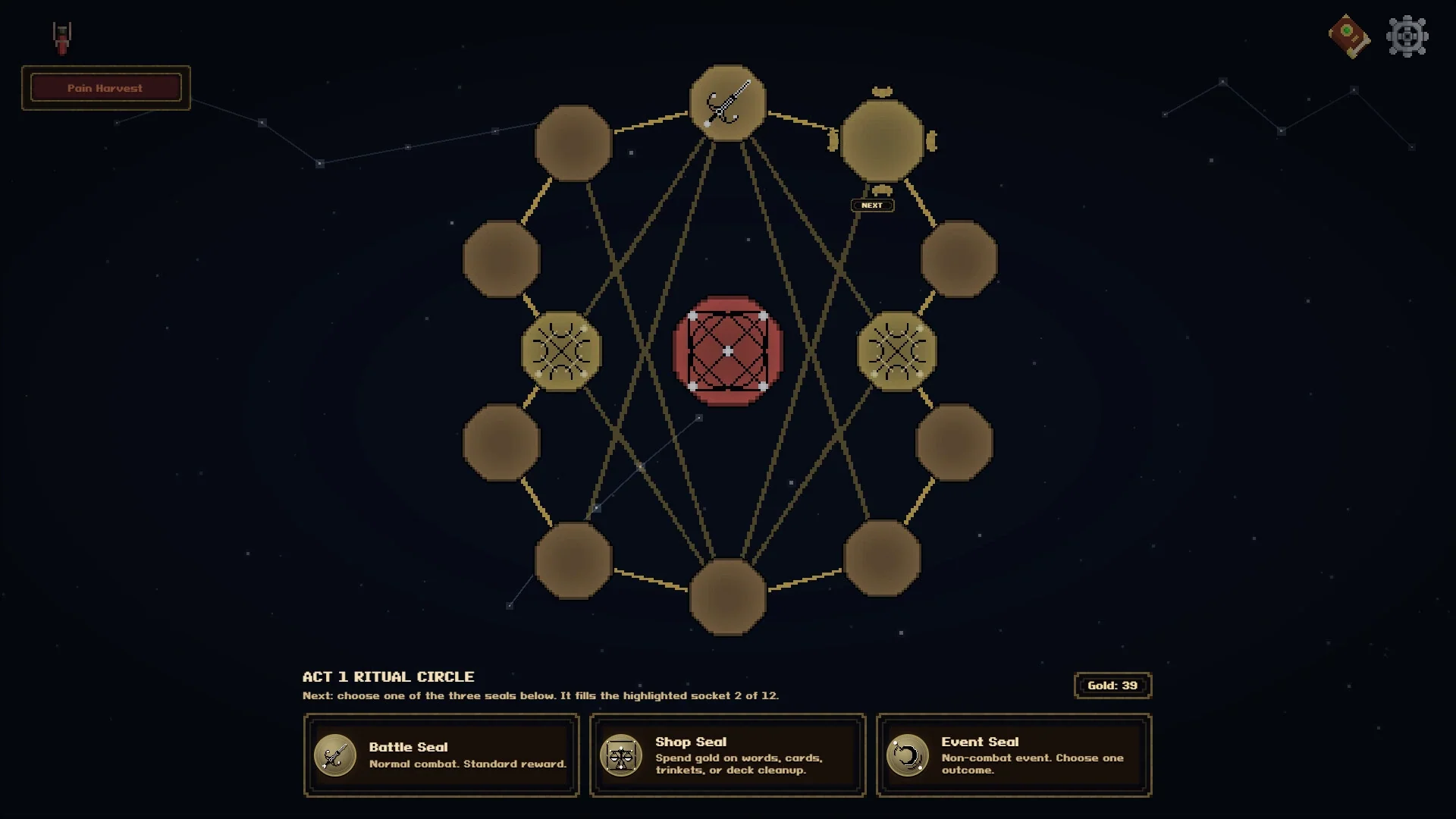
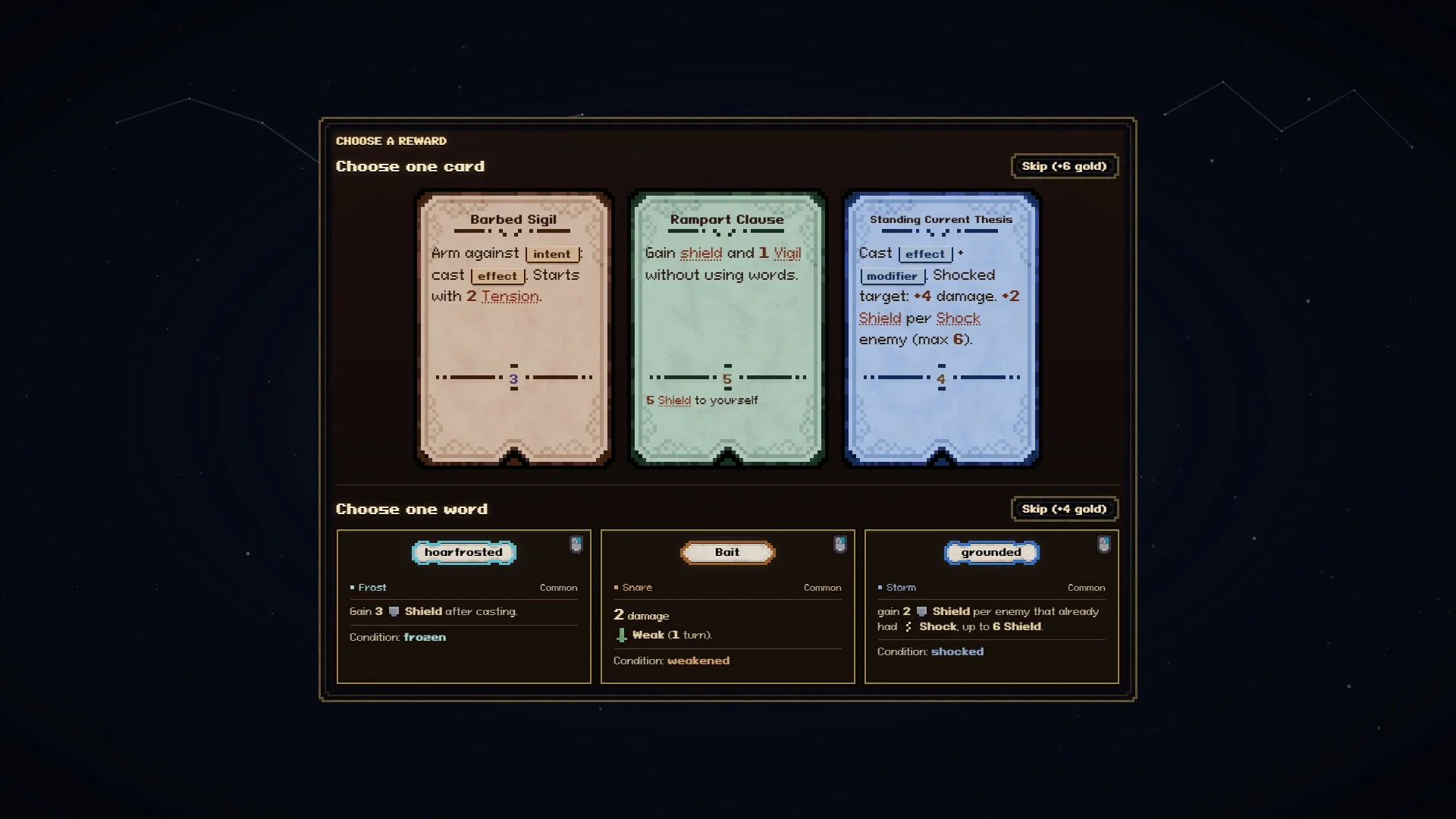
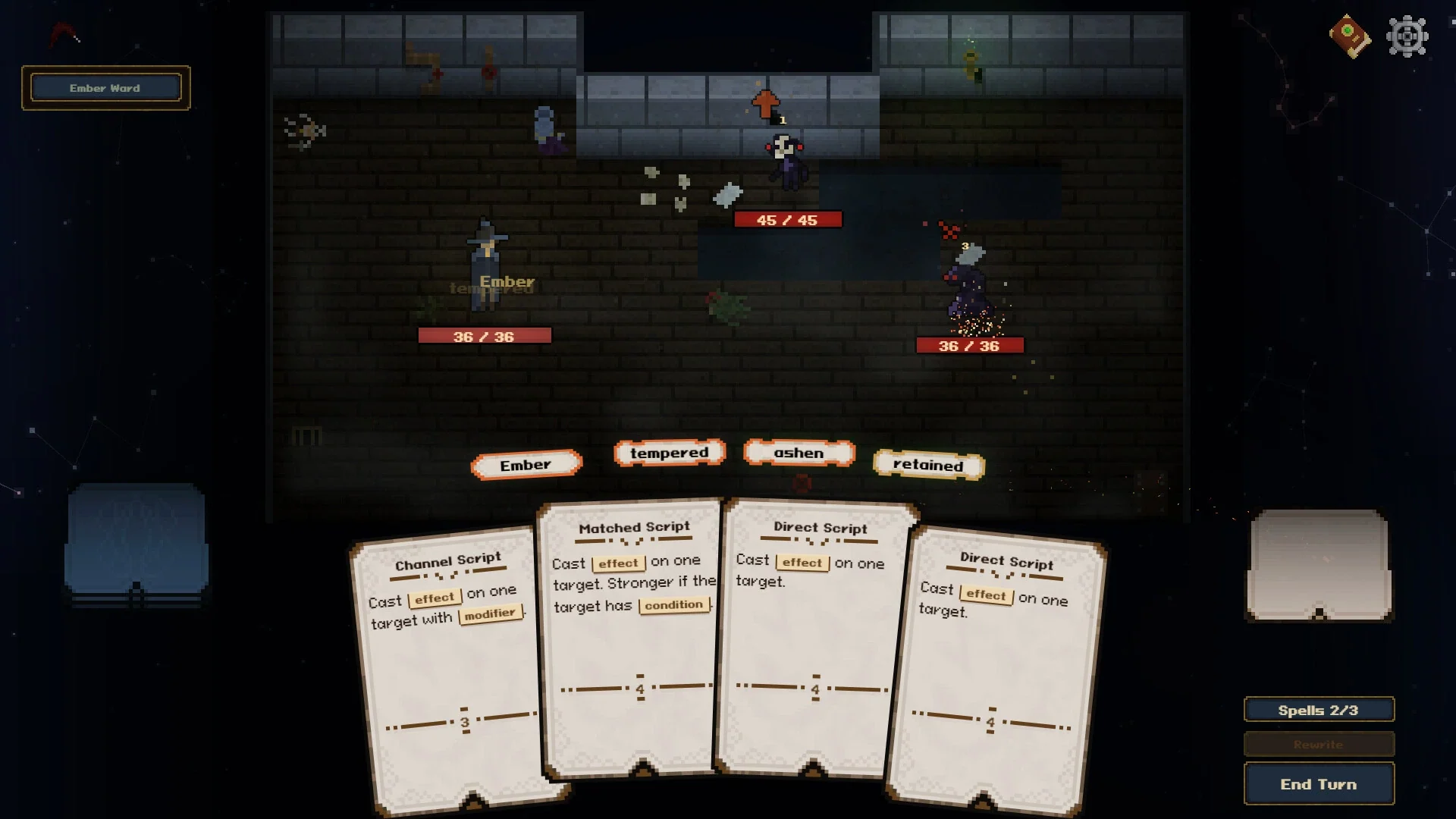
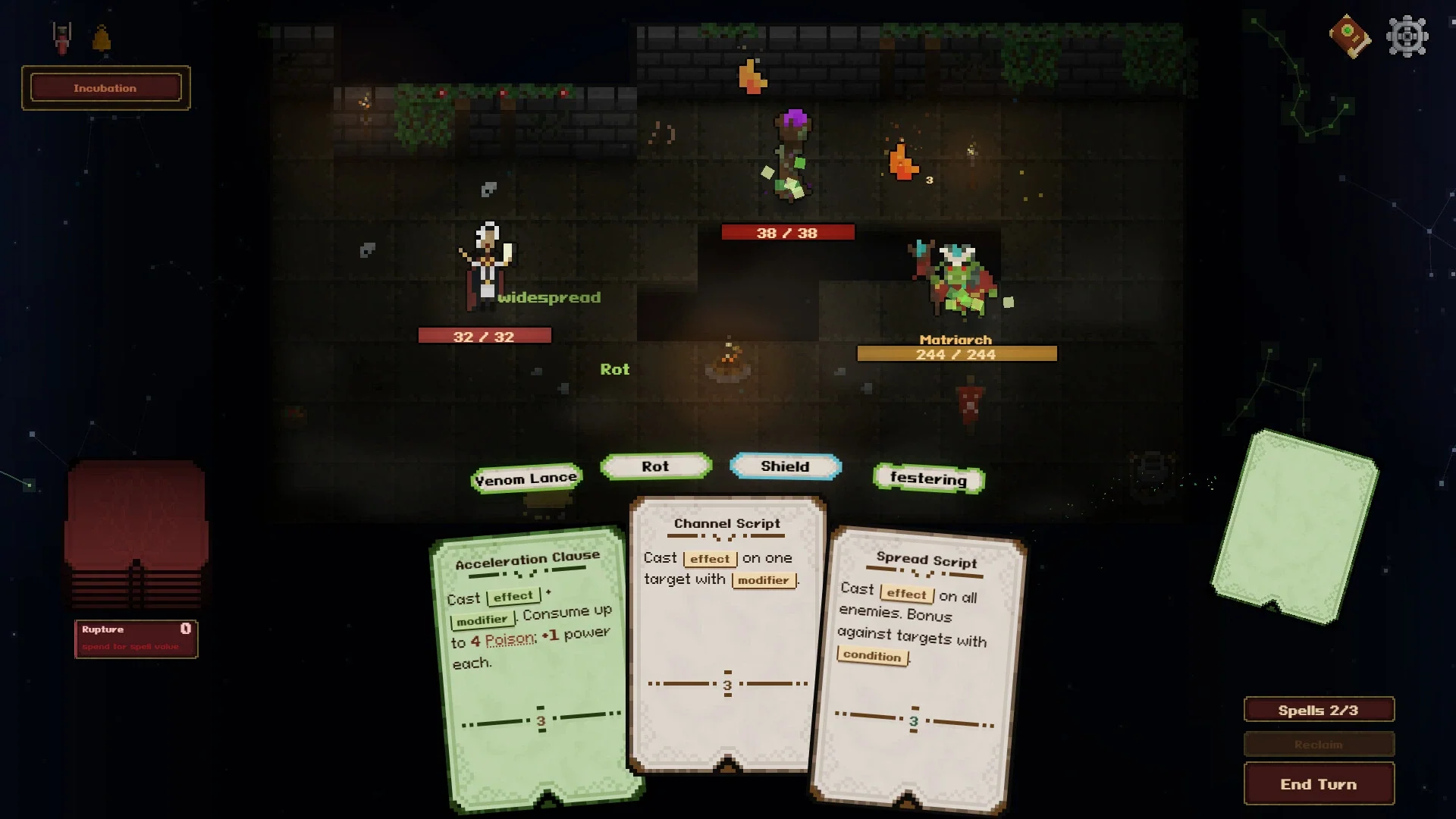
Official Steam screenshot. Esteran Games.
In Grimoire of Blanks, a useful spell can sit in your hand without knowing what it does yet. You draw unfinished cards and a separate supply of words, then put them together during a fight. The choice is not simply which attack to play. It is what you can make that attack become with the vocabulary you have available.
Esteran Games released the roguelite deckbuilder on 6 November 2026 for Windows and Linux. You can play alone or in online co-op with up to four people, and a free Steam demo gives you a way to try the word system before buying.
Two collections to build: your cards and your words
In a public development post, the solo developer describes the idea as wanting more freedom over what a deckbuilder's cards can do. That has a practical consequence: a run develops both your deck of sentence templates and the words you can put into them. Finding a useful template is only part of the job. You also need something useful to say with it.
The official screenshots make the distinction clear. Channel Script has spaces for an effect and a modifier. Spread Script adds a condition. The frame supplies a rule for the spell, while the words change its behaviour. You are choosing from the game's defined pieces, rather than typing an unrestricted sentence and expecting the game to invent magic for it.
Combat is turn-based. You can use the words in hand to deal damage, protect someone or set up an effect that reacts to an enemy's intention. Keeping a strong word for a better combination is another option. That is the interesting question here: whether to use the best thing you can assemble now or preserve a piece that may make another card much more useful.
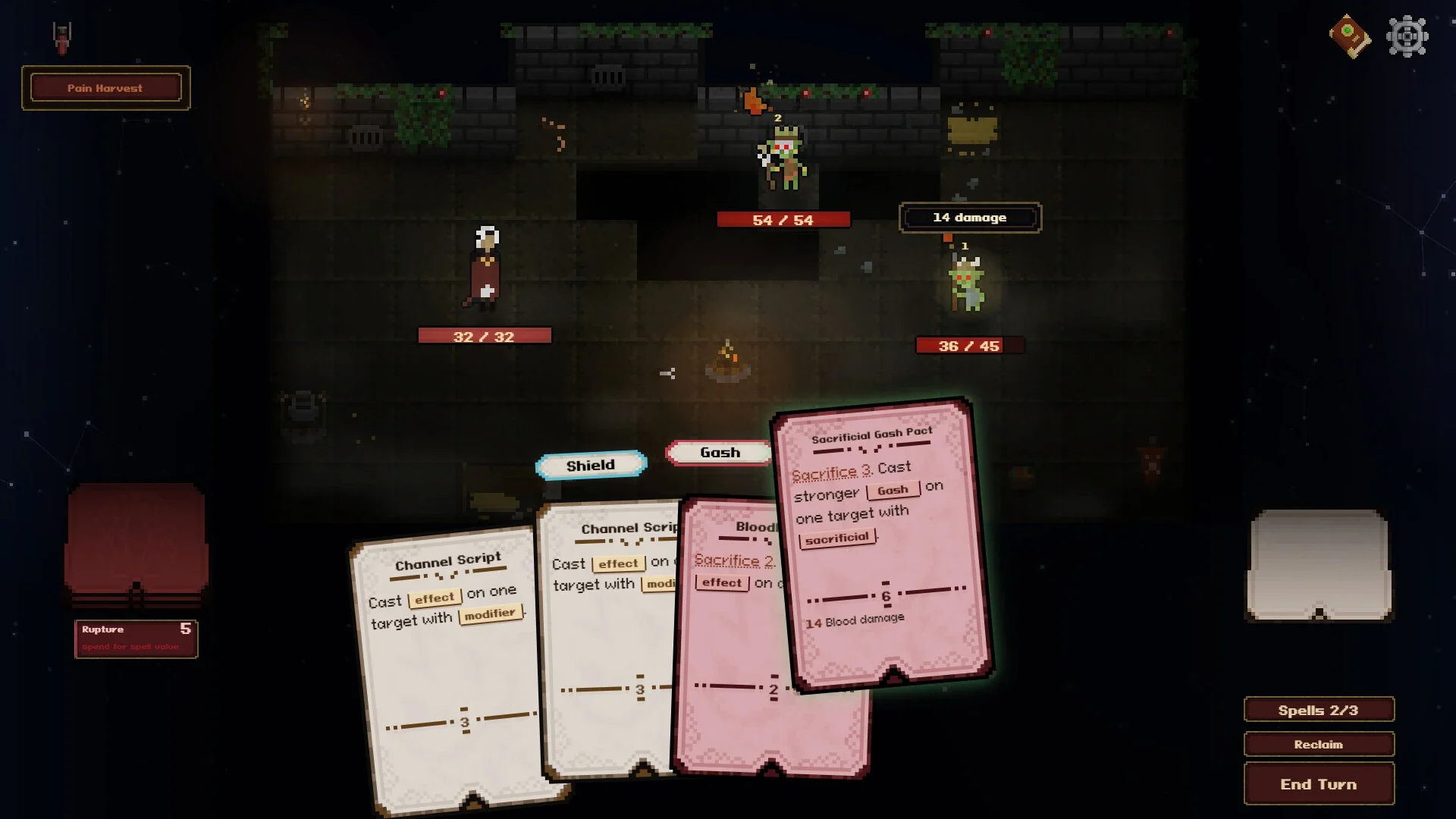
One current screenshot shows Sacrificial Gash Pact alongside ordinary unfinished scripts. The completed card combines Gash with a sacrificial modifier, displays a sacrifice cost and lists Blood damage. It is a useful illustration of the tradeoff: the stronger-looking result also asks something of the caster. The displayed numbers are an example from official material, not a tested recommendation for a build.
Online co-op gives your spare words somewhere to go
Each player brings a class, a deck and a word pool into the same run. You can lend words during combat, so a word that does little for your current hand may complete somebody else's spell. The developer explicitly wanted more interaction than several people playing separate decks beside one another.
That makes a small conversation part of the decision: who needs the effect you drew, who can exploit an enemy condition, and who can protect the group while the others prepare something larger? It is a promising fit for a group that enjoys working through combinations together. It also means the trading interface and the clarity of the card text matter as much as the underlying idea.
Four mages approach that vocabulary differently
The Scribe specialises in efficient word use and repeating spells. The Binder prepares effects around enemy intentions. The Heretic exchanges health for power, while the Starmage works with Void, Starlight and lunar phases. Those are different ways to value the same broad card-and-word system, rather than four interchangeable portraits.
There is room to keep a successful run going, too. In a September development update, Esteran explained that Endless Mode can begin as a new run using unlocked biomes or continue from the end of a normal run with your existing combination of cards and improvements. Shorter biome routes and more boss encounters are intended to keep that extended run moving.
The development posts show the game being adjusted in public
The official YouTube channel mixes gameplay trailers with smaller development glimpses. An August video presents a combat ambience update; another short asks whether a displayed combo should be weakened. That older clip is a look at the developer's balancing process, not evidence that its particular combination still behaves identically in the release build.
A September Steam update is more concrete about presentation changes: individual effect words received their own particle animations, and card families gained colour variants. For a game where you keep reading and recombining cards, making effects easier to distinguish has a clear purpose beyond making a trailer look busier.
The Steam demo thread gives a better sense of how feedback is handled than a general promise to listen. On 1 August, a player reported that some text was difficult to read. Esteran asked which situations were worst, added 115% and 130% scaling options, then returned on 2 August to say the updated demo was available. The developer also acknowledged that this was a basic improvement, with more substantial work still needed.
In September, another player described controller-selection problems. Esteran clarified that the game was designed around the mouse and said the controller recommendation label had been corrected. A later request to let players reconsider a card reward received a proposed solution, but that reply alone does not establish that the change shipped. These are specific demo-era exchanges, not a blanket guarantee that every launch issue is fixed.
Should you try Grimoire of Blanks?
Grimoire of Blanks is worth a look if the pleasure of a deckbuilder is finding an unexpected use for the pieces already in front of you. The word trading gives that puzzle a shared version, and the developer's public replies provide useful context about readability and controls before you jump in.
Start with the demo if you want to see whether assembling spells feels satisfying to you. It covers the first act with two of the full game's four classes and supports online co-op. Check the card text at your own screen size, try lending a word to a friend, and see whether the extra construction step is the part you enjoy. This is a source-based introduction, not a hands-on review.
Screenshots