
Hell Wait: a riichi mahjong roguelike with a demon across the table
Build riichi mahjong hands with joker tiles, upgrades and pacts while a demon demands an ever-higher score.

Official Steam screenshot. Mondbekker.
You need a stronger mahjong hand. The demon across the table needs you to make a mistake. Hell Wait is a riichi mahjong roguelike deckbuilder in which you must beat an ever-increasing score target, with your fingers on the line.
The decisions sit at two levels: which tiles to keep or discard at the table, and which jokers, upgrades and pacts will support the hands you want to make. If you like building scoring combinations, the attraction is changing the rules around a recognisable tile game. This introduction explains that structure and the full release without pretending to be a hands-on review.
Hell Wait screenshots
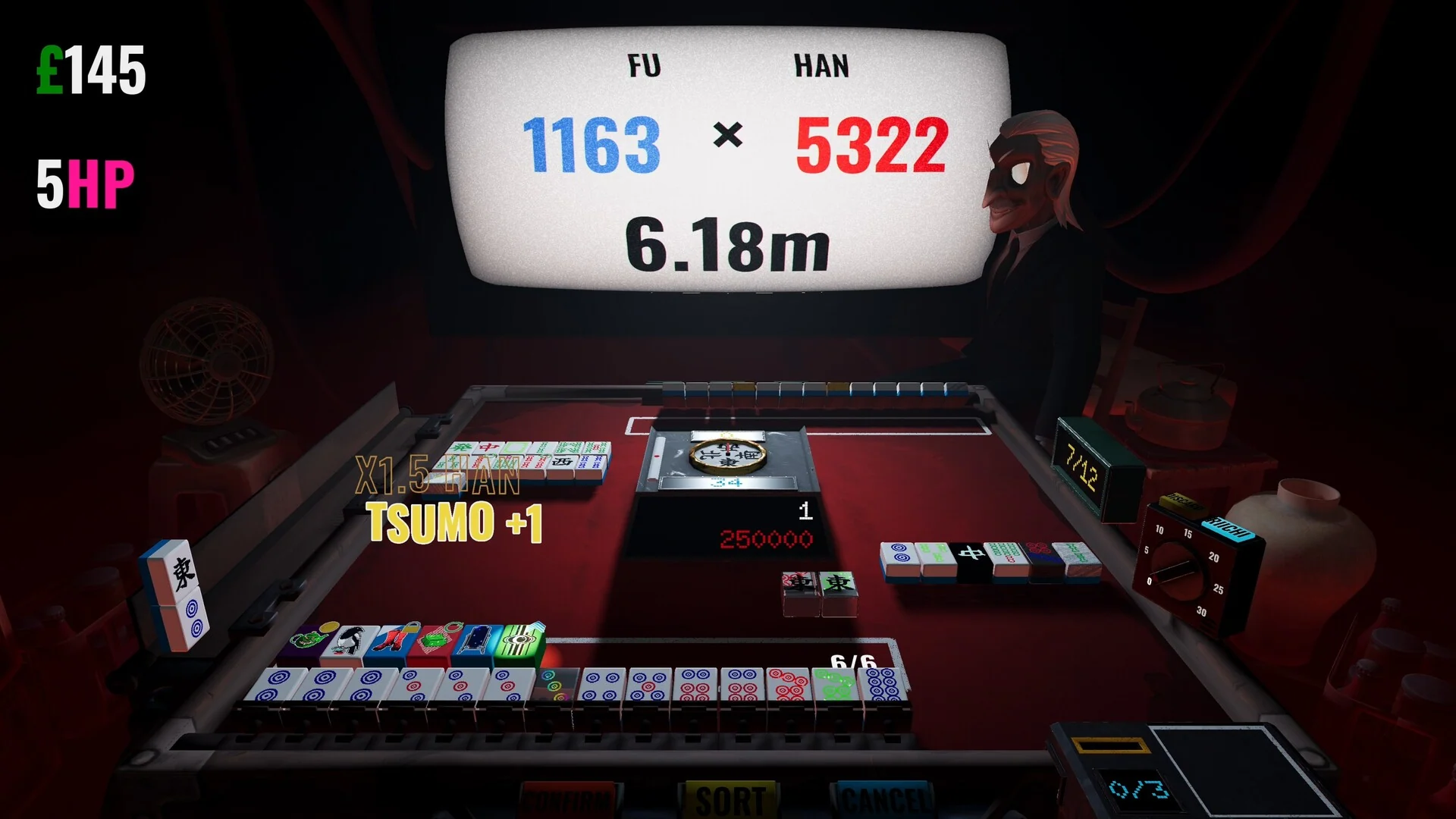
How Jokers and Blessings change a hand
In traditional riichi, yaku are scoring patterns or conditions. Dora add bonuses to a winning hand, rather than replacing its qualifying yaku. Those basic terms help explain the extra layer in Hell Wait: Blessings upgrade your yaku, while materials, stickers and dora enhance the tiles themselves.
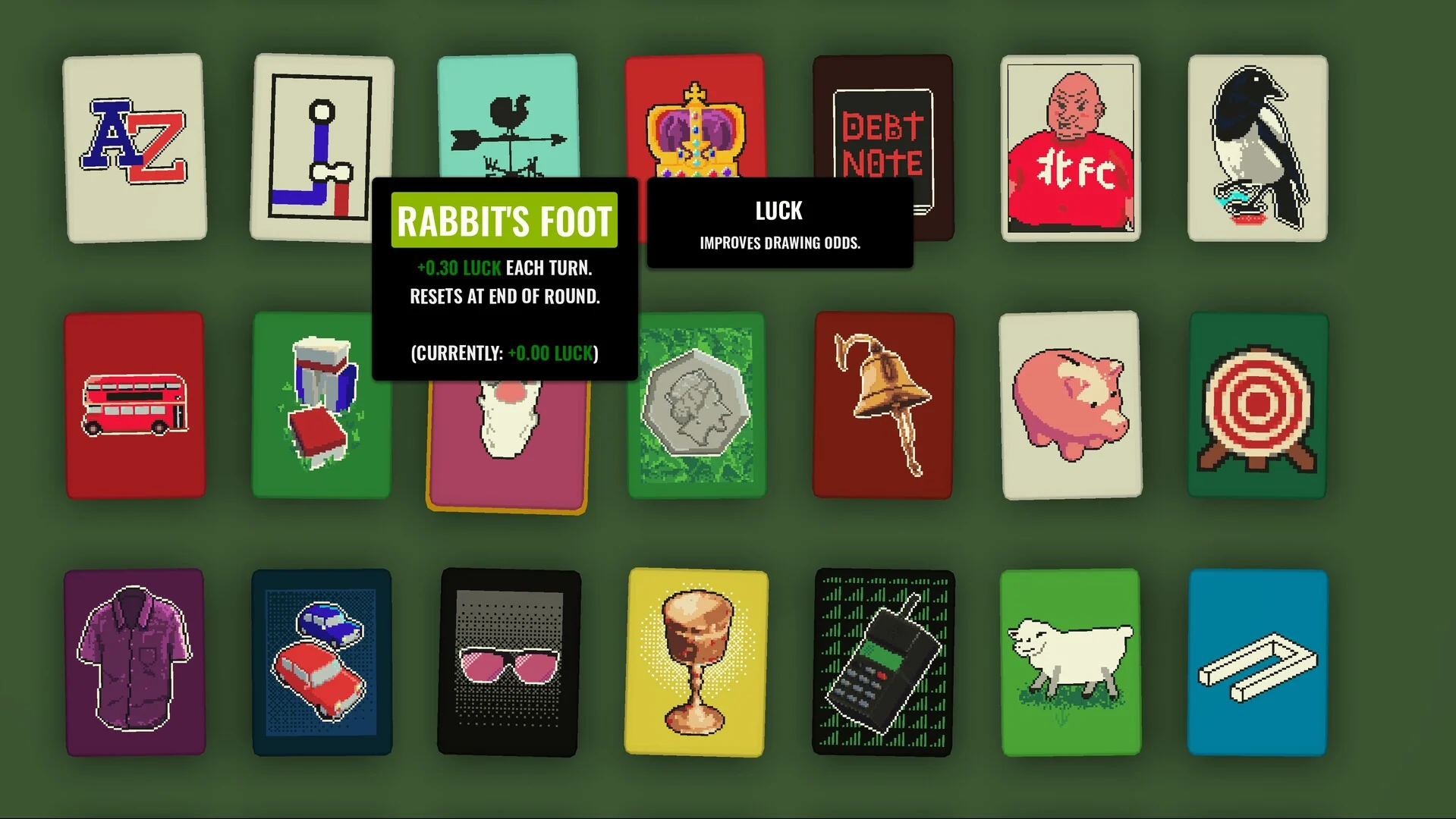
An official Joker-preview image provides a concrete example: Rabbit’s Foot gains Luck each turn and resets at the end of the round. Its tooltip describes Luck as improving drawing odds. That illustrates a Joker affecting what you might draw, rather than simply adding a larger score multiplier; the image does not independently confirm the current build’s balance.
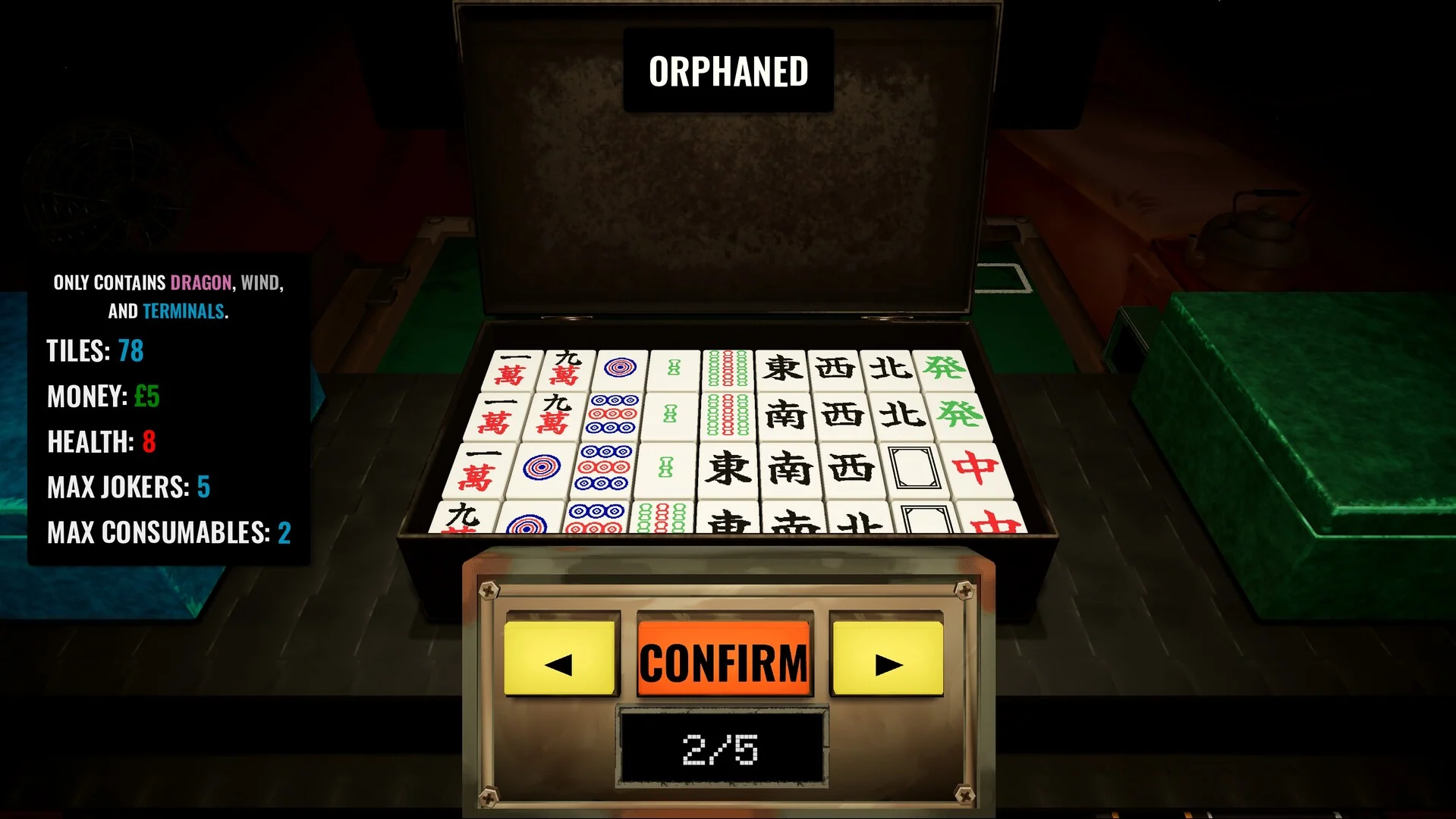
Joker tiles can affect scoring, drawing and other rules. Different tile sets also change how you build your deck at the start of a run. One official deck-selection image shows Orphaned restricted to winds and dragons, the honour tiles, plus terminals, the ones and nines. That gives a concrete reason to reconsider which hand patterns you can pursue before the round starts.
Dark Pacts and an opponent whose intent may be false
Pacts offer further ways to manipulate your tiles. Alongside jokers and Blessings, they let you develop a run around interactions between effects, rather than relying only on the ordinary value of a hand.
The opponent also states his intent, but the developer warns that he might be lying. That makes the information part of the tension: an announced intention is not presented as a promise that the next move will be safe. The opponent’s bluffing has not been independently tested for this introduction.
Avoiding a dangerous discard matters to the premise. The official description warns against dealing in while asking you to keep clearing a rising score target. The pressure comes from pursuing enough points with the threat of losing fingers across the table.
Is mahjong knowledge required?
The developer says no prior mahjong knowledge is required and advertises a comprehensive tutorial. More demanding mechanics, including furiten, are optional difficulty modifiers. You can also mix and match modifiers to increase the challenge.
For context, furiten in ordinary riichi includes the case where a tile in your own discard pile would complete your current hand. That can prevent winning from another player’s discard. Hell Wait’s description places it among the optional rules, so you should not assume every traditional restriction is compulsory from the outset.
That makes the game worth investigating if the scoring ideas appeal but the terminology is unfamiliar. It does not independently prove that the tutorial will teach every player comfortably, or that learning this roguelike is the same as learning a standard competitive ruleset.
What the full game adds over the demo
The 9 November launch announcement lists 151 jokers, twenty decks and seventeen challenges, alongside more pacts, choices and bosses. It also says the full release includes all difficulties. These are the developer’s launch figures.
The official website still uses the older description of over a hundred Joker tiles. For the release’s scope, the dated launch post is the more precise source. Neither description establishes how balanced or varied every possible build will feel.
The developer explicitly names Balatro, Inscryption and Buckshot Roulette as inspirations. That frames the intended combination of scoring, run-building and threat, without claiming that their combat, pacing or other systems are reproduced here.
Hell Wait release date, platforms and languages
Mondbekker is listed as both developer and publisher. Hell Wait released on Steam on 9 November 2026 for Windows and Linux. The official site also lists SteamOS; a Steam Deck-specific compatibility rating has not been verified for this introduction.
Steam currently lists English, Japanese, Simplified Chinese, Traditional Chinese, Italian, Korean and Brazilian Portuguese. Older announcements and the developer website should not be treated as a complete account of the current launch listing.
Official screenshots show the mahjong table, Joker effects and the score calculation. They support an explanation of the systems, while a current run is still needed to judge balance, readability and the pace of play.
What does a “hell wait” mean in mahjong?
The expression also has a meaning outside this video game. The United States Professional Mahjong League-hosted glossary describes a hell wait as a single-tile wait to complete a pair, with only one winning copy still available. That terminology provides context for the phrase; this article’s feature claims come from Hell Wait’s own official sources.
Sources
Official Steam store · Developer news and updates · Official Hell Wait website · USPML-hosted Japanese mahjong glossary
Information checked 10 November 2026. Official screenshots: Mondbekker. Source-based introduction; no hands-on review.