Terrum DeepDrill makes you price the ground before you drill it
Read boreholes, bid for mining sites and keep your crew paid. A look at Terrum DeepDrill’s drilling loop, PC version and buying considerations.

Official Steam screenshot. Ezkubia.
A rich ore vein is not much of a bargain if you paid too much for the land above it. In Terrum DeepDrill, your mining shift starts with a set of test boreholes and an auction. Read what is underneath the site, decide what it might be worth, then bid against three rival firms before taking your drill below ground.
That gives the familiar dig, haul and upgrade loop a useful extra question: can this particular patch of ground pay back what you spent to get into it? Ezkubia's single-player drilling game released on Steam for Windows on 8 November 2026. Its side-view machinery and underground hazards are the immediate attraction, but the contract and crew systems are what make it worth a closer look.
Read the boreholes before bidding against rival firms
Terrum Corp owns your debt and presents it as a contract. Bringing back ore is how you try to stay ahead of the company's bill, so paying for a site is part of that pressure.
Each tender includes cores from the actual ground you would mine. The developer says these test boreholes record rock layers, ore veins, gas pockets and lava. They give you something more concrete to weigh than a promising-looking plot on a map: valuable material has to be considered alongside the route and hazards around it.
The site then goes to a live auction. Three rival firms raise their bids every few seconds, and the highest bidder gets the ground and its ore. According to the store description, those firms also remember who beat them and compete for desirable sites at dawn. Winning is only the first part of the decision. The developer explicitly warns that an excessive bid can leave you with ground that will not repay its purchase cost.
For a player who enjoys management, that is the interesting connection. Your judgement before the digging starts affects how worthwhile the later work can be. This is not a tested bidding strategy, and the available official material does not establish how easy the rivals are to outsmart.
Drill in real time, then bring the load home
Underground, you directly operate a rig in a 2.5D side view. Fuel, heat, hull condition and cargo capacity all need attention while you cut through the rock. A fuller hold is useful only if the machine can still get its contents back to the surface.
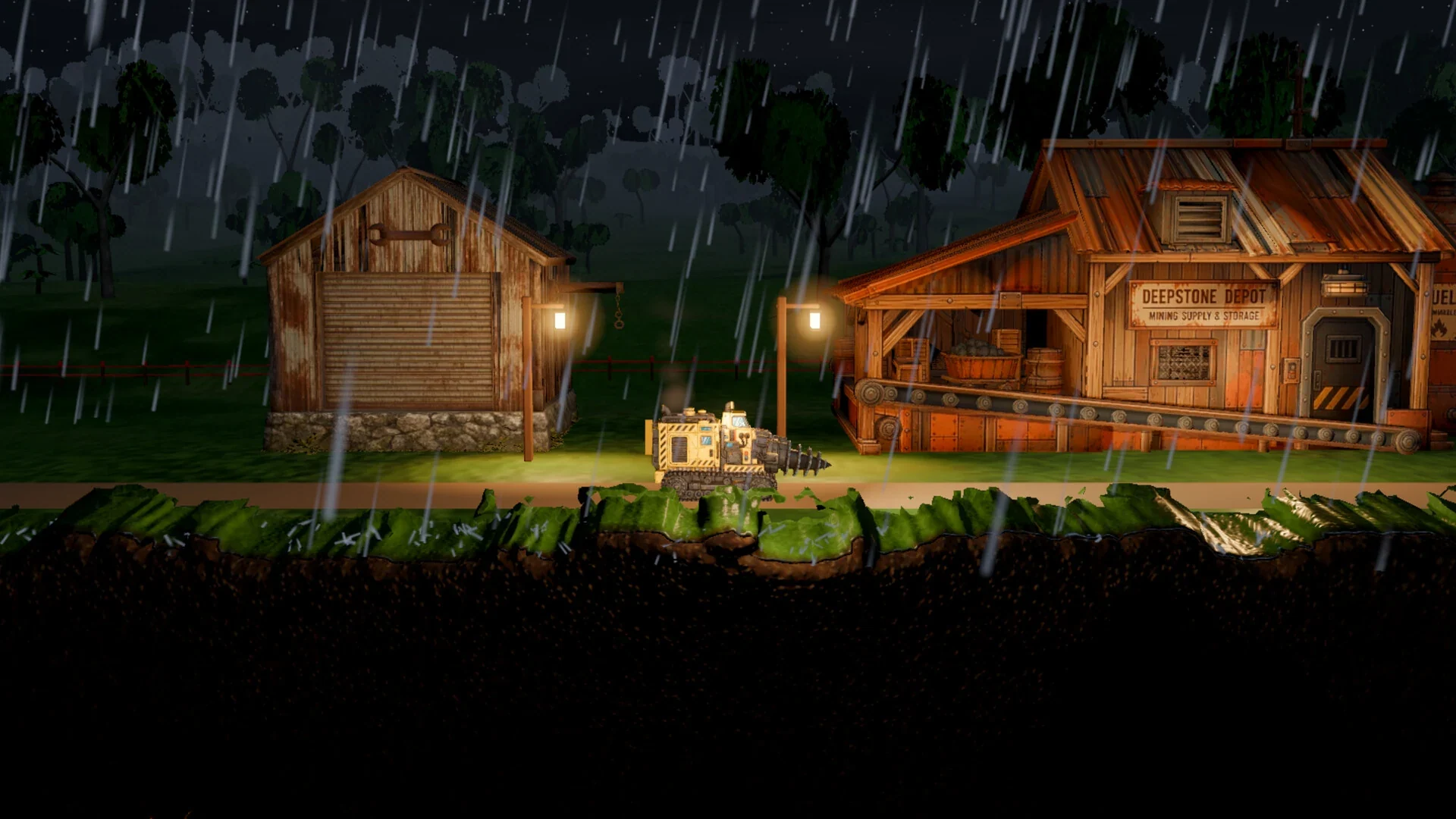
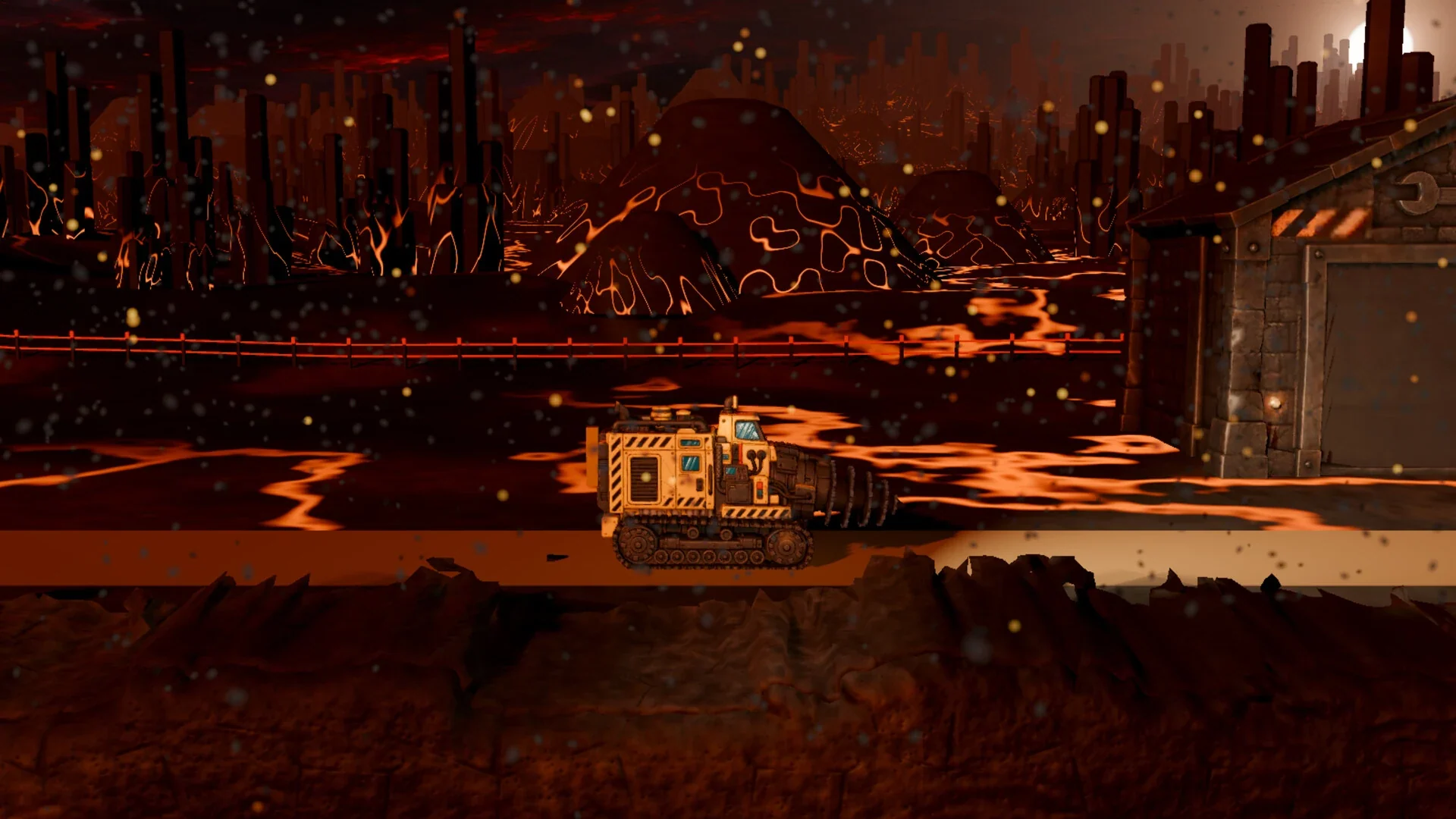
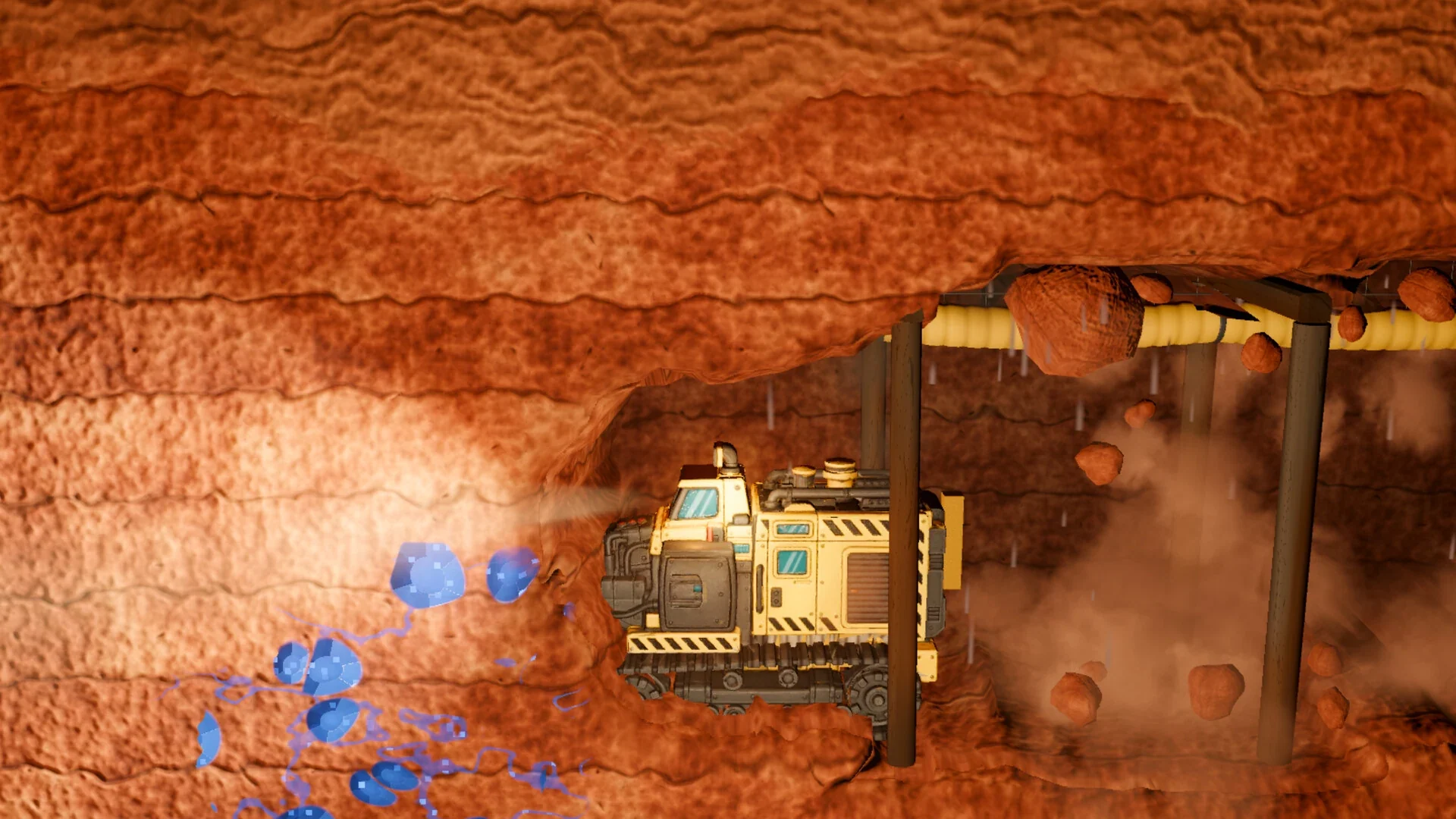
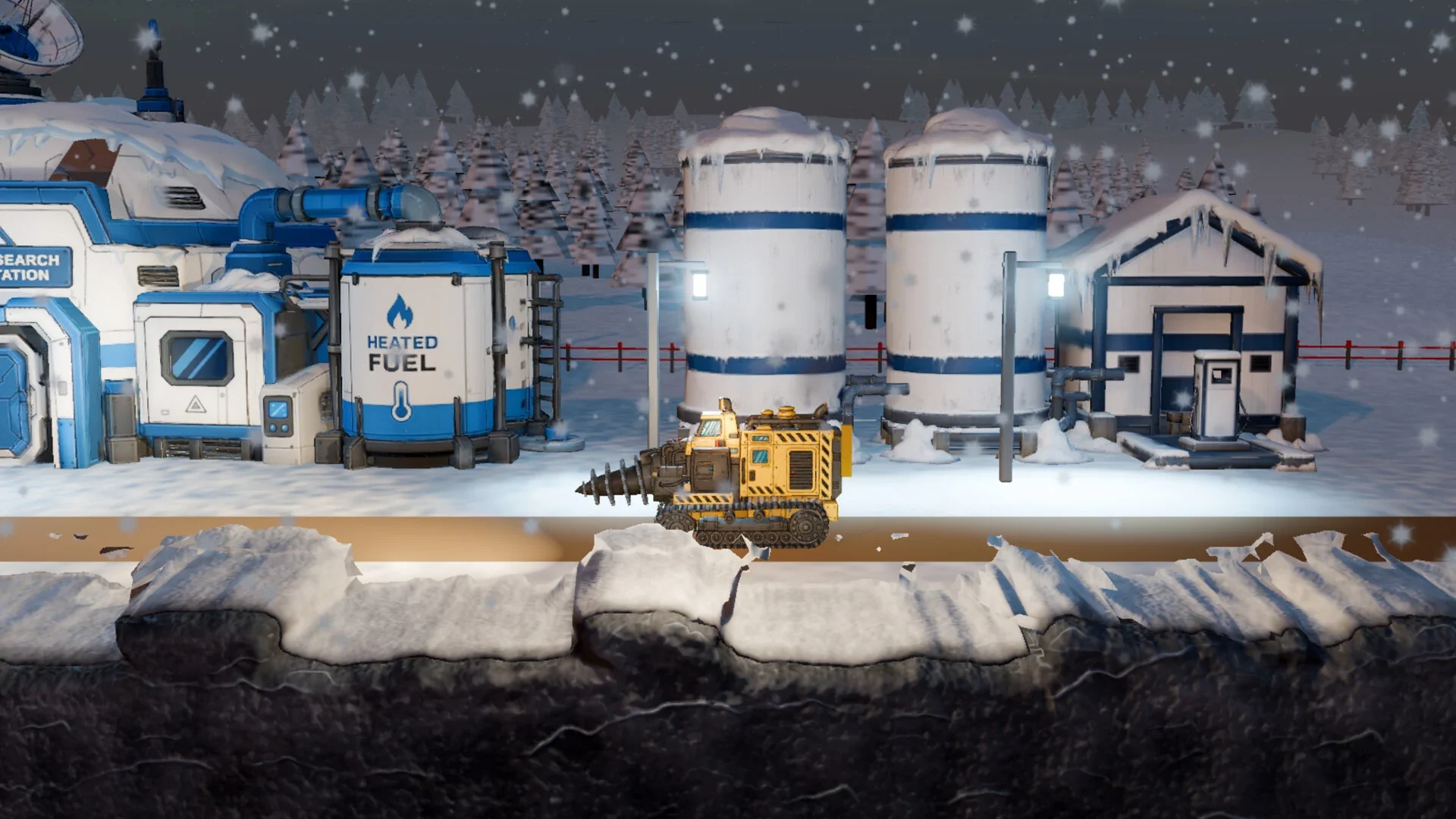
The official screenshots show the rig working horizontally through an orange rock face towards blue ore, with a shaft structure immediately behind it. Other scenes place the machine around ice, lava and surface facilities. These images establish the shape of the mining work; they do not tell us how forgiving the controls or resource balance feel in a long session.
Ezkubia describes twelve ore types, ranging from coal and iron to uranium and meteorite, alongside fossils and buried artefacts. Ore goes up the shaft, into the depot and onward by truck, ship or plane. The rig progression runs from the Rust-Bucket V1 through the Iron Golem Mk-II to the Mega-Quake 9000, with different balances of fuel, carrying capacity, hull strength and power.
Choosing a stronger machine is therefore part of a wider cost-and-capacity problem. You are deciding what kind of run the rig can support, rather than simply replacing a drill with a bigger-looking drill.
Your crew turns a mining run into a business
Once you hire operators, crew rigs can work up to three contracts at the same time. Different machines can share a site, with each crew cutting its own strip, riding the shaft lift and unloading its haul at the depot. Fuel, repairs and upgrades come out of the company wallet.
Wages are due at dawn, and the developer says an unpaid crew quits. More simultaneous work brings more financial obligations. It also gives the auction a second role: you are looking for work that can support an operation, not only a place for your own next trip underground.
Hauler workers, crate loaders and drones move material to the depot. Shelters provide places to refuel, repair and stash cargo below ground, while station upgrades include security barriers, turrets, a teleport pad and insurance. The appeal is the way extraction, transport and upkeep connect. Whether those systems remain interesting after many contracts still needs a hands-on check.
The hazards reach above the mine as well
Gas pockets and lava are only part of the listed trouble. Underground hazards include cave-ins, earthquakes, methane explosions, floods and overheating. On the surface, storms, blizzards and ashfall accompany the risk of thieves raiding the depot.
That matters when deciding who the game might suit. The colourful machinery does not make this a consequence-free tidying game: the developer describes losing a rig if a run goes badly. If you enjoy watching a small operation grow while constantly reconsidering what you can afford to risk, that is a more relevant reason to look than the sheer number of ores.
The store describes three operating regions on the globe: Tasmania's West Coast, the Pilbara Red Desert and the Volcanic Archipelago. It separately lists four mining levels, including the Red Canyon, Glacier and volcano. The operation moves from a temperate starting region towards desert and volcanic conditions, with different ground and tenders described for each region.
There is a story thread beneath the work, too. A radio voice called M. accompanies you, and the store hints at an unexplained door below the mine. I would leave that as a reason to explore rather than promise a particular kind of narrative payoff.
Ezkubia's mobile background and the PC version
Ezkubia develops and publishes Terrum DeepDrill itself. Its own website primarily presents Android and iOS development work, including apps such as Cubble, Vigilet and Cariox, and lists Terrum alongside them. That is a concrete background for the developer, rather than evidence of a long catalogue of PC mining games.
There is an Android edition on Google Play, whose listing describes optional rewarded adverts and a premium option. Those are mobile-store details. They should not be treated as a description of how the separately sold Steam version is monetised, or as proof that both versions have identical content. Even the listed rig counts differ between the two stores.
The Steam page also discloses that some in-game and store artwork was produced with generative AI tools and then edited. It says the game does not generate content during play or connect to an external AI service. That is relevant if the origin of the artwork affects your buying decision.
What to check before buying Terrum DeepDrill
The strongest reason to investigate is the chain from reading a core to pricing a site to keeping a crew supplied. It could suit mining-game fans who want an economic decision before every descent. It is less clearly a fit if you mainly want quiet excavation without hazards, bills or upkeep.
There are early rough-edge reports to consider. In a Steam discussion posted on 8 November, one player criticises event frequency, shelter interaction and the English writing. No developer reply was visible in the thread when checked. That is one player's report, not a verified finding that every installation has those problems, but it gives useful things to inspect in current gameplay footage.
The Windows requirements also deserve a look: the store specifies DirectX 12 or Vulkan-capable graphics and explicitly excludes DirectX 11 cards. English is the listed language. Before buying, check current gameplay for the borehole and auction interface, the readability of underground controls, and whether the hazard pace matches what you want from a mining game. This introduction is based on official material and public discussion, not my own playthrough.
Screenshots