WoW Forever lore: what Blizzard changed, and what it left alone
Blizzard calls WoW Forever a time bubble, not an alternate timeline. Here is what that changes in Azeroth's story — and the two places it breaks.

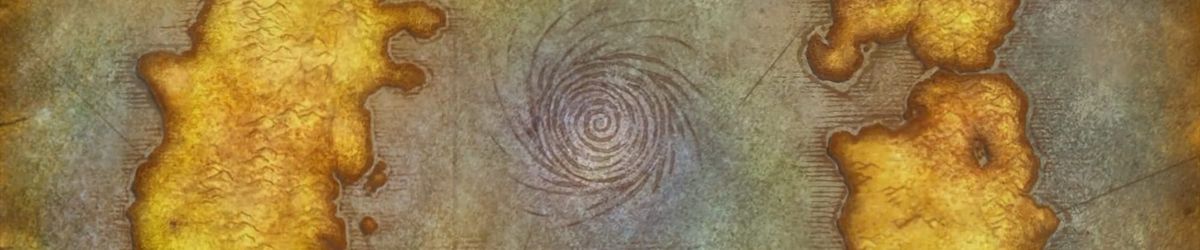
WoW Forever lore sits in a gap the studio has never filled in before. The game is set after the events of Warcraft III Reforged: Forsaken Kingdom and before Molten Core, and that stretch has been given a name Warcraft has not used for a product before: a time bubble. Not a reboot, not a retcon, not a second version of World of Warcraft Classic. A sealed pocket of the original world that can grow without touching anything downstream of it.
If you have played Azeroth before and want to know what is actually different this time, this is the piece for you: where the story sits on the timeline, which of the new places are genuinely new, and which parts of the announcement are still a blank. Every quote below comes from an official page, and the gaps are named rather than filled.
The game launches on 4 November 2026, and that framing decides everything else. It is why Mount Hyjal can finally open, why an elven people nobody has heard of can turn up on a floating island, and why two of the nine new dungeons sit in a version of Azeroth that, by the game's own calendar, has not built them yet.
Where World of Warcraft: Forever sits on the Warcraft timeline
Forever begins where vanilla begins. The Found Photos panel recap puts it plainly: "WoW: Forever begins where original World of Warcraft begins: in the early 'Year 1' period of Azeroth, before Kazzak reopened the Dark Portal and before later journeys to places like Northrend reshaped the timeline."
That is a tighter placement than Blizzard's own announcement gives. The announcement anchors the game narratively — "Set after the events of Warcraft III Reforged: Forsaken Kingdom and before Molten Core" — while the panel anchors it chronologically. Both are official. One marks the story beats on either side, the other names the year.
This is also not a side mode bolted onto WoW Classic. The deep dive recap calls World of Warcraft: Forever "a full new World of Warcraft game" — a full game rather than a mode, a third permanent world alongside Warcraft Classic and the modern one — and the first year of Azeroth is the whole of it.
The Forsaken Kingdom half of that sentence is worth pausing on, because it is a Warcraft III story that shipped the same day the game was announced. Blizzard describes it as filling "the four-year gap between Warcraft III and World of Warcraft" — the stretch between Arthas's return to Lordaeron and the emergence of the Undercity. It answers questions vanilla never bothered with: how the Undercity was established, how the Forsaken built a culture, "why the Scourge did not reclaim Lordaeron… and why the water is green."
So the chain runs: Warcraft III, then a campaign about what the Forsaken did in the four years nobody was watching, then Forever. The link is stated twice: "World of Warcraft: Forever continues shortly after the events of the Forsaken Kingdom campaign."
The map does not grow outwards from there. "The Eastern Kingdoms and Kalimdor still hold mysteries worth uncovering, stories waiting to be told, and places that have lingered just beyond the edge of the map for years," the What's Next recap says — original Azeroth, opened wider rather than left behind.
Kazzak, the Dark Portal and Northrend appear in exactly one sentence across all four panel recaps, and only as timestamps. Nothing says any of them will show up.
"Time bubble", not alternate timeline: what happens to the original lore
Two threads on the official forums ask some version of the same question — is this a retcon, or a separate timeline, or what — and the answer is on a page most people reading those threads have not opened.
The word Blizzard uses is time bubble: "WoW: Forever occupies its own 'time bubble,' allowing the team to explore those possibilities without disrupting original Azeroth's foundational stories."
The difference from "alternate timeline" matters more than it sounds. An alternate timeline implies a branch point and a divergence — this happened here, that happened there. A bubble is a containment argument. It says the new material cannot propagate forward, because there is no forward from inside it, and in that sense nothing downstream is at risk. Nothing World of Warcraft: Forever does to Hyjal has to be reconciled with what Hyjal looks like in Cataclysm, because the two never meet.
So the original lore is not being rewritten, and nothing in current lore has to move to make room. It is being left where it is while a new layer grows underneath it, in a year the rest of the game has already passed through. The next line sets the ceiling: the approach gives the team "creative freedom while still painting inside the lines of Warcraft lore." That is a promise about restraint, not about scale.
The phrase Classic+ is a different matter. It has never been used officially, and the What's Next recap draws a boundary without naming it: "This is not a mode, a season, or a new version of Classic." What has and has not been confirmed about the product itself sits in the WoW Forever tracker.
Found photos: the rule behind every new story in the game
The design philosophy has a name, and it came from Chris Metzen — though not for this game. He is credited with coining "found photos" in early conversations about adding new stories to Season of Discovery.
The definition: "discovering story threads that feel as though they may have been part of Classic Azeroth all along." The philosophy "favors local mysteries, grounded conflicts, and underused characters — the kinds of stories that make the world feel large, textured, and full of possibilities just beyond the road."
Blizzard sorts new content into three buckets, and the sorting is the useful part, because it tells you what each addition is allowed to be.
Anticipated: places players have long known about or wanted to explore, such as Mount Hyjal. New but familiar: fresh stories grounded in Warcraft history and existing locations, like the Riverglades. Unexpected: "surprises used more sparingly, added in ways that feel right at home."
Only one region is filed under unexpected, and it gets fenced off in the same breath — Zephras Isle is "a surprising but self-contained experience — unexpected, but added with care and restraint." Read the three categories as a budget. The studio is telling you it plans to spend most of it on things you already half-remember.
The Riverglades is the clearest case of the middle category: a mid-level zone roughly the size of Stranglethorn Vale, "built from a previously inaccessible part of the Classic world," populated by gnoll camps, ogres, the new Powderfuse goblins, the Twilight's Hammer and the Brotherhood of the Horse. New storylines, old map. Its quest count is the one number the announcement contradicts itself on, and and the tracker carries both figures with their sources.
That is the pattern across the whole of it. More than a thousand new quests are spread across the level 1–60 journey rather than stacked at the end; the new battleground, Darkspear Islands, is fifteen against fifteen off Kalimdor's coast. None of it arrives as a later expansion. Everything is added inside the first year of the world.
The nine dungeons and two new raids, sorted by what they actually are
The entire official dungeon text is three paragraphs, and it lists the nine as one run-on sentence. Sorted by their relationship to the original game, they fall into five groups, and the groups tell you far more than the list does.
Never existed: Krol'dok Stronghold, which returns no hits anywhere in Warcraft material, and the Drowned City, which has no canon entry under that name. The Drowned City is the more interesting of the two, because the idea behind it is old. A Gurubashi city called I'lalai was sunk by a tidal wave, and the only place that story is told is a stone tablet you can loot in vanilla Stranglethorn: "A rumble was heard as great waves rose from the deep and raced toward the land. When they reached I'lalai they cast a shadow on the city." That is a found photo in the literal sense — a 2004 lore fragment with nothing built on it for twenty-two years.
Existed but sealed: the Hall of Thanes under Ironforge, the City of Dalaran, Hyjal Summit and the Barrow Deeps. Old Ironforge sat under the High Seat from launch and did not open until 2011. Dalaran's purple dome was never a backdrop — vanilla gave it a quest text, from Magus Wordeen Voidglare in Tarren Mill: "The wizards of Dalaran constructed a vast, magical dome around the heart of their city. Some believe it was for protection from the violence of these times, while others say they merely wanted solitude, to study and plot." Forever opens that dome at a point in the calendar where the canon keeps it shut.
Existed, reachable, empty: Alcaz Island. You could swim to it in vanilla. There was nothing to do there — naga, hydras, no quest, no instance. Everything that makes it a prison arrived later, in a comic and in previous expansions.
Existed, reachable, never an instance: the Ruins of Lordaeron and Whelgar's Excavation in the Wetlands. Note the preposition in the phrasing for the second one — "a mysterious excavation site above Whelgar's Excavation." The new dungeon is built over the old dig, not inside it. Its official name, from a blue post, is Excavation Site: Wetlands.
That blue post is worth having. On 15 September, Kaivax corrected a level range that had gone out wrong at BlizzCon and published the full table: Hall of Thanes 13-18, Ruins of Lordaeron 15-20, Excavation Site: Wetlands 24-29, City of Dalaran 28-33, the Drowned City 35-40, Krol'dok Stronghold 40-45, Alcaz Prison 48-53, Blackmaw Hold 55-60, Shaper's Terrace 58-60. Those are official numbers, not a datamine.
| Dungeon | Levels | What it was in Classic |
|---|---|---|
| The Hall of Thanes | 13–18 | Old Ironforge under the High Seat — sealed until 2011 |
| Ruins of Lordaeron | 15–20 | Walkable from launch, never an instance |
| Excavation Site: Wetlands | 24–29 | Built above Whelgar's Excavation, not inside it |
| City of Dalaran | 28–33 | Behind the purple dome, with a quest text explaining why |
| The Drowned City | 35–40 | No canon entry — closest anchor is a Stranglethorn stone tablet |
| Krol'dok Stronghold | 40–45 | Nothing. Entirely new |
| Alcaz Prison | 48–53 | An island you could swim to, with nothing on it |
| Blackmaw Hold | 55–60 | Added in Cataclysm, patch 4.0.3a |
| Shaper's Terrace | 58–60 | Added in Wrath, patch 3.0.2, extended in Cataclysm |
The two new raids get far less. The Barrow Deeps is "planned as a maximum-level 10-player challenge"; Hyjal Summit "will bring 20-player raid encounters to one of Warcraft's most important locations." Both raids carry new tier sets and a legendary reward that has not been shown. Neither has a storyline attached to it yet, and neither has a release date beyond the 9 December unlock.
The Barrow Deeps deserves a note of its own. In Warcraft III it is the cave system under Hyjal where the druids slept and where Illidan was imprisoned for ten thousand years — the place Tyrande walks into against Malfurion's wishes. WoW has never let you inside it. It is now a ten-player raid with nothing said about its history at all. No bosses, no Illidan, no Malfurion. The connection is obvious and nobody official has made it.
Hyjal Summit carries a different oddity: the name is already taken. In the Burning Crusade expansion it belongs to a time-travel raid in the Caverns of Time. Forever turns the same name into a place you visit in the present.
Two places that should not exist yet in vanilla Azeroth
This is the part that does not fit the bubble, and it is the most interesting thing in the announcement.
Blackmaw Hold is not a vanilla location. It was added to Azshara in patch 4.0.3a, in November 2010, where it replaced the old Timbermaw Hold entrance during Cataclysm's rebuild of the world. Shaper's Terrace is not a vanilla location either. Its northern half arrived in patch 3.0.2 with Wrath of the Lich King in 2008, its eastern half in the same Cataclysm patch as Blackmaw. It is named after Khaz'goroth, the Shaper, and the titan reading of Un'Goro that it belongs to is a later idea. Vanilla Un'Goro had rotating crystals and no explanation for them.
So World of Warcraft: Forever, set before Molten Core, hands you two dungeons that are canonically built years after the period it occupies. That is not a mistake, and it is not a contradiction the bubble cannot absorb — the whole point of it is that Forever owes nothing to what came after. But it is a clear statement of method. Blizzard is not restricting itself to what vanilla contained. It is taking anything from Azeroth's later history that fits the mood, including material built for a much later expansion, and dating it backwards.
Two more cases run the same way, more quietly. The Hall of Thanes takes its name from the Warcraft role-playing books, where it was explicitly non-canon. Alcaz Prison takes its prison identity from a comic. Forever is promoting material from the edges of the franchise into the main line.
If you want one sentence for what changes about WoW's lore here, that is it. Not the new zones, and not the new race. Forever treats twenty-two years of accumulated Warcraft material as a parts bin for the year 2004.
The Skyborne elves and the Forsaken paladins: two stories WoW Classic could not tell
Two additions are genuinely new fiction rather than reopened ground, and they are the clearest look at what "painting inside the lines" means in practice.
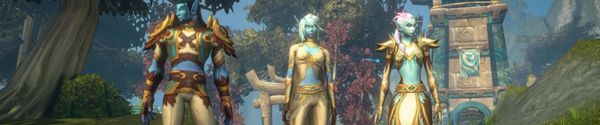
The Skyborne, also called the shen'dorei or hidden people, are the new playable race and the one piece of the world filed under unexpected. The press fact sheet calls them High Elf exiles; the panel gives the longer version: "rebels who fled Eldre'Thalas after the War of the Ancients and eventually found refuge in Skywall, where wind spirits anchored their island home in the elemental plane." High elves who took the elemental route instead of the arcane one, and who have been off the map ever since.
You meet them at the worst moment. "Their elemental benefactors have vanished, the pylons that hold Zephras together are failing, and portions of the island have begun falling into ruin and darkness." Three groups are fighting over what to do about it — the Windshapers, the High Order and the Al'Aketh. Blizzard names them in one sentence and says nothing else about them. What separates them, what each wants, which side you end up on: all of it is blank.
The split is baked into the Skyborne elves themselves. Horde Skyborne "embrace elemental traditions and gain access to the Shaman class"; Alliance Skyborne "pursue the arcane legacy of their ancestors and gain access to the Mage class." One people, one crisis, two answers.
The Forsaken paladin is the smaller story and the better one — the only one of the six new class combinations that comes with a reason. From the panel: "Their path rolls directly out of the new Warcraft III campaign Forsaken Kingdom, beginning at a time when these former paladins are deeply mistrusted by other Forsaken and still learning what it means to channel the Light in undeath." The place to go is Bandarion Keep, in the Whispering Wood of Tirisfal Glades.
The payoff is one line, and it is the sharpest piece of writing in any of the four recaps: "Whereas Alliance paladins claim their epic charger in the name of Redemption, the paladins of the Forsaken ride in the name of Retribution."
The other five class combinations — gnome priest, human hunter, dwarf shaman, orc mage, troll warlock — arrive with no story at all. They are a list in the deep dive recap and nothing more.
What Blizzard has not said
The gaps are large, and a few of them are being reported as though they were filled.
There is no statement about the level cap beyond 60. Level 60 is the target and there is no level scaling; those are different claims from "the cap will never rise," and the second one is not on any official page. What is confirmed is that character power stops going up and starts going sideways, which is a systems question rather than a lore one — we have gone through what was actually said about horizontal progression separately. Onyxia is not mentioned anywhere. Whether Molten Core exists in Forever at all, and when, is unsaid — it appears once, as the far edge of the placement sentence.
No boss is named for any of the nine dungeons or the new raids. The legendary reward is explicitly held back. No NPC in the Riverglades has a name. What the long-hidden mystery of Shen'dralas actually is, what waits in Darkwhisper Gorge, why the Skyborne's elemental patrons left — none of it has been answered.
Shen'dralas does not even have a settled location. The What's Next recap puts it "between Mulgore and Desolace." The Found Photos recap puts it "South of Desolace through the Valley of Bones." Both are official, two days apart.
And the count of new zones depends on which page you read. The opening ceremony round-up says "three new zones." The What's Next recap names four regions and calls them "new and reimagined" — which is the tell, because Mount Hyjal is not new, it is unsealed.
One name turns up in a place nobody intended. The screenshots in the press kit are filed as WoW_Camelot_Announce_Zones, which is why you will see World of Warcraft: Forever called Camelot in forum threads. That is a filename, not a statement: no page, panel or recap uses the word, and nothing says it was the project's internal name.
None of this is a complaint. An announcement three days old is allowed to have holes in it. It is worth knowing which parts are load-bearing, which storylines are real and which are still a name on a slide — and which of them can still change between now and release.
FAQ
What is the story of WoW Forever?
It is a third, permanent World of Warcraft, set in the earliest part of the World of Warcraft story, after the Warcraft III campaign Forsaken Kingdom and before Molten Core. Rather than moving the timeline forward, it expands the year-one world sideways: new regions, nine dungeons, two new raids and a new elven people added to that period instead of after it.
Is WoW Forever an alternate timeline?
Not in Blizzard's words. The Found Photos recap says Forever "occupies its own 'time bubble,' allowing the team to explore those possibilities without disrupting original Azeroth's foundational stories." That is a containment claim rather than a branch: the new material is sealed off from everything that happens later in Warcraft. "Alternate timeline" is the community's phrasing, not the studio's.
Does WoW Forever retcon Classic WoW?
No. Nothing in the announcement changes an existing vanilla story. Forever adds to the year-one world and keeps its additions sealed inside, so Classic, Cataclysm and the modern game are untouched. The one wrinkle runs the other way: Forever imports two locations that canon builds years later, Blackmaw Hold and Shaper's Terrace, and dates them backwards.
Do I need to play Forsaken Kingdom to follow WoW Forever's story?
Nothing says you do, and Forever starts after it rather than inside it. But it is where the Forsaken paladin comes from, and it covers the four years between Warcraft III and vanilla — the founding of the Undercity, why the Scourge never retook Lordaeron. If that thread interests you, it is the context the new game assumes.
Where does WoW Forever fit in the Warcraft timeline?
In the early "Year 1" period, before Kazzak reopened the Dark Portal and before anyone went to Northrend. Warcraft III Reforged: Forsaken Kingdom sits immediately before it and covers the four-year gap between Warcraft III and World of Warcraft — the fall of Lordaeron, the founding of the Undercity, and why the Scourge never took the kingdom back.
Are WoW Forever's new dungeons real Warcraft places?
Mostly, yes. The Hall of Thanes, City of Dalaran, Ruins of Lordaeron, Alcaz Prison, Whelgar's Excavation and the Barrow Deeps all exist in Warcraft already — sealed, empty, or never made into an instance. Krol'dok Stronghold is entirely new. Blackmaw Hold and Shaper's Terrace exist too, but were built in expansions that come after Forever's own period.
Who are the Skyborne elves in WoW Forever?
High elves, also called the shen'dorei, descended from rebels who fled Eldre'Thalas after the War of the Ancients and sheltered in Skywall. You meet them in crisis: their elemental patrons are gone, the pylons holding Zephras Isle together are failing, and three factions are fighting for control. Those factions have been named — Windshapers, High Order, Al'Aketh — and described in no further detail.