
LORE LIBRARY VOLUME 15
The Rise of the Horde
How the Burning Legion turned Draenor’s orc clans into the Old Horde.
In Warcraft lore, the rise of the Horde began on Draenor, where the demon lord Kil’jaeden turned the orc clans against the draenei. Gul’dan brought the clans under one Warchief and bound many of them to the Burning Legion through the blood of Mannoroth. The Horde that later invaded Azeroth had already fought a war on its own world.
On this page
Why did Kil’jaeden target the draenei?
Kil’jaeden used the orcs to reach Velen and the draenei, who had fled their home world of Argus and settled on Draenor. The orc clans had their own chieftains and shamanic traditions. To turn those clans into a single fighting force, Kil’jaeden needed an enemy they would all believe threatened them. Blizzard’s history of Draenor
Kil’jaeden appeared to the orc shaman Ner’zhul as the spirit of his late mate, Rulkan. Ner’zhul trusted the warning and rallied the clans against the draenei. When he realized who was behind the visions and refused to go further, Kil’jaeden turned to his apprentice, Gul’dan. The in-game account of the Horde’s origins
Gul’dan, Blackhand and the Shadow Council
Gul’dan pushed the orcs toward fel magic as the shamans lost contact with the elements. He gathered warlocks into the Shadow Council and used it to steer the clans from behind the scenes. Blackhand, the Blackrock chieftain, became the first Warchief of the Horde. Blackhand commanded the armies while Gul’dan shaped the decisions that put them in the field. Blackhand’s role in the Horde
What did Mannoroth’s blood do to the orcs?
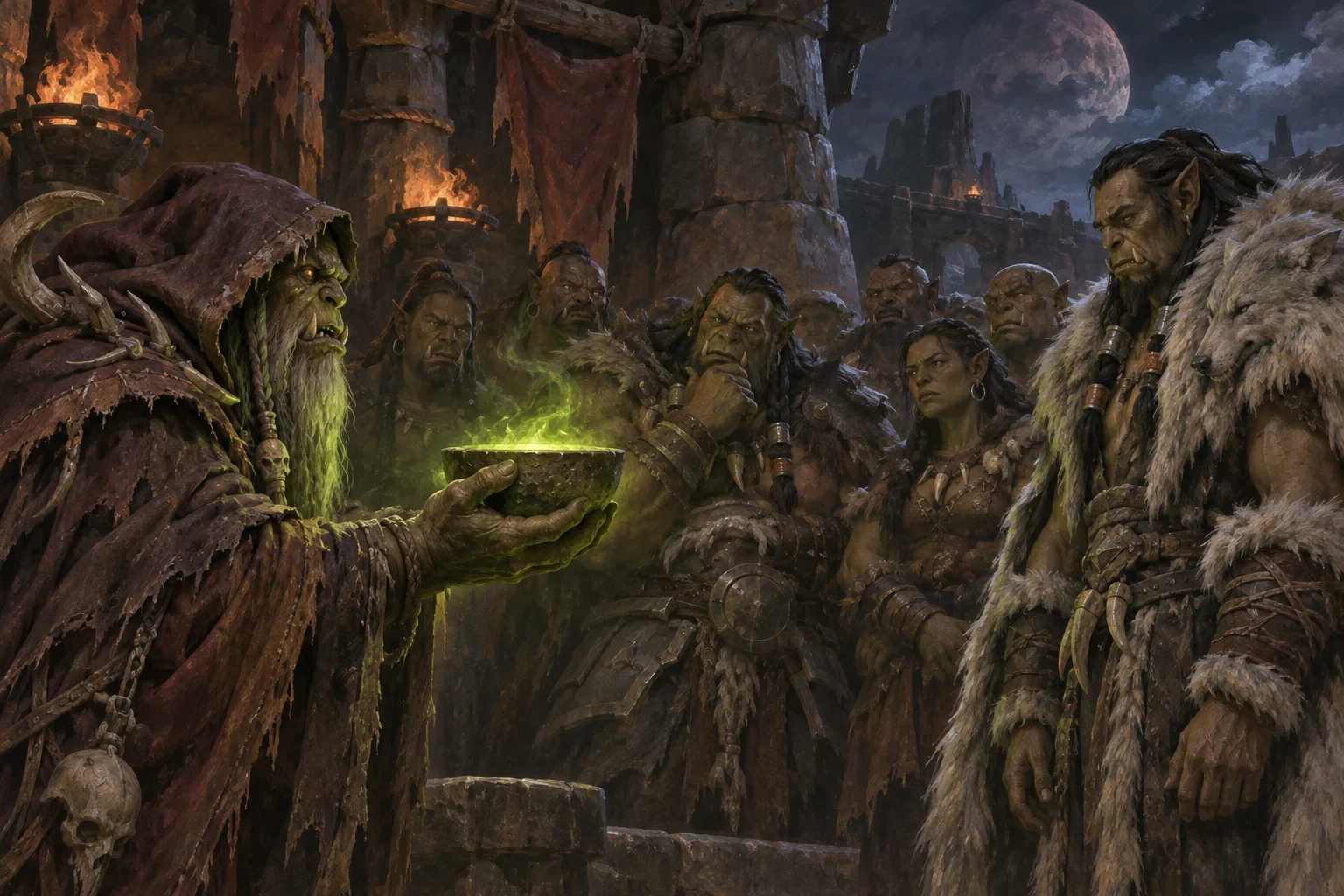
Drinking the blood of Mannoroth gave the orcs a surge of strength and bloodlust. It also bound those who drank to the Burning Legion. Gul’dan presented the blood of the pit lord as a source of power before the assault on the draenei capital of Shattrath. Grom Hellscream of the Warsong clan drank. Durotan, the Frostwolf chieftain, forbade his people to drink. His friend Orgrim Doomhammer also refused. Blizzard on the blood pact · Durotan’s refusal
The fall of Shattrath
The newly formed Horde had already attacked draenei settlements before the pact. The fall of Shattrath broke draenei resistance, but Velen and other survivors escaped. Durotan’s choice spared the Frostwolves from drinking demon blood, even though the clan had already taken part in the campaign. His refusal shows how much harder it had become for a chieftain to oppose Gul’dan once the clans answered to one Warchief.
From Draenor to the Dark Portal
After the war, the orcs faced a dying Draenor. On Azeroth, Medivh contacted Gul’dan while under Sargeras’s influence. Together they opened the Dark Portal between the two worlds. The invasion brought the orcs into battle with the humans of Stormwind. That conflict begins in the next volume, The First War. Blizzard’s First War timeline
Is Rise of the Horde canon?
Yes. Christie Golden’s 2006 novel World of Warcraft: Rise of the Horde tells the canon story from the perspectives of characters on both sides, including Durotan and Velen. Blizzard’s Burning Crusade Classic timeline recounts the same events. Thrall, Durotan’s son, frames the story from a later era. The Horde he leads is the New Horde. The army Blackhand led on Draenor is commonly called the Old Horde. Blizzard’s guide to the novel
YOUR READING JOURNEY
Keep your place in Azeroth.
Load your account progress to keep your place.