
LORE LIBRARY VOLUME 09
The War of the Satyr: WoW Lore
The satyr war, the Scythe of Elune and the first worgen.
The War of the Satyr was an ancient conflict between the night elves and demonic forces left on Azeroth after the Sundering. It also produced the first worgen: druids whose attempt to master a dangerous wolf form became a threat to their own people. The night elves had to confront both the satyrs in their forests and a crisis within their defenders.
This Warcraft lore guide is for WoW Forever readers following Azeroth’s history. It explains the satyr war, its outcome and the Scythe of Elune’s role in the worgen curse, so you can distinguish the two transformations. It follows Nordrassil and the Long Vigil.
On this page
The War of the Satyr after the War of the Ancients
A Burning Legion army without a new invasion
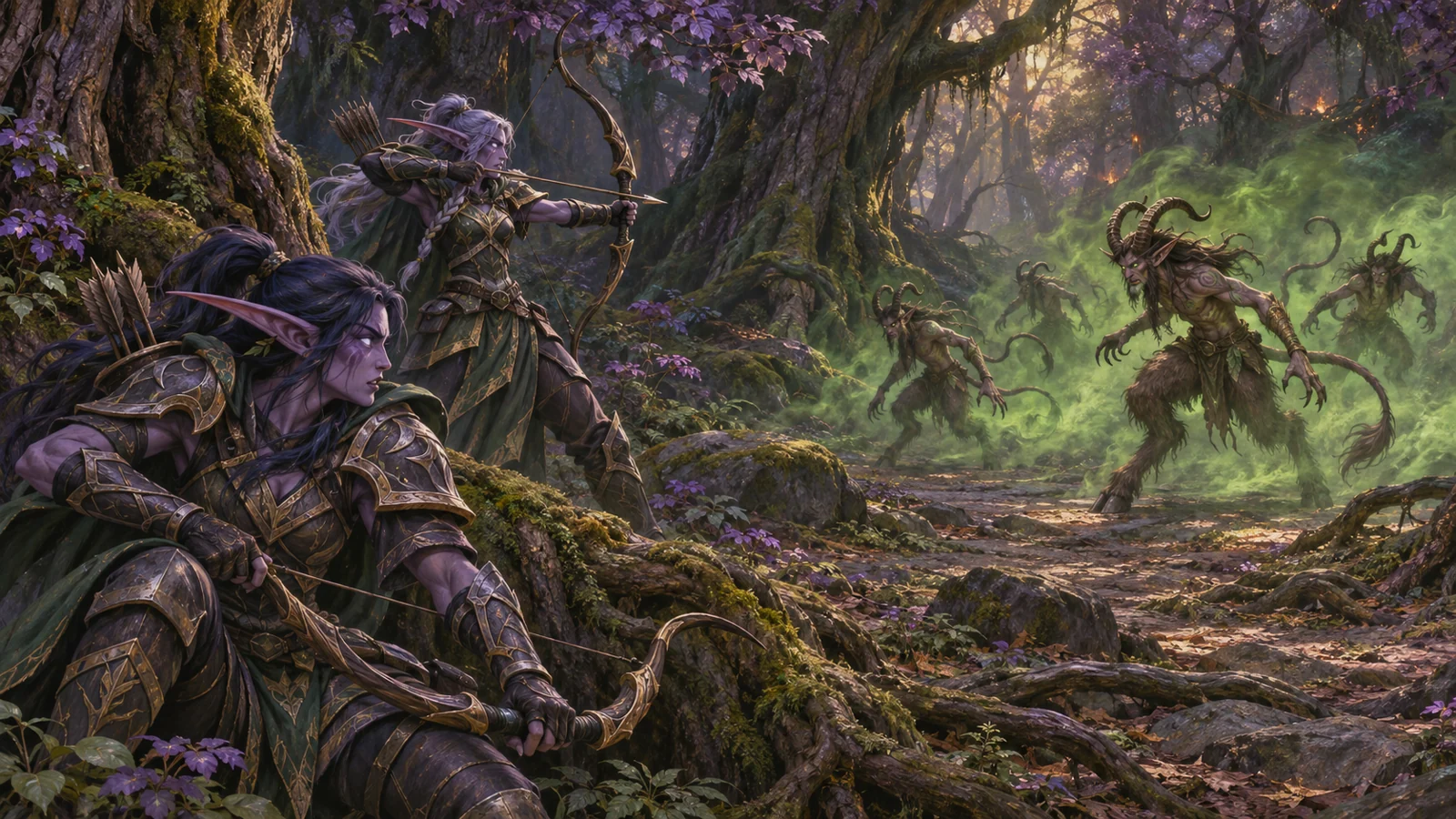
The Sundering closed the Burning Legion's invasion route, but it did not remove every demon from Azeroth. Xalan the Feared gathered Legion soldiers who had lingered in Azeroth’s forests since the Sundering. The satyrs attacked Night Run, a night elf stronghold. The attackers were intent on destroying night elf civilization while the defenders were still rebuilding it.
Blizzard's Chronicle Volume I places the War of the Satyr roughly 9,300 years before the Dark Portal. Its account also credits Shandris Feathermoon's guerrilla warfare with overcoming enemies including Xalan. Shandris asked Malfurion Stormrage to summon the druids. He agreed, bringing Kalimdor’s strongest druids to support the Sentinels.
The satyr war and the Third War in the timeline
The War of the Ancients and the Sundering came first, followed by Nordrassil and the Long Vigil. The satyr conflict interrupted that vigil about seven centuries after the earlier war. The night elves were defending a changed Kalimdor, not the empire that had existed before the continents split.
The publisher-authorized Chronicle search excerpts establish that military setting. The army's danger came from both demonic survivors and their ability to corrupt the forests the night elves depended on.
Xavius and the ancient satyr curse
These bestial demons were themselves transformed creatures. Sargeras had given Xavius his demonic form during the earlier War of the Ancients, making him the first satyr, and the new satyr lord spread that demonic transformation to other Highborne. The curse could also affect other races; being born a night elf was not a requirement for becoming a satyr.
Blizzard's preserved satyr encyclopedia entry describes horned beings with claws, hooves and goat-like lower bodies. Their curse has a different origin from the wolf-shaped creatures that emerged during this later war. Xavius and Xalan also belong to different parts of the story; their names are not interchangeable.
Ralaar Fangfire and the Druids of the Pack
Some night elf druids wanted a stronger answer to the demons. These were defenders experimenting with their own nature magic, rather than another group accepting the satyrs’ demonic curse. Ralaar Fangfire favored the pack form, drawing on the ferocity of the wolf Ancient Goldrinn. Malfurion opposed its use because it was unstable.
Arvell fought beside his friend Ralaar, but refused to adopt the dangerous form and died in combat. The loss took a heavy toll on his companions. Arvell's partner, the priestess Belysra Starbreeze, then helped Ralaar seek a way to strengthen it.
The in-game Tome of the Ancients, particularly its first three Scythe chapters, records those choices.
The Scythe of Elune and the first worgen
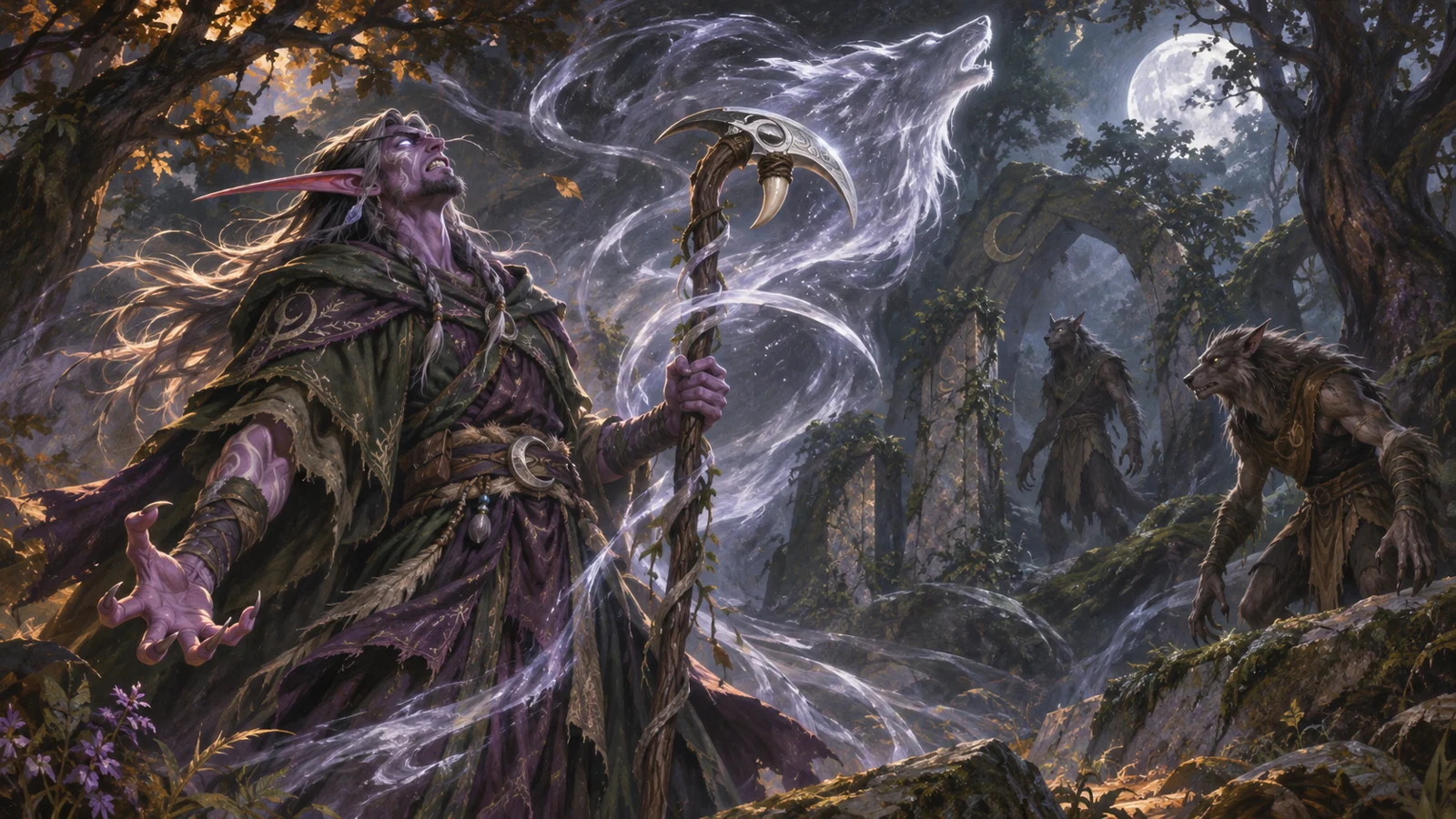
Ralaar and Belysra combined a fang of Goldrinn with the Staff of Elune. The resulting Scythe of Elune joined the wolf Ancient's power with lunar magic.
Blizzard's druid artifact history connects the weapon directly to the worgen's origin. It also warns that Goldrinn's spirit can overwhelm someone who cannot maintain control.
The Scythe strengthened the pack form, but the druids became feral worgen and attacked allies as well as enemies. Greater power had not solved the problem Malfurion feared.
Why the worgen curse could spread
The transformation also endangered people who had never chosen the pack form. Blizzard’s Creative Development answers explain that a worgen can pass the curse through a bite. Containing the transformed druids therefore meant protecting others from becoming worgen too.
Satyrs, pack form and worgen are different
| Name | What it means in this story |
|---|---|
| Satyr | A demon shaped by the curse originating with Xavius. |
| Pack form | The unstable wolf transformation some druids sought to use against the demons. |
| Worgen | The cursed wolf-like beings produced by the Scythe's enhancement of that form. |
How the night elves contained the worgen
Malfurion obtained the Scythe and banished Ralaar and his fellow worgen into the Emerald Dream. He hoped they would remain calm beneath the tree Daral'nir.
Banishment contained the danger; it did not undo the transformation. The Dream became a place of confinement for these druids, rather than simply the realm they entered through ordinary druidic practice.
That distinction connects back to the previous volume. The sleeping druids associated with Nordrassil had duties within the Dream. Ralaar's followers were sent there because they had become dangerous.
Victory and the war's aftermath
What happened to the satyr forces?
The satyrs’ defeat did not mean their extinction. The night elves won, but survivors remained. In the same Creative Development Q&A, Blizzard explains that the war shattered their central leadership. Survivors continued in small sects. Victory broke their united military strength; it did not erase every satyr from Azeroth.
What the war changed for the Cenarion Circle
The night elves overcame their enemies, but the worgen disaster exposed a danger within druidism itself. Protecting nature demanded restraint as well as strength.
The Chronicle excerpts explicitly connect that catastrophe with Malfurion reconsidering druidic practice. Blizzard's preserved Cenarion Circle history explains the order's wider purpose: preserving the world and its balance, learning from nature, and defending it against corruption.
Together, those accounts explain why a common tradition mattered. A druid's choices could affect people far beyond their own circle. The experiment's consequences could not be limited to its volunteers.
The ancient worgen were not the people of Gilneas
The first worgen came from night elf druids. Gilneas's later curse belongs to another era.
Blizzard's announcement for Curse of the Worgen describes a comic that connects an ancient night elf war with the much later troubles of the human kingdom. The two periods are linked, but they are not one battle.
For Forever, this chapter supplies historical background. The ancient satyr war predates the Third War by millennia, and it should not be confused with a later Legion invasion. Retail campaigns and playable artifact quests are not assumed to have happened in this version of Azeroth.
Sources and references
This chapter uses official lore from Chronicle Volume I, the in-game Tome of the Ancients and Blizzard’s published background articles and answers. The linked Chronicle passages are licensed search excerpts; the full pages are not available in that preview.
Next in the suggested reading order is The Founding of Quel'Thalas. Return to the lore library to follow the timeline or choose another volume.
YOUR READING JOURNEY
Keep your place in Azeroth.
Load your account progress to keep your place.