
Backdraft game review: fun minion builds, slow unlocks
After three hours, Backdraft gets 8/10 from me: lovely minions and fun build ideas, with unlock pacing and Hero Draft difficulty still needing polish.
Review · 3 hours played · Version 1.0.0
Backdraft’s minions, art and build possibilities make me want to keep playing. The unlock pacing and the route into harder Hero Draft runs need some polish.
I got my first win in Backdraft, Legacy Labs' turn-based roguelike deckbuilder, on my second attempt. What I wanted afterwards was a harder run and more freedom to try another combination. I liked the minions, I liked the art, and I wanted to see what else I could make work. The frustrating part was how much of that experimenting still sat behind unlocks.
After three hours, I'm giving Backdraft 8/10. There's a really nice foundation here. Putting together a build is fun enough that I want more room to play with it, and the progression doesn't always give me that room as quickly as I'd like.
Disclosure: The developer provided a free copy of Backdraft for this review. This did not influence my opinion.
Backdraft gameplay: a battle for board control
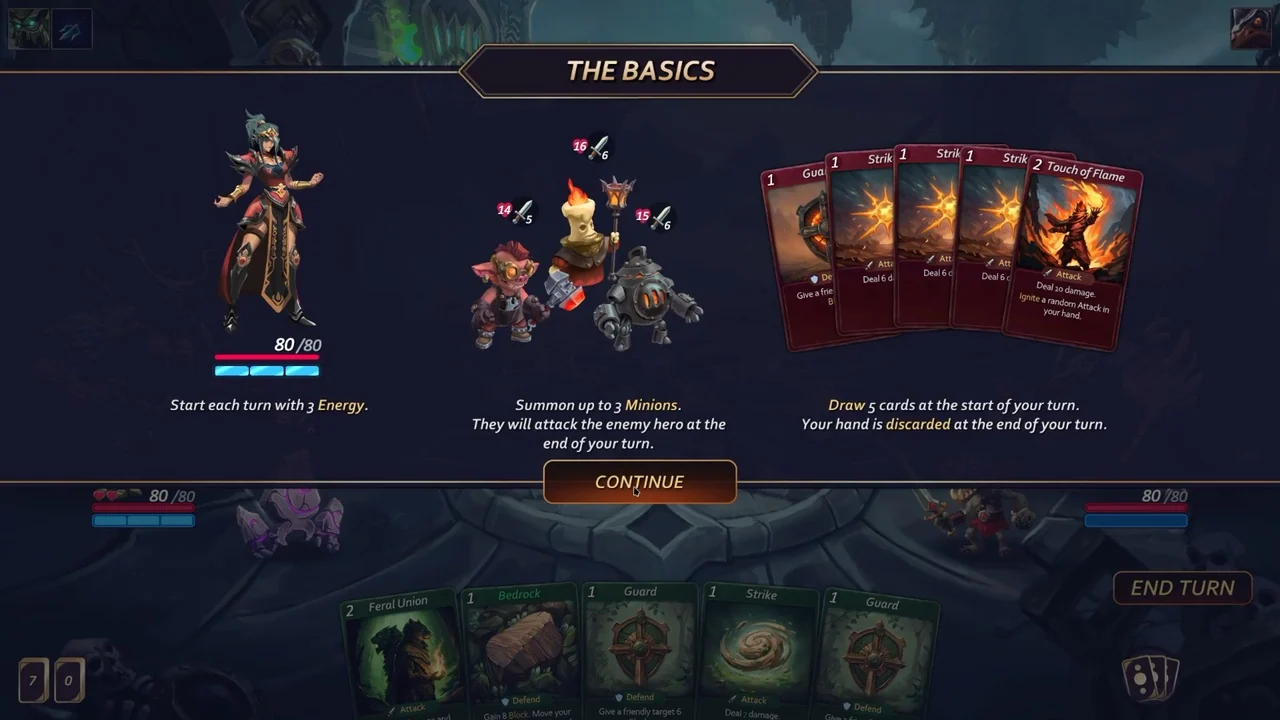
Backdraft is a hero vs hero card game: your opponent has a deck and minions, just like you. Legacy Labs calls it a deckbuilding brawler. The fighting is turn-based, so the challenge comes from the cards you choose and how you build your side of the board. The opening tutorial gives you three energy each turn, a five-card hand and space for up to three minions. Those minions attack the opposing hero at the end of your turn, so what you leave on the board matters alongside the cards you play.
That makes board control part of your deckbuilding strategy. You have a limited amount of energy to spend on your hand, while summoned minions can contribute after you've finished playing cards. A build has to work within both limits: what you can afford this turn and what you can keep fighting for you on the board.
Hero and companion choices shape your deck
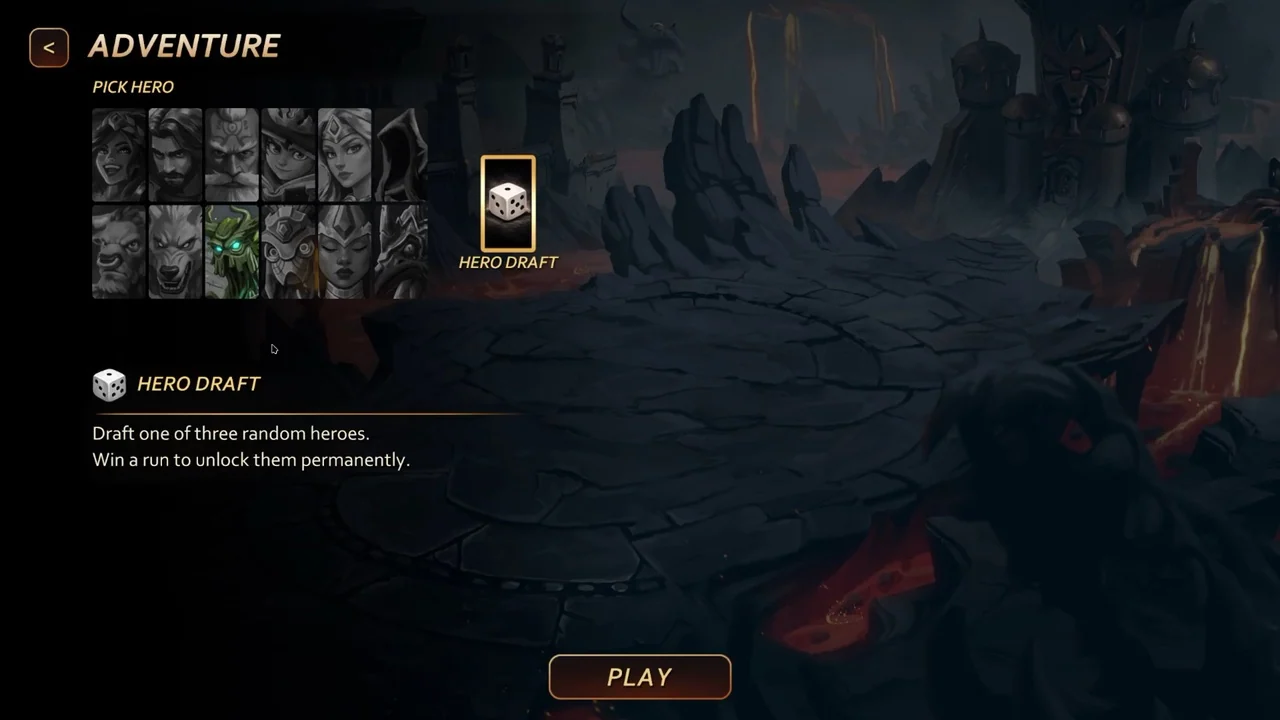
In Hero Draft, you pick one of three randomly offered heroes, then choose a companion. Winning a run unlocks the chosen hero permanently. The hero brings a unique power, while the companion opens a second elemental card pool. That pairing gives you a starting direction for your build. Between fights, you visit shops to open packs, recruit minions, upgrade cards and find artifacts. Winning fights earns Blessings that improve later shops.
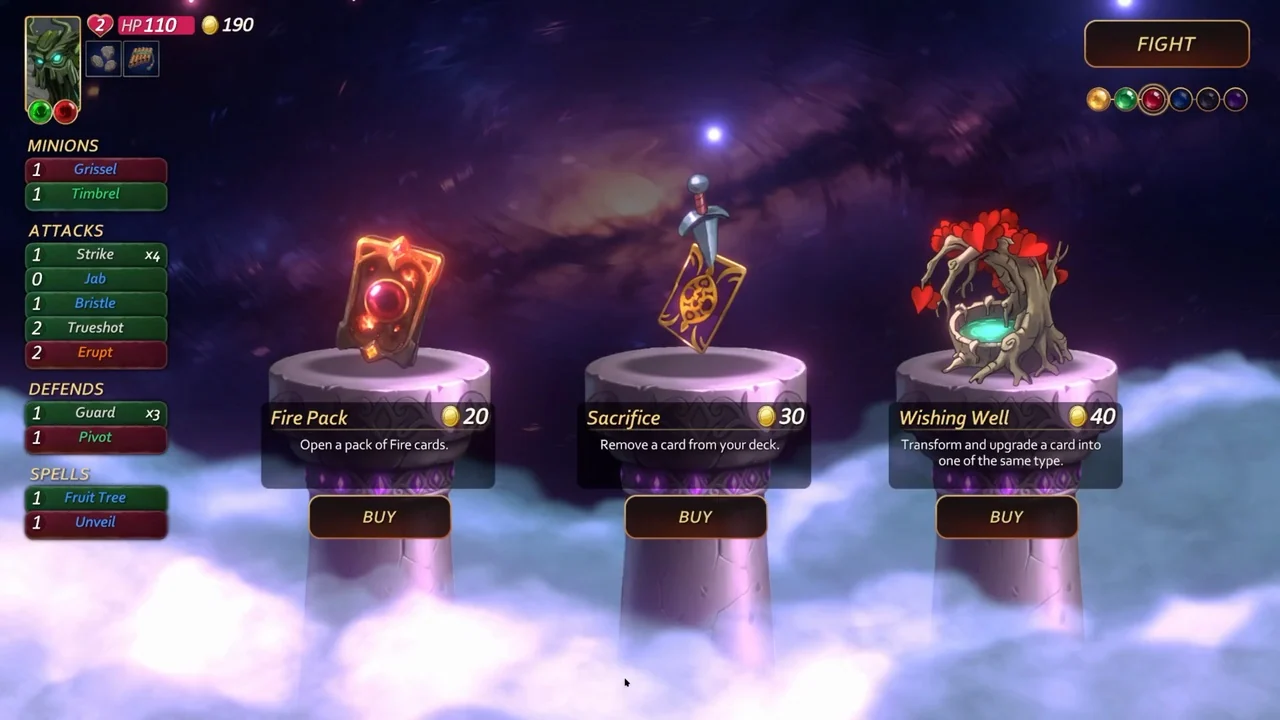
The shops are where you put that starting idea into practice. Opening another pack gives you more cards to work with; upgrading a card improves something already in your deck. Recruiting a minion or picking up an artifact gives you other ways to develop the build. Those choices are the part of the run I want the progression to let me explore more freely.
I like card games, but I tend to play them casually. The part that interests me here is finding a combination I enjoy and seeing how far I can take it. Getting a win early made me want to try more.
Minion builds, poison and the art I love
I really like the minions. One of the builds I enjoyed kept summoning them, and that was the kind of combination I wanted to keep developing. Poison became another favourite, and Quake was a card that caught my interest.
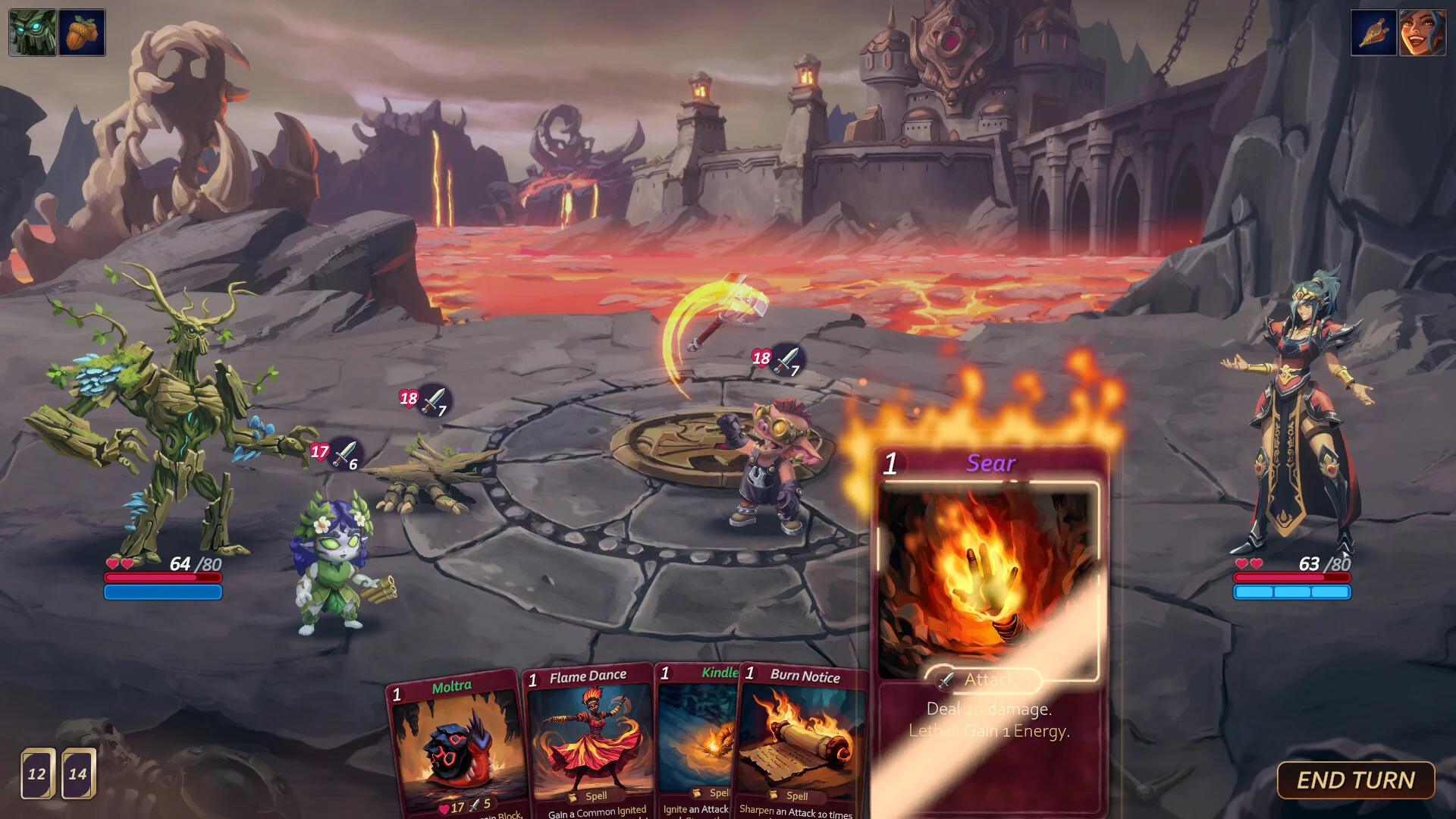
The art style helps a lot. I like how the game looks, and the minions give me something to get attached to beyond the cards in my hand. Tiny creatures fight alongside much larger heroes, with the cards spread across the bottom of the battlefield. I like having those little characters in the fight, and that makes building around them more appealing to me.
Unlock pacing and card removal hold back experimentation
The unlock pacing is my biggest reservation so far. I can imagine some players enjoying gradually opening things up. For me, it can feel like I need to work through the progression before I can properly explore the combinations that caught my attention.
I also wanted more opportunities to remove cards. When I have an idea for a deck, being able to refine it matters as much as finding another card to add. The Sacrifice option in the shop removes a card from your deck; my recording shows it offered alongside a card pack and a Wishing Well. I wanted more chances to use it during my runs.
Heat Levels: why can't Hero Draft offer a harder run?
Hero Draft feels like the main loop to me. It's where I naturally want to start another run, try a different pairing and see what happens. After winning on my second attempt, I wanted the option to make that loop more difficult.
Backdraft does have Heat Levels. My issue is how I reach them. As I understand the current setup, I have to go to a separate tab and first play a run with the exact hero and companion combination I want before I can raise its difficulty. That makes trying a fresh pairing at a higher challenge feel less direct than I'd like.
I'd rather be able to turn the difficulty up from Hero Draft itself. I don't want to mistake a progression rule for a missing feature, so I've asked the developer about the thinking behind this setup. For now, this is how it came across during my playthrough, and why it interrupted the loop I wanted to keep playing.
Replayability: the full game still feels familiar after the demo
Coming from the demo, my first impression was that the full game's main loop felt quite familiar. I enjoyed that loop already, but the move to the full version didn't immediately feel like a big change in what I was doing.
That's an early impression of the solo game, rather than a claim that I've seen every combination or everything the progression opens up. It's also why the pacing matters to me: if more of the variety sits further into the unlocks, I want to reach it before the familiar part starts feeling repetitive.
Solo Adventure, online Versus and the Steam demo
Adventure is the single-player mode. You take on six realms solo, with one rival hero guarding each and three lives to make it through the run, according to the official press kit. That gives some context to the early victory in my notes: it made me want another challenge, rather than making me feel done with the game.
Versus is the separate online multiplayer mode. You can open or join a lobby and challenge your friends online. I haven't tried PvP, so I can't judge its balance, matchmaking or how well my favourite ideas hold up against another person. My 8/10 is for the solo experience I've played.
The indie strategy game launched on 3 November 2026 for Windows and macOS through Steam. There's also a free demo. If you're curious about the card battles and minions, that's a useful place to try the basic loop before buying. My experience moving from the demo to the full game is why I would pay attention to the unlock pacing as well as the combat.
Is Backdraft worth playing? My verdict: 8/10
I like Backdraft. The minions, the art and the build possibilities give me plenty to enjoy, and poison has already found its way onto my list of favourites. I want to keep trying combinations, which is a good place for a deckbuilder to leave me.
What I'd like next is more freedom to experiment, a smoother route into harder Hero Draft runs and some polish around the progression. Those are the things that could make a game I already enjoy easier to keep coming back to.
If you enjoy experimenting with card combinations and having minions fight alongside your hero, Backdraft is worth a look. If you want immediate access to lots of combinations or a straightforward way to turn up every new run, look closely at the progression before buying.
Backdraft game hub: heroes, game basics and trailer →
Sources and review scope
Played for three hours. The gameplay recording identifies the game as version 1.0.0. Hands-on opinions come from my play notes, with mechanics and menu screens checked against my gameplay recording. Game details were checked on 4 November 2026 against the Steam store and official press kit. PvP is untested. Developer interview answers are pending.