RimWorld Vanilla Races Expanded — Android: colonists that never eat, never sleep, and never grow
Vanilla Races Expanded — Android after 60 hours: what New Utopia really starts you with, how awakening works, and why an android colony stops telling stories.

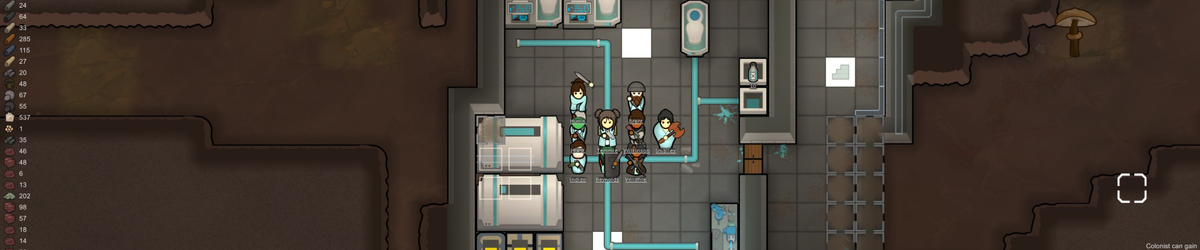
RimWorld runs on need bars. Colonists get hungry, get tired, get filthy, get bored, and the game is the pressure of keeping five of those off the floor while a raid walks in. Vanilla Races Expanded — Android deletes most of them. Its androids do not eat, do not sleep, do not use a toilet and do not get bored. You build them at a station, program their skills instead of hiring them, and they run until the reactor is empty.
Xenotype · 60h+ played
For about twenty hours this is fascinating, and the New Utopia scenario is one of the best framings any RimWorld mod has written for itself. Then the trade shows its shape: the mod removes five needs and hands back one, and a basic android carries a hardware gene that stops it learning anything, ever. You end up with a colony that runs beautifully and stops generating stories — and stories are why you play this rather than a factory builder.
It is well made and it is not buggy. It just takes away more interesting problems than it adds. Push toward awakening rather than treating androids as better workers and you will get more out of it than I did.
What an android actually is
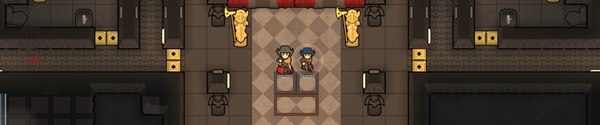
RimWorld Vanilla Expanded androids are not robots bolted onto the side of the game. They are a Biotech xenotype, which is why the DLC is a hard requirement — no Biotech, no genes, no mod. They also look human on purpose, which is the clearest line between this and Android Tiers: the mod’s own FAQ answers the “why don’t they look robotic” question with the observation that an android is a synthetic being that closely resembles a human.
Every android is a stack of two kinds of gene. Hardware is the chassis — immutable, and it decides that the thing has a reactor, has a memory need and cannot feel pain. Subroutines are the software layer, and they decide whether it is any good at anything.
There are twenty-two hardware genes and twenty-four subroutines, plus five templates that generate one gene per skill at runtime. Hardware you pick; subroutines you budget.
The skill system is where this stops being cosmetic. Aptitude comes in four grades and each is a flat offset on a skill level — basic +4, intermediate +8, advanced +12, expert +16. You do not recruit a good crafter, you program one. There is a fifth grade in the other direction, incapable, which locks the android out of a skill entirely, and it exists because the whole thing is a budget: helpful subroutines cost efficiency, harmful ones pay it back. Combat incapability, which makes an android refuse to fight at all, is the single largest refund in the file.
The needs it deletes
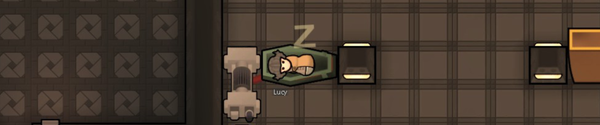
The list is longer than the marketing suggests. Food, rest, bladder, hygiene, thirst, food variety and cult-mindedness are switched off outright. On top of that, a basic android carries six more genes that each kill a need: joy, beauty, comfort, outdoors and indoors, room size, and drug desire.
Two of those switches reach into other people’s mods — Dubs Bad Hygiene’s thirst and the food variety need are named directly in the exclusion list. If that looks like a mod conflict, it is the opposite: the suppression is deliberate, nothing errors, and the needs simply never appear on an android.
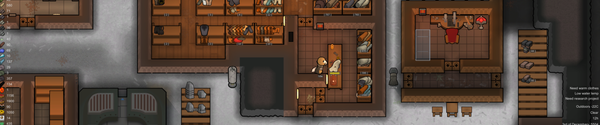
Read that back and notice what is left. A basic android has no reason to care about a bedroom, a dining hall, a rec room, a temple, a view or a floor. The entire architectural half of RimWorld — the part where you build somewhere nice because your colonists have opinions about it — simply switches off.
Power, reactors and the neutroamine problem
The reactor is installed into the stomach, which is a nice joke, and it costs ten plasteel, twenty uranium, one spacer component and two industrial ones. When it runs dry the effect is not a slowdown. The final stage multiplies both Consciousness and Manipulation by zero — the android is a statue until someone intervenes. Pull the dead reactor and you get a spent reactor back, described in the files as a useless piece of junk, plus toxic wastepacks unless the android carries the zero waste subroutine.
The upkeep resource is neutroamine, and this is the mod’s largest structural problem. RimWorld does not let you produce neutroamine. You buy it from traders, and trader stock is not a supply line. The mod knows: asked in its own FAQ how to get enough, the answer recommends installing a different mod and building an automated neutrosynthesizer from Vanilla Factions Expanded — Mechanoids.
A mod whose central resource loop is closed by a second mod has not finished designing that loop. You can work around it — the Neutroamine Logistics research gives you tanks, pipes and taps — but storage is not production. Eventually you are back at the trade screen.
New Utopia: what the scenario really starts you with
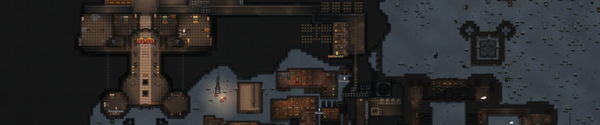
This is the scenario most people mean when they talk about the mod, and it is the best thing in it. You are not a colony that builds androids. You are a band of awakened androids hiding in a derelict outpost, and the goal is to become a sanctuary for others of your kind. The description ends on a line that does more work than most RimWorld framing: how many are you willing to save?
The head start that matters is the research, and it is worth being precise about its size. Android Tech is a 2,000-point project at the Ultra tech level that normally sits behind high mechtech and needs a hi-tech bench with a multi-analyzer. Neutroamine Logistics is 1,500 points at Spacer, behind biofuel refining. Starting with a finished Ultra project is a real advantage — but it is two projects, not a filled tree. Everything else is standard.
The scenario then keeps feeding you. A part named, verbatim, hunted android every 10 days fires a quest on that cadence for the whole run, offering refugees you can take in or turn away. That is the utopia loop, and it is the clearest case of the mod matching its mechanics to its own premise.
Awakening: the best idea in the mod
Under extreme mood, an android can wake up. Eleven genes are stripped, and the list of what returns is the whole story: joy, comfort, beauty, outdoors and indoors, room size, drug desire, pain, mental breaks, inspiration, psychology, and the ability to learn skills naturally.
Note what does not come back. Food and rest stay off. An awakened android still never eats and never sleeps — that exclusion has no awakening exemption anywhere in the mod’s files. The pawn you get is not a human. It is a human’s emotional life running on a reactor.
The design is smart, and the reason it is smart is that it turns your own success into a cost. Treat your androids well enough and they stop being appliances. Suddenly you need rec rooms, decent beds and a floor that is not gravel, in a base you built precisely because none of that was necessary. In a run whose entire premise is offering sanctuary, that is exactly the right kind of expensive.
The catch
Two, and the second is the one that matters.
The neutroamine loop is unfinished, and the mod outsources the fix. That is the section above. On its own it would be a real complaint.
A basic android is a pawn that cannot develop. Hardware includes a gene stating plainly that androids are incapable of learning new skills naturally. You set aptitude at the creation station and that is who they are, permanently, unless they awaken. RimWorld’s long game is largely watching people change — the useless brawler who becomes your best shooter, the chemical interest you plan around, the rivalry that reshapes the barracks. A colony of basic androids has none of that. It has throughput.
And because androids have no mood needs, most of them cannot have a bad day either; mental breaks are disabled by gene. Nothing goes wrong socially, which means nothing happens socially. Sixty hours in, the base ran well and I had stopped having stories to tell about it. The mod’s own best feature is the way out of this, which is a strange position for it to be in: awakening is worth building toward specifically because it undoes the flatness the rest of the design creates.
Sixty hours in
The mod is stable, well made and clearly loved by its authors — seventy-two change notes, a live 1.6 build, and continuous updates since May 2023. Nothing about it spoiled a run. Odyssey players get a real bonus on top: androids are vacuum-resistant, which the FAQ confirms outright, and that makes them better suited to gravship and space play than any other xenotype.
What I did not get was a second act. The first stretch is very good — working out the subroutine budget, learning what a dry reactor actually does, taking in the first few hunted androids. After that the colony became efficient and stayed there. Neutroamine was the only pressure left, and neutroamine is a shopping problem, not a survival one.
Who it’s for
Get it if
- You want a colony that ignores food, sleep, temperature comfort and mood entirely.
- The awakening arc appeals to you as a story, not as a stat change.
- You are playing Odyssey and want a crew that shrugs at vacuum.
- You already run Vanilla Factions Expanded — Mechanoids and can make your own neutroamine.
Skip it if
- The pawns are why you play — unawakened androids never grow or surprise you.
- You do not want your central resource to depend on a second mod.
- You want visible robots; these are synthetic humans by design.
- You are on a save you love — xenotype mods cannot be safely removed later.
FAQ
How do you build androids in RimWorld’s Vanilla Races Expanded?
You research Android Tech first — a 2,000-point project at the Ultra tech level that needs a hi-tech bench with a multi-analyzer attached. That unlocks the Android Creation Station, where you choose hardware and subroutines, and the Subcore Polyanalyzer. Every android also needs a reactor: ten plasteel, twenty uranium and three components.
What do androids eat in RimWorld’s Vanilla Races Expanded?
Nothing. Food is switched off for every android, awakened ones included — they run on a reactor and the Power need replaces hunger on the need list. The catch is the fuel: neutroamine cannot be produced in vanilla RimWorld, so your supply comes from traders unless you add a mod that makes it.
How do you recharge androids in Vanilla Races Expanded?
You refill the reactor with neutroamine. The Neutroamine Logistics research unlocks tanks and pipes so you can plumb it around the base instead of hauling it, and New Utopia starts with that project finished. Treat the Power bar as a fuel gauge, not a meal schedule.
What happens when an android’s reactor runs out?
It stops completely. The final reactor stage multiplies Consciousness and Manipulation by zero, so the pawn cannot act until someone intervenes. Pulling the dead reactor returns a spent reactor item, and unless the android has the zero waste subroutine you also get toxic wastepacks. Keep spares.
How do you awaken an android?
Extreme mood triggers it — there is no button and no research for it. Eleven genes are stripped, and the android gains joy, comfort, beauty, outdoors, room size and drug desire, plus pain, mental breaks, inspiration, psychology and natural skill learning. It is one-way, and it makes the pawn much more expensive to house.
Do androids need recreation and comfort?
Basic androids do not; awakened ones do. This catches people out, because a base built for androids usually has no rec room and no decent beds — awakening turns appliances into people who need both. Food and sleep stay off either way, so an awakened android ends up emotionally human and mechanically still a machine.
Can androids learn skills in Vanilla Races Expanded?
Not until they awaken. Basic androids carry a hardware gene making them incapable of learning naturally, so competence is fixed at creation by aptitude subroutines: basic +4 to a skill, intermediate +8, advanced +12, expert +16. Awakening removes the restriction.
Is this the same as the Android Tiers mod?
No — different foundations entirely. This one is a Biotech xenotype, so it needs the DLC, runs on genes, and its androids look human on purpose. Android Tiers is an older standalone framework with visibly robotic pawns and its own tier ladder. Running both is not advisable; pick the fiction you prefer.
How often do hunted androids arrive in the New Utopia scenario?
Every ten days. The scenario carries a part named “hunted android every 10 days” that keeps firing all run, offering refugees you can take in or turn away. It is what keeps the sanctuary premise supplied with arrivals instead of leaving it as opening-screen flavour.