
Warhammer 40k Dawn of War 4 — everything we know
Warhammer 40k Dawn of War 4 is real, dated and coming to PC. The fourth mainline entry in the Warhammer 40,000: Dawn of War series — a real-time strategy (RTS) game, the genre built on gathering resources, building a base and commanding armies in real time rather than in turns — is developed by KING Art Games (Iron Harvest) and published by Deep Silver, not Relic. It launches December 3, 2026 on PC via Steam, pitched as the biggest series entry yet and a modern successor to the classic RTS the franchise is known for. This page pulls together everything the studio has confirmed — the release date, the four factions and how each one actually plays, the economy, editions and pricing, the campaign and the post-launch roadmap — for Warhammer 40k fans, RTS players and newcomers alike. It also makes history: Lion El'Jonson is the first playable Warhammer 40,000 Primarch in any video game. Everything below is dated and sourced, and it ends with what still isn't confirmed.
Last updated 10 September 2026
The facts
Update log
Nothing has moved since the delay. Steam still reads 3 Dec, 2026, Windows only, and the pre-purchase discount is still running — 59.99 to 53.99 euros for the standard edition and 89.99 to 80.99 for the Commander Edition, which bundles the Year 1 Expansion and up to three days of advance access. The last developer post on Steam remains the release date update from 12 August. The gap worth naming: three of the four launch factions have had a written deep dive — Orks in January, Adeptus Mechanicus in May, Necrons in July — and Space Marines still have not. That is an absence, not a cancellation. One correction on our side: the Necron faction trailer we had embedded was the copy on the Warhammer brand channel; it now points at the Dawn of War IV channel’s own upload.
Source: the official Dawn of War IV account on X.
Elliott Verbiest and Jan Theysen are back for a live AMA on 1 September at 4pm BST, run through the game’s Discord — questions go in beforehand. The billing is “what’s next on the road to launch”, and it is the first word from the team since the December delay.
Source: the official Dawn of War IV account on X.
KING Art and Deep Silver pushed the launch back from September 17. Creative director Jan Theysen said the team “saw an opportunity to further enhance Dawn of War 4” and will use the extra time to optimise performance, resolve bugs and polish the game. The Commander Edition keeps its three-day head start, now from November 30. Steam and Deep Silver also put a 10% pre-purchase discount on both editions until release day — Standard at $53.99 and Commander at $80.99, with the offer set to end on December 3.
Source: Steam news.
Deep Silver revealed the voice cast. The 70+ mission campaign is written by Black Library author John French. Brian Drummond returns as Ork Warboss Gorgutz, and Alistair Petrie voices The Lion (Lion El’Jonson), alongside Steve Blum (Cyrus), Toby Longworth and others across the factions.
Source: Deep Silver.
KING Art's Necron faction deep dive lays out how the deathless army plays — slow, but relentless. The Tomb Citadel anchors production and upgrades; most Necron buildings must sit on the Power Matrix, which buffs and heals units standing on it and generates the faction's sole resource, Dominion. Resurrection Galleries rebuild an assigned unit type for free, cheap Scarabs tie down enemy ranged units in melee, Deathmark snipers pick off commanders, and Doomstalkers bring the heavy firepower.
The late game is the twist: Canoptek Spyders build Tomb Pylons anywhere (fresh Power Matrix plus teleport targets), the Translocation Science stratagem teleports up to five units across the map, and the Monolith's Eternity Gate deploys reserve units behind enemy lines. The blog also reveals a second playable Necron commander, Ahmnok — where Thothmek bends time, Ahmnok simply lets his claws do the talking. The Space Marines close out the faction series next.
Watch: Necron Faction Trailer. Source: Deep Silver.
Creative Director Jan Theysen and Senior Game Designer Elliott Verbiest answered community questions on multiplayer. Quick Match defaults to Annihilation (destroy every enemy HQ), with Domination (hold Strategic Positions for Victory Points) and Maelstrom (dynamic objectives) also selectable. Commanders are generic faction units outside the campaign, chosen before a match alongside faction and start position — and you can make them a starting unit or disable them entirely.
They also detailed the three tools for preserving units: cover (a big damage reduction against ranged fire — Necrons ignore it), retreat (the icon shifts red to yellow, after which the order can be cancelled), and on-field reinforcement (the strongest but most resource-hungry option, pulling economy into combat). The Army Painter got a tease — "more news in the near future" — with Skirmish and Last Stand deep dives still to come.
Source: Deep Silver.
A CGI cinematic marks the Necrons' arrival. The Chronomancer Thothmek commands a vast fleet gathering over Kronus, waking his deathless legions from a 60-million-year slumber to reclaim the tomb world from the "lesser species." The trailer teases iconic units — Warriors, Deathmarks, the towering Monolith, and even a C'tan Shard of the Void Dragon.
Watch: Necron CGI Trailer. Source: Warhammer Community.
The second Battlefield Report pits the Adeptus Mechanicus against the Necrons, and it is the biggest mechanical reveal so far. The Necrons do not use requisition or power at all. They have one resource, Dominion, earned by spreading a Power Matrix outward from their structures — the further it creeps across the map, the more they earn, and their units regenerate faster while standing on it. Cheap Convergence of Dominion buildings exist purely to spread it, which also makes them the faction's weak point. Resurrection Galleries rebuild an assigned unit type for free every time it dies, and the more of them die, the faster the resurrection runs.
Opposite them, the Adeptus Mechanicus Noosphere Network turns out to be a levelling system, not a passive aura: every building placed in range raises the network level, making units cheaper, turrets stronger and squads larger. Theysen reached level 8 mid-match and kept expanding purely for the discount. Their Auger Vision paints enemy movement through the fog of war as a heat-map — but it refreshes on a slight delay, which is exactly the gap a teleporting Necron army exploits. Full breakdown in Faction mechanics below.
Watch: Battlefield Report — Necrons vs Adeptus Mechanicus. Source: Deep Silver.
KING Art opened the multiplayer curtain with an extended Battlefield Report — Creative Director Jan Theysen (Space Marines) and Senior Game Designer Elliott Verbiest (Orks) playing a full 1v1 and narrating every decision. It is the first unedited look at how a match actually flows: capture points, expand, research, push. The Orks can build structures almost anywhere on the map with ordinary infantry — Verbiest calls base-crawling "a legitimate strategy" and plants a second HQ in contested ground — and their WAAAGH! meter unlocks the entire arsenal at maximum. The Space Marines answer with orbital reserves, dropping units and even instant Hammerfall Bunkers anywhere they like.
Two quiet but important confirmations: research costs time, not resources, so build orders are about sequencing rather than saving; and multiplayer commanders will be generic in the final game, with named characters like Azrael reserved for the campaign. A 1v1 on a small map ran roughly 20–25 minutes; big maps and free-for-alls can reach an hour.
Watch: Battlefield Report — Space Marines vs Orks. Source: Steam news.
At the Warhammer Skulls Showcase, Deep Silver and KING Art set the launch to September 17, 2026 on PC via Steam, with a Release Date & Post-Launch Roadmap trailer (below). Two editions opened for pre-order at a 10% discount: Standard ($59.99) and Commander ($89.99), the latter granting a 3-day early unlock (Sept 14), the digital soundtrack, and both Year One expansions.
The post-launch plan firmed up: a Blood Ravens Story Prologue (the Chapter returns to its homeworld Aurelia) and the Aftermath Campaign Expansion, which adds a fifth playable faction across all game modes, plus a year of free updates — including the return of Crusade Mode, new maps, new Commanders and a Mission Editor. Both expansions sell separately; the Commander Edition bundles them.
At PC Gamer's Most Wanted showcase, a Story Trailer (below) revealed the Dark Angels as a second playable Space Marines Chapter alongside the Blood Ravens — and Lion El'Jonson, the first playable Warhammer 40,000 Primarch in any video game. KING Art says the Lion has a small but pivotal role in the campaign's climactic finale rather than appearing every mission.
Source: Deep Silver · Wargamer.
The Bremen studio behind Iron Harvest confirmed it had been building DoW4 for roughly four years. Creative director Jan Theysen framed the game as the answer to one question — "what would a modern interpretation of the first Dawn of War look like?" — with the new Combat Director pitched as an evolution of the original's Sync Kill system. Story co-written by Black Library author John French.
Source: Deep Silver · Wikipedia.
Warhammer 40,000: Dawn of War IV was revealed with a cinematic announcement trailer, developed by KING Art Games and published by Deep Silver — the first mainline entry since 2017 and the first not made by original studio Relic. Four factions confirmed: Space Marines, Orks, Necrons and the Adeptus Mechanicus (a series debut). Set on Kronus, ~200 years after Dark Crusade.
Source: Warhammer Community · KING Art.
Original series studio Relic Entertainment became independent in a 2024 management buyout from Sega. Dawn of War IV surfaced the next year at a different studio — the reason this is a KING Art game, not a Relic one. Games Workshop had invited KING Art to pitch during Iron Harvest's development.
Each entry is dated and links to its source. New confirmed information is added newest-first; nothing here is inferred or predicted.
Warhammer 40,000: Dawn of War IV screenshots
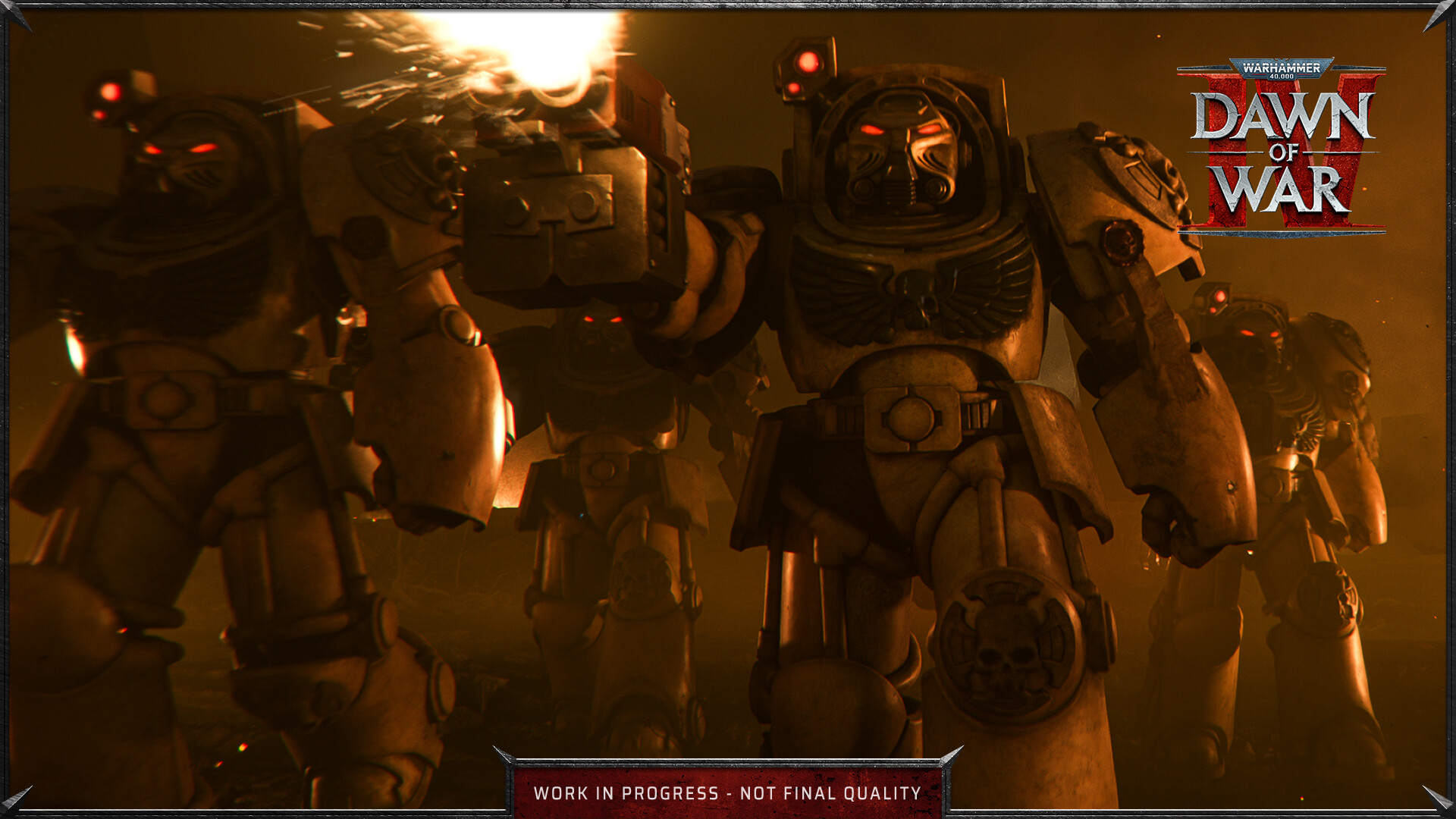
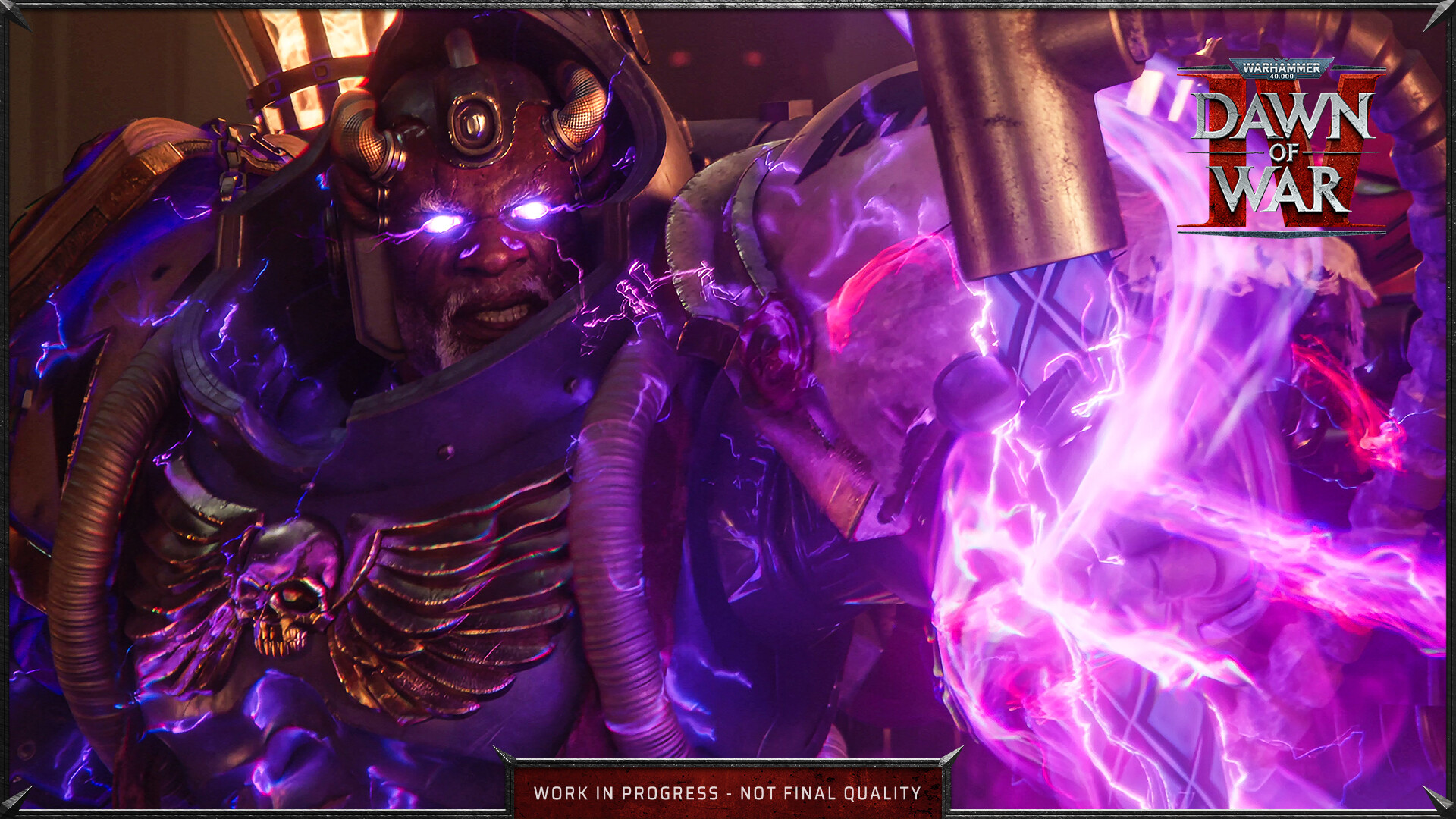
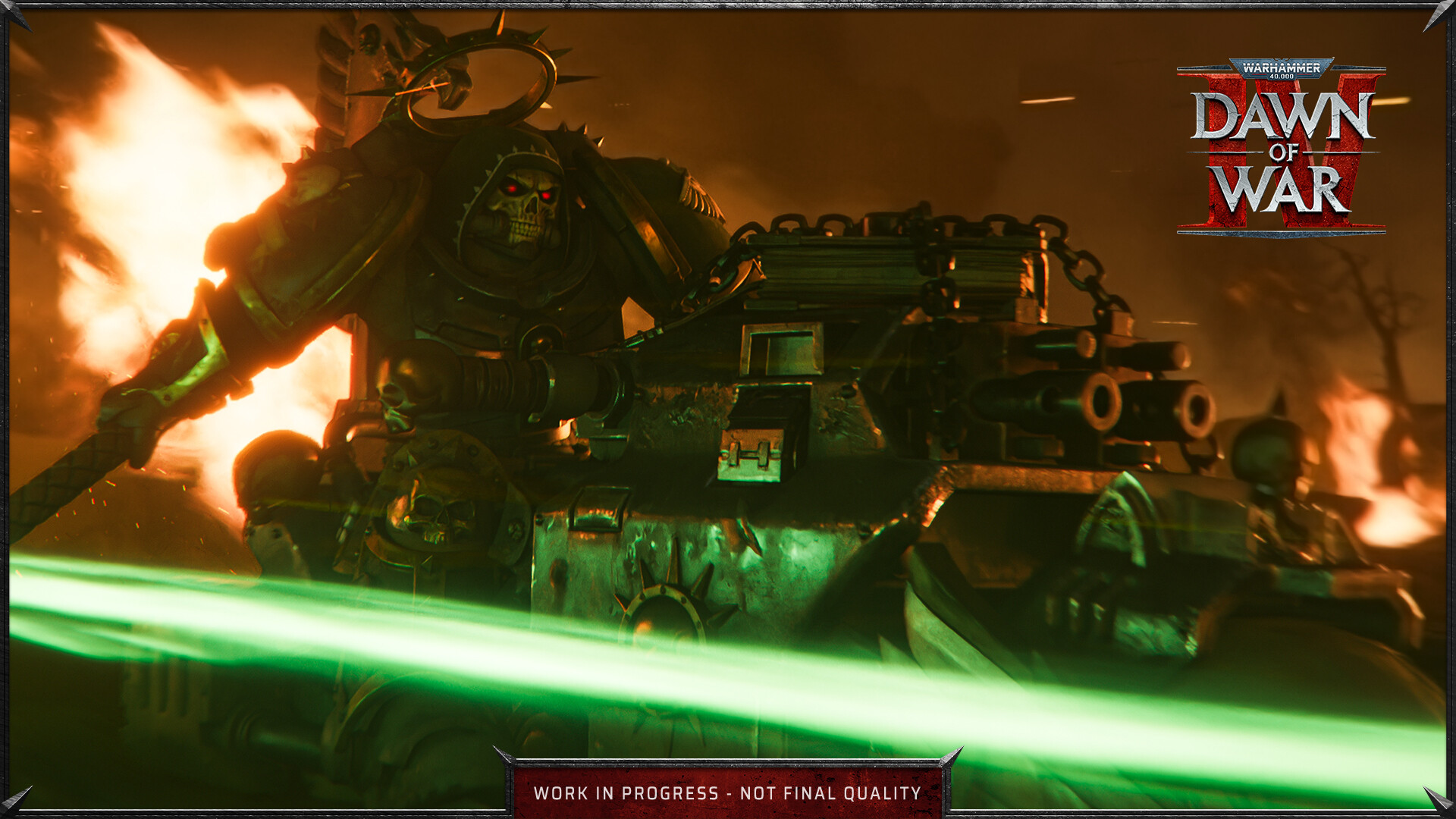
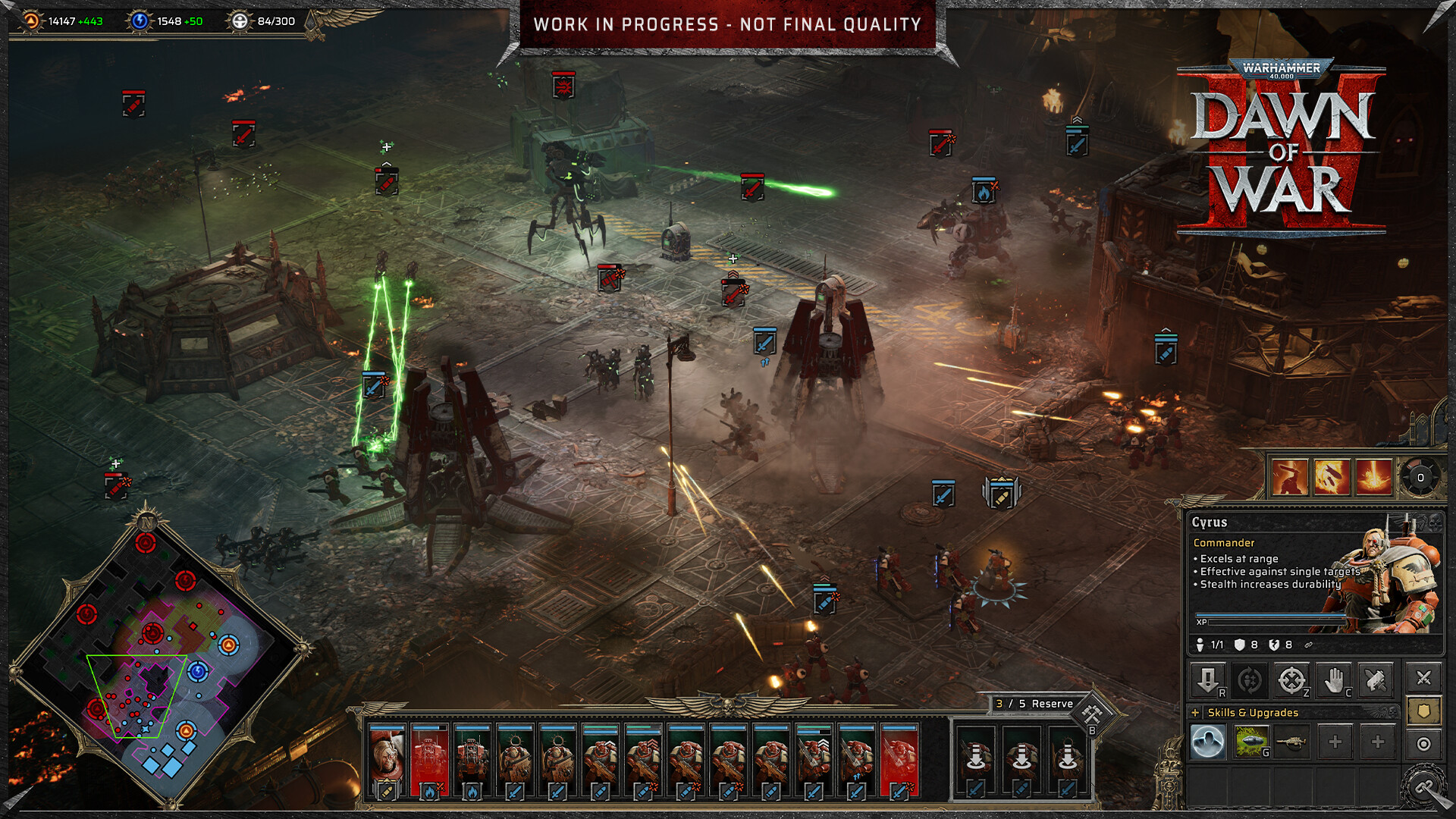


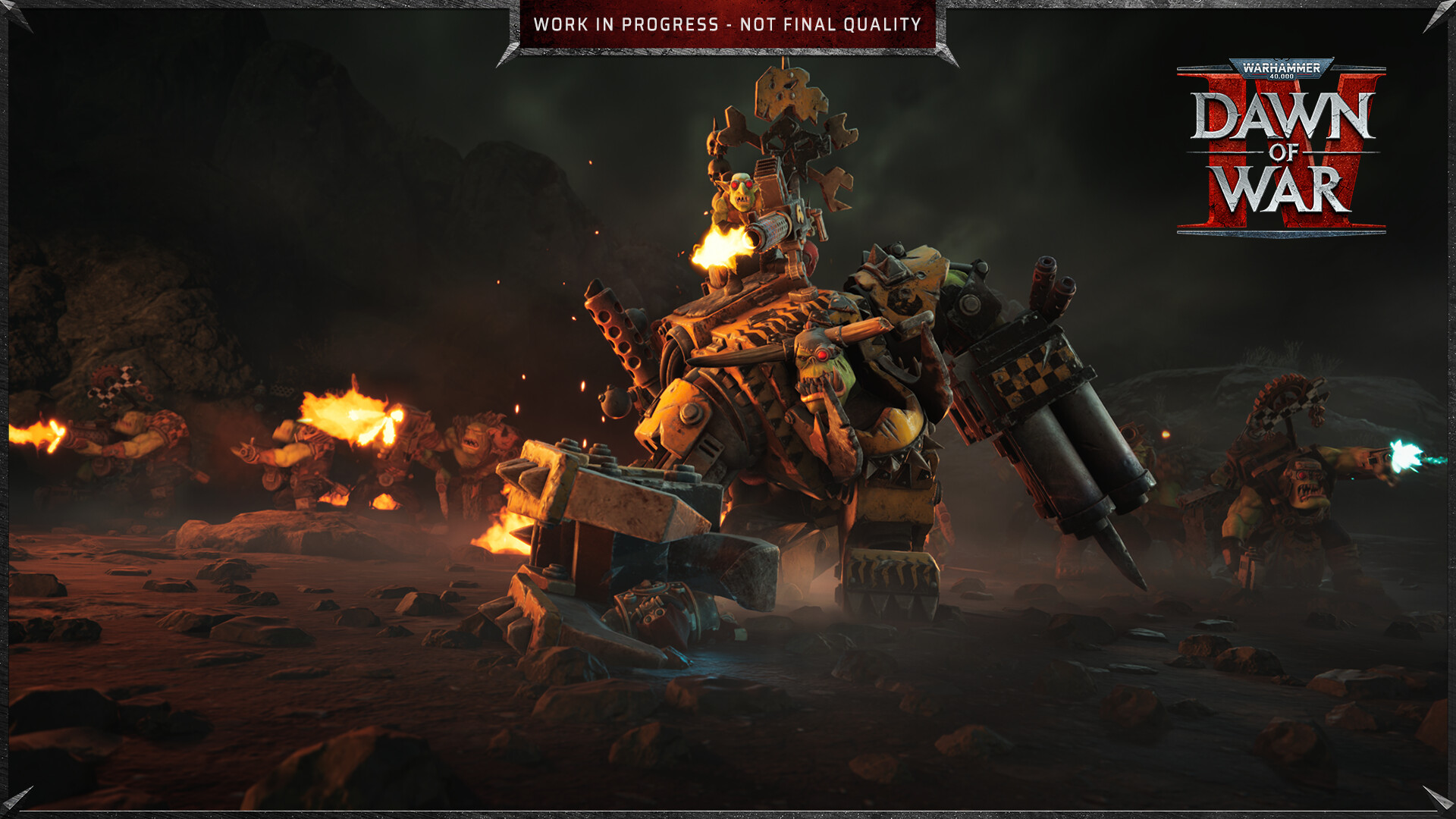

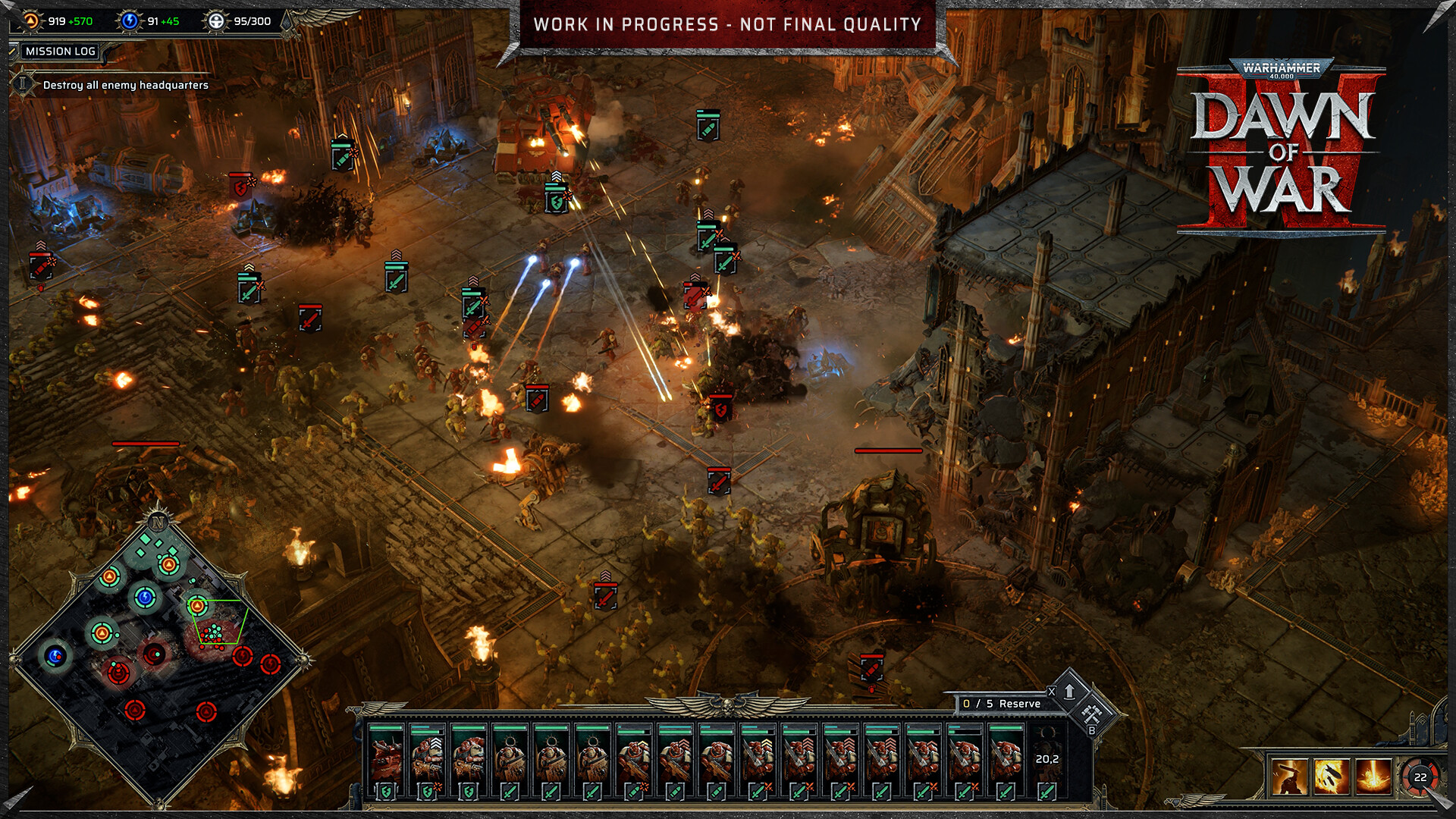
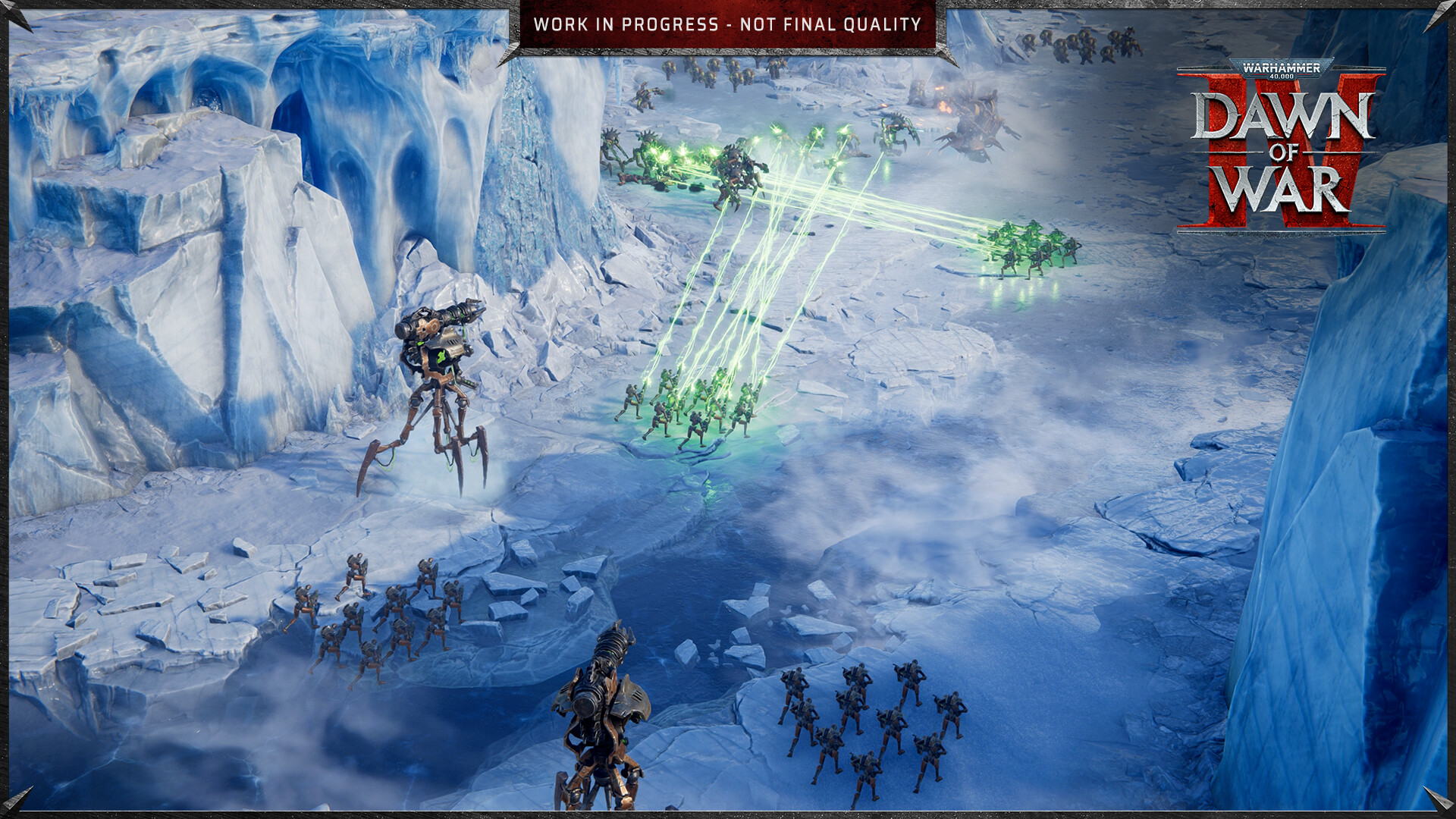
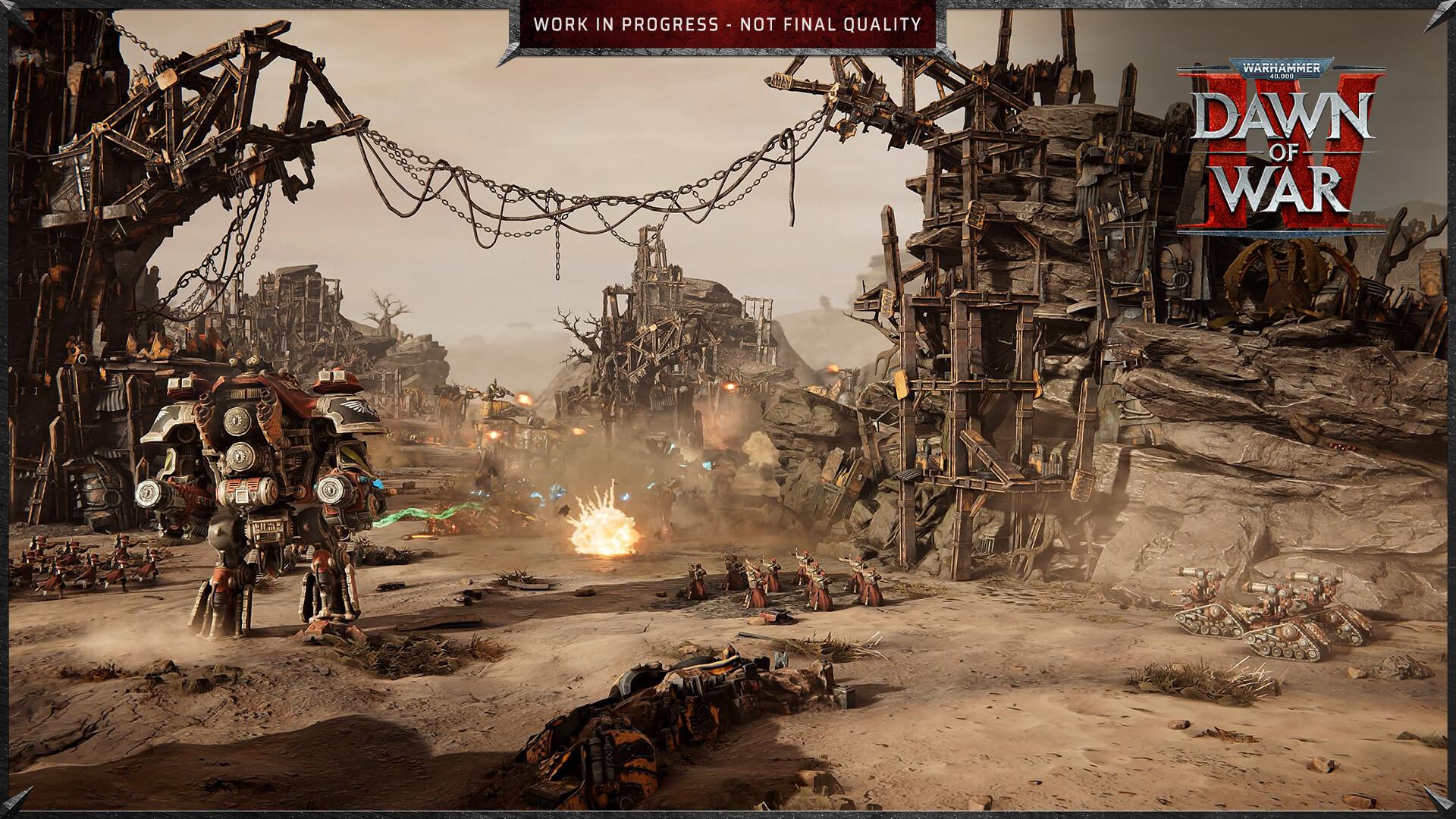
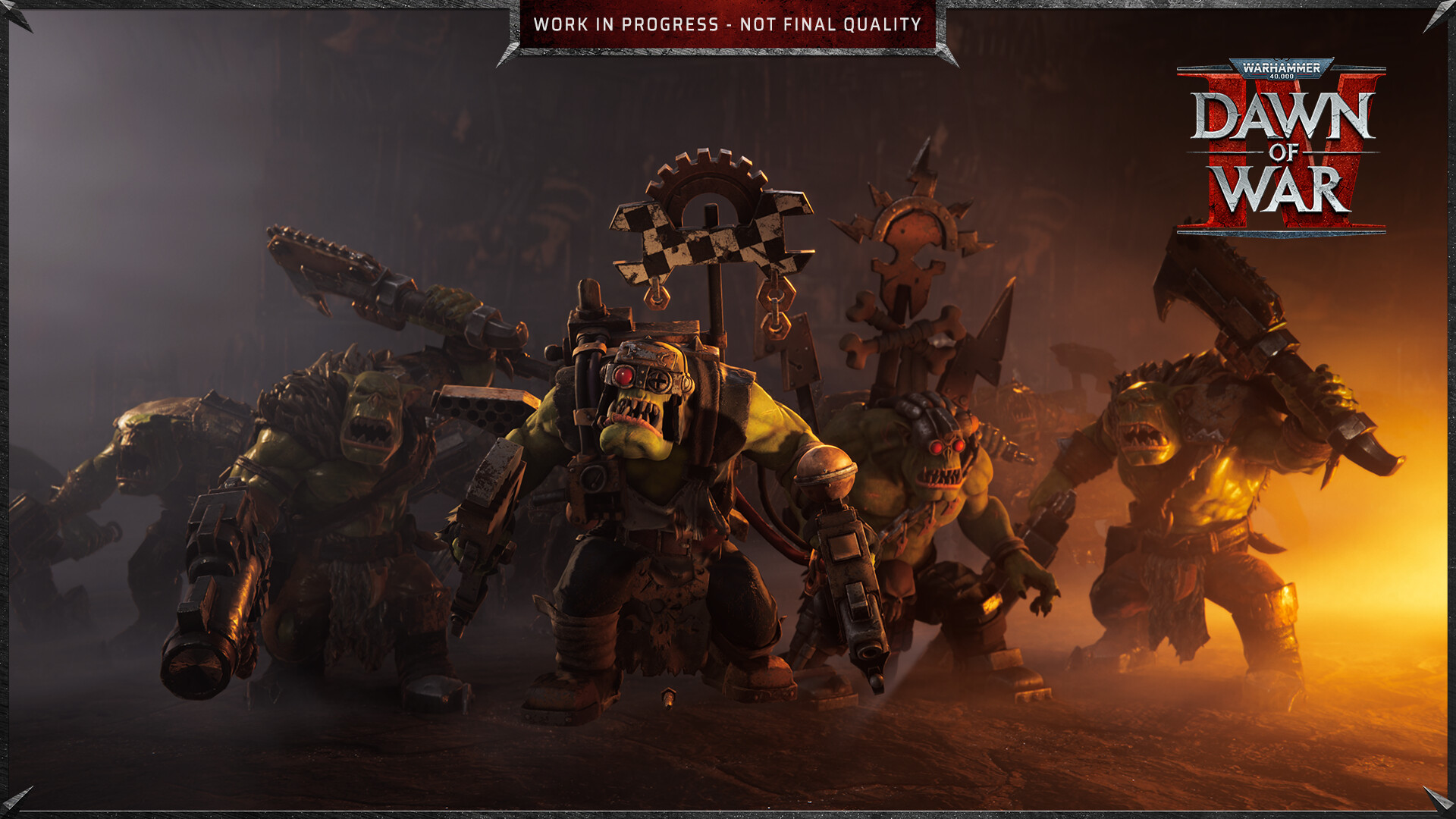
Screenshots via the game’s Steam store page · © their respective rights holders.
What's confirmed
Everything in this section comes from Deep Silver, KING Art Games, the Warhammer Skulls press release, the official Steam listing or the developers' own Battlefield Report matches. Where the studio has given a number, it's here as stated.
Who's making Dawn of War IV — Deep Silver and KING Art
DoW4 is developed by KING Art Games (KING Art GmbH, Bremen — the Iron Harvest studio) and published by Deep Silver, a division of PLAION, under a Games Workshop licence. Relic Entertainment, which made the previous Dawn of War games, is not involved — Relic became independent in a 2024 management buyout from Sega. This is the Dawn of War series' first mainline entry since Dawn of War III in 2017, and the first not made by Relic. KING Art says it has been in development for roughly four years.
Back to the RTS series' roots
Creative director Jan Theysen has described DoW4 as a modern take on the original Dawn of War — a return to the RTS series' roots with deeply satisfying strategy gameplay: large armies, base-building, and resource and research management, a step away from Dawn of War III's hero focus. A cover system rewards positioning, so troops in cover take less damage, while the headline new mechanic — the Combat Director — is billed as an evolution of the original's Sync Kill system, driving more detailed, visceral melee animations. The loop is classic Dawn of War: capture resource points across the map, expand your base, and push into enemy lines to overwhelm your opponents.
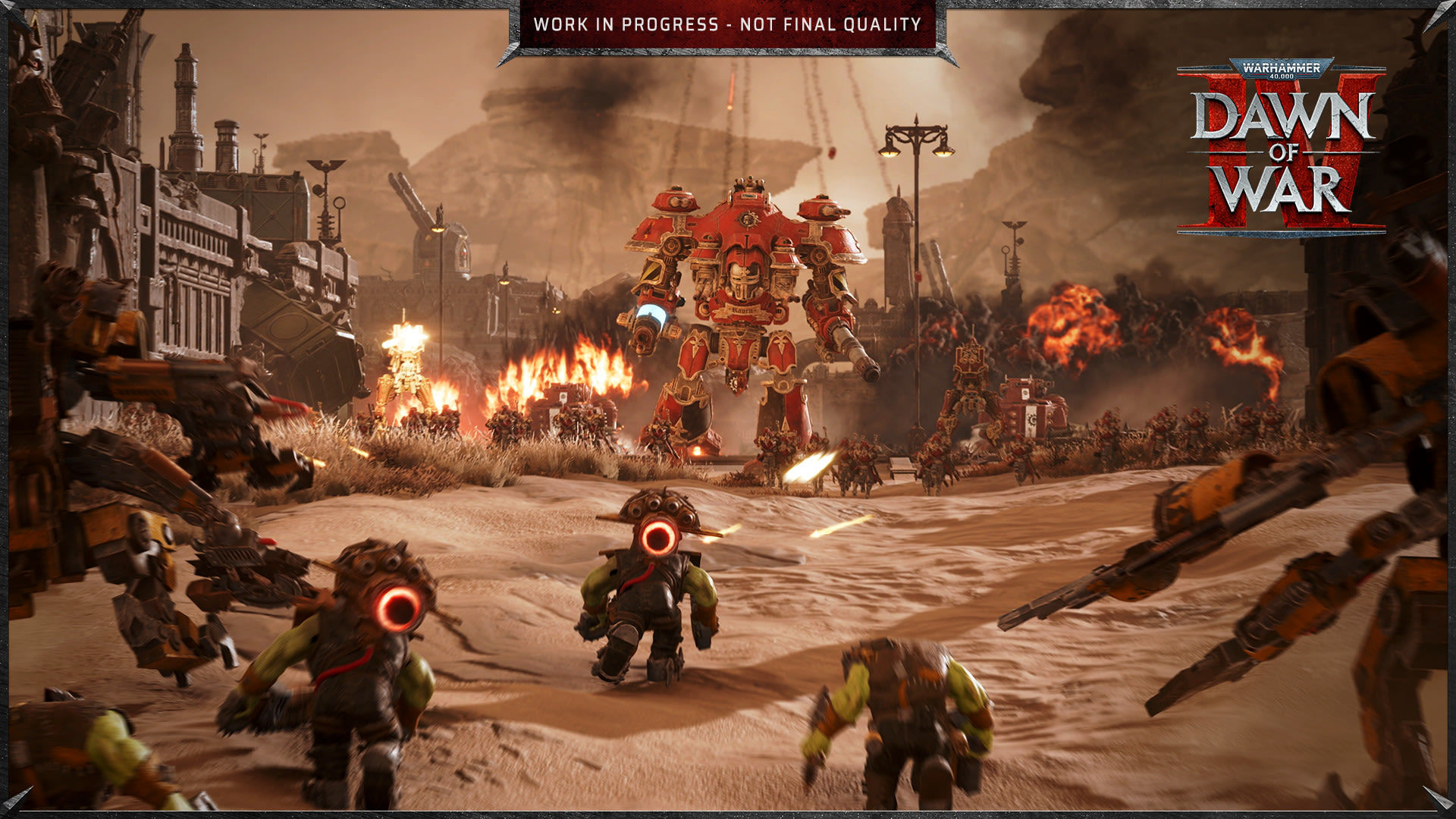
Dawn of War IV — press image (Deep Silver / KING Art).
Multiplayer and modes
Beyond the four faction campaigns — playable solo or in co-op — DoW4 ships a full slate of modes: Skirmish against configurable AI, the returning fan-favourite Last Stand (back from Dawn of War II, redesigned to be less hero-centric), and competitive multiplayer in 1v1, 2v2 and 3v3, plus free-for-all. In the developers' own Battlefield Report, a 1v1 on a small map finished in about 20–25 minutes; Theysen notes that big maps and free-for-alls can run up to an hour. An Army Painter lets you restyle your forces — you can play any Space Marine Chapter you like in multiplayer — and a Mission Editor arrives free after launch for player-created content.
The four factions
You take command of four factions at launch, and each has a genuinely different economy and base-building rule set: the Space Marines (Blood Ravens, joined by the Dark Angels as a second playable Chapter), the Orks, the Necrons, and the Adeptus Mechanicus in their series debut. The Orks are a cheap, snowballing horde who can build almost anywhere; the Adeptus Mechanicus are a fragile, long-ranged army whose whole power curve hangs on their Noosphere Network; the Necrons, awakening from a 60-million-year slumber, don't use requisition or power at all; and the Space Marines are the elite, few-but-powerful defenders of humanity who drop their reinforcements in from orbit. Between them there are 110+ units, buildings and vehicles, many of them upgradeable. See Faction mechanics for how each one actually plays.
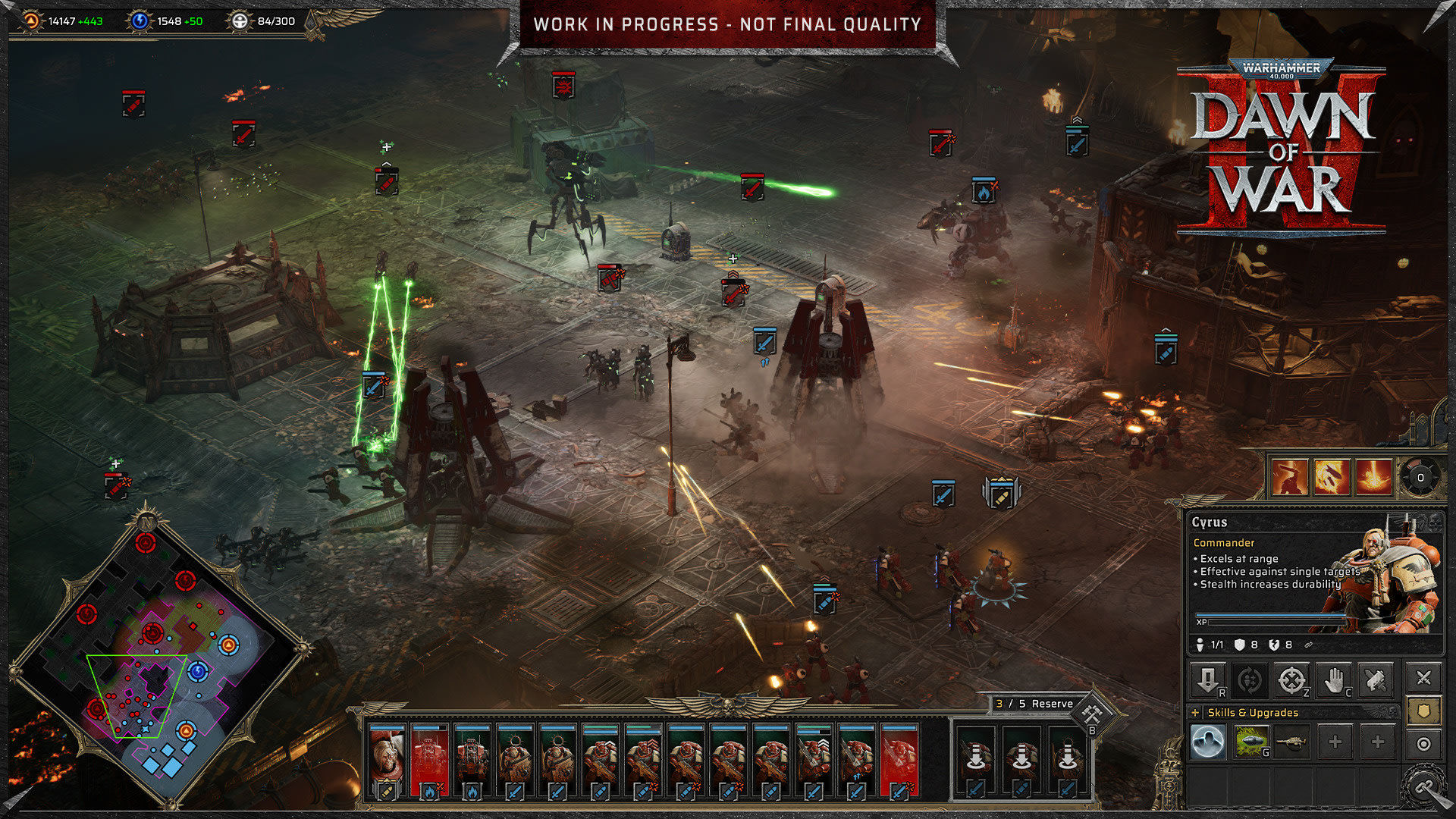
Dawn of War IV — press image (Deep Silver / KING Art).
Campaign structure
Each faction has its own dedicated campaign, set on Kronus around 200 years after Dark Crusade and co-written by Black Library author John French, weaving in returning characters like Cyrus, Jonah and Warboss Gorgutz. The four campaigns can be played in any order, though the story runs chronologically as Orks, then Mechanicus, then Necrons, and finally the Space Marines. Altogether they span 70+ missions with non-linear, branching choices, and in the finale Lion El'Jonson descends to the battle as the first playable 40K Primarch in any game — a rare chance to wield the power of a Primarch. A fifth faction arrives with the post-launch Aftermath expansion but has not been named.
Economy and army: how a match plays
The two classic Dawn of War resources return — requisition and power — generated by nodes spread across the map rather than tucked inside your base, so territory control drives your economy. Requisition points can be upgraded into emplacements that shoot back; power nodes cannot defend themselves, and if enemy infantry captures one they inherit every generator built on it, intact. Expansion has diminishing returns — each additional point you hold pays out slightly less — and a large army carries upkeep, so over-expanding is a real trap.
Squads can be pulled back with a retreat order (they run to the nearest production building) and reinforced in the field; an auto-reinforce toggle keeps them topped up automatically at a heavy resource cost. Units carry veterancy, gaining experience and abilities as they fight, so losing a levelled squad stings. You can kit squads out with different weapon loadouts to shift their role between anti-infantry and anti-armour, and spend banked resources on faction stratagems — the Space Marines' orbital bombardment is their strongest, and it damages your own units too. Crucially, research costs no resources at all, only time: the skill is in the order you take it. The hands-on demo ran a population cap of 300, far higher than past games — though how close a faction gets to it depends on whether it fields a few elites or a green tide.
Editions, price and the Year One pass
Two editions are on pre-order at a 10% discount. The Standard Edition ($59.99) is the base game. The Commander Edition ($89.99) adds a 3-day early unlock (playable Sept 14), the digital soundtrack, and both Year One expansions — the Blood Ravens Story Prologue and the Aftermath expansion (the fifth faction). Both expansions are also sold separately, and KING Art has promised a year of free updates alongside them, including the return of Crusade Mode, new maps, new Commanders and the Mission Editor.
Sources. Warhammer Community reveal (Aug 19, 2025) · KING Art announcement · Deep Silver official page · Steam · Release date (Gematsu, May 21, 2026) · Story trailer / Primarch (Deep Silver, Dec 2025) · Battlefield Report: Space Marines vs Orks (Jul 1, 2026) · Battlefield Report: Necrons vs Adeptus Mechanicus (Jul 9, 2026) · Wikipedia overview.
Faction mechanics
The two Battlefield Report matches are the clearest look yet at how DoW4's factions differ — and the differences run deeper than unit rosters. Every faction obeys a different rule for where it can build and what it spends. Everything below is stated on camera by Jan Theysen or Elliott Verbiest.
Space Marines — elite, power-hungry, and dropped from orbit
Few units, each much stronger one-on-one. Their weakness is economic: Space Marines are power-hungry, which is precisely why the Ork counter-play is to seize and hold power nodes. Their signature trick is the reserve — you can produce units straight into orbit rather than onto the map, then drop them anywhere you like via the Thunderhawk Relay and drop pods, turning reinforcement into a surprise flank. They can also drop a Hammerfall Bunker onto a contested position on the spot, instantly fortifying ground the enemy thought was theirs. Squads re-equip between auto bolt rifles, swords and grenade launchers depending on what they're facing. Their ultimate stratagem, orbital bombardment, is the hardest hit in the game — and it hurts your own troops caught in the blast.
Orks — quantity, snowball, and base-crawling as a strategy
"It's all about quantity over quality," as Verbiest puts it, and the Orks are explicitly designed to snowball — the longer they survive, the stronger they get. The structural quirk: almost every Ork infantry unit can build structures anywhere on the map, and Ork buildings are cheap and armed. Verbiest calls this "base crawling as a legitimate strategy" and used it to plant a second HQ deep in contested territory mid-match. The Bomb Squig Pen is a fortification that automatically breeds Bomb Squigs and hurls them at anything in range — dangerous even to Space Marines. And the WAAAGH! meter fills as Orks fight and die; at maximum WAAAGH!, the entire Ork arsenal unlocks, up to and including the Gorkanaut.
Adeptus Mechanicus — the Noosphere Network is the whole faction
Built by Cybernetica Datasmiths, the Noosphere Network is not a passive buff — it's a levelling system. Every new building placed within range of the existing network raises the network level, and a higher level means cheaper production, stronger turrets, bigger squads, better weapons and unlocked research. Theysen reached level 8 mid-match and then kept expanding purely because "even bigger means even cheaper units." The catch: it's breakable — destroy the buildings and the network de-levels. Their second trick is Auger Vision, a heat-map that shows enemy movement through the fog of war, making them almost impossible to ambush — though it refreshes on a slight delay, which is the crack a teleporting opponent can exploit. Stratagems include a gravity pulse and a solar pulse that strips enemy defences across the whole field and negates cover. Fragile in melee: bind their Skitarii in close combat and their best weapons go silent.
Necrons — no requisition, no power, only Dominion
The most radical faction in the game. The Necrons do not use requisition or power. They have a single resource, Dominion, earned by spreading the Power Matrix — a creeping field radiated by nearly every Necron structure. The further you push it across the map, the more Dominion you earn (up to a cap), and Necron units standing on the matrix regenerate health and replace losses faster. Cheap Convergence of Dominion structures exist purely to spread it quickly — and they are the faction's glass jaw, since destroying them starves the Necron economy outright.
Necrons are powerful but slow, and they solve that with teleportation: Canoptek Spyders plant Tomb Pylons anywhere on the map, and units held in reserve in the Tomb Citadel can be deployed to any pylon instantly. The endgame Monolith teleports itself and then acts as a mobile pylon. Then there are the Resurrection Galleries: assign one unit type to a gallery and that unit rebuilds itself, free, every time it dies — and the more of them die, the faster the resurrection runs. Destroy the gallery and that unit type stops coming back. Necrons also ignore cover entirely, and their smaller turrets can teleport, letting you shove your defences forward with the front line.
How you beat each of them
Counter-play as demonstrated by the developers in the two Battlefield Report matches (July 2026).
Locked in vs still open
The honest split — what the studio has committed to, and what a tracker shouldn't pretend to know yet.
- Release — December 3, 2026 (Advance Access from November 30 with Commander Edition)
- PC / Steam (Windows)
- KING Art Games + Deep Silver
- Four named factions: Space Marines, Orks, Necrons, Adeptus Mechanicus
- Faction mechanics: Dominion, Noosphere Network, WAAAGH!, orbital reserves
- Multiplayer 1v1 / 2v2 / 3v3, with generic commanders
- 70+ mission campaign; Lion El'Jonson playable
- Pricing: Standard $59.99 · Commander $89.99
- Year One: Blood Ravens Prologue + Aftermath expansion, free Crusade Mode & Mission Editor
- The fifth (Aftermath) faction's identity
- Game engine
- PC system requirements
- Any console version (PC-only so far)
- Public alpha/beta dates (sign-up only for now)
- Exact Year One expansion release dates
- Final population cap outside the demo build
More Dawn of War IV videos
Videos via YouTube · they only load when you press play.
FAQ
When does Dawn of War 4 come out?
December 3, 2026, on PC via Steam. Commander Edition buyers keep their 3-day early unlock and can play from November 30. The launch was originally set for September 17 at the Warhammer Skulls Showcase on May 21, 2026; KING Art moved it back on August 12, 2026.
Is Relic making Dawn of War 4?
No. The first three games were Relic's, but DoW4 is developed by KING Art Games (the Iron Harvest studio) and published by Deep Silver. Relic became independent in a 2024 management buyout from Sega and isn't attached to this game.
What factions are in it?
Four at launch: the Space Marines (Blood Ravens, plus the Dark Angels as a second playable Chapter), the Orks, the Necrons, and the Adeptus Mechanicus — the last making their Dawn of War debut. A fifth, still-unnamed faction comes with the post-launch Aftermath expansion.
How are the Necrons different from the other factions?
They don't use requisition or power at all. The Necrons run on a single resource, Dominion, which they earn by spreading a Power Matrix across the map from their structures — the further it spreads, the more they earn, and their units regenerate faster while standing on it. They also rebuild dead squads for free through Resurrection Galleries, and teleport their slow army around the map using Tomb Pylons and the Monolith.
What is the Noosphere Network?
It's the Adeptus Mechanicus's core mechanic. Every building placed within range of the existing network raises its level, and a higher network level makes units cheaper to produce, turrets stronger, squads larger and new research available. It can be broken — destroy the buildings and the network de-levels — which is the main way opponents fight the Mechanicus.
Can you really play as a Primarch?
Yes. Lion El'Jonson, Primarch of the Dark Angels, is the first playable Warhammer 40,000 Primarch in any video game. KING Art says he has a small but pivotal role in the campaign's finale, rather than being playable in every mission. Note that in skirmish and multiplayer, commanders will be generic rather than named characters.
What platforms is it on?
PC (Steam, Windows) is confirmed for launch. No console version has been announced.
How much does it cost, and what's in each edition?
The Standard Edition is $59.99 (base game). The Commander Edition is $89.99 and adds a 3-day early unlock, the digital soundtrack, and both Year One expansions — the Blood Ravens Story Prologue and the Aftermath expansion. Both were on pre-order at a 10% discount.
Is there a beta?
No public beta has been dated. KING Art and Deep Silver say alpha/beta testing opportunities will be shared through the Dawn of War IV newsletter and Discord. When one is announced, it'll appear in the update log above.
Does it go back to the classic base-building style?
That's the stated intent. Creative director Jan Theysen has framed DoW4 as a modern interpretation of the original Dawn of War — base-building, large armies, cover and squad-based combat — rather than Dawn of War III's hero focus. The Battlefield Report matches bear it out: capture points, expand, research, and push.
© Games Workshop. Warhammer 40,000: Dawn of War IV, the War IV logo, and all associated logos, names, races, characters and their distinctive likeness thereof are trademarks of Games Workshop, variably registered around the world, and used under licence. The KING Art logo and all other trademarks and respective logos remain the property of their respective owners.