
Warlock: Dungeons & Dragons — everything we know
Everything that’s known about Warlock: Dungeons & Dragons, the single-player action-adventure from Invoke Studios and Wizards of the Coast, in one place, updated as news drops. You play Kaatri, a weapons master who buys her way to magic with a pact, in Darkon — a Domain of Dread whose Dark Lord is rumoured to have walked out. The Warlock Dungeons and Dragons game is due in 2027 for PC, PlayStation 5 and Xbox Series X|S. There is still no release date, and nobody has named a price. This page is for anyone deciding whether Warlock is worth following: it separates what Invoke Studios and Wizards of the Coast have actually confirmed from what has been assumed around them, flags every open question rather than filling it in, and is updated each time something new lands.
Where things stand
Warlock: Dungeons & Dragons news and updates
The short-form series carried on with a third clip on 5 September at 16:00 UTC — the same slot Exploration and Combat used on 31 August and 1 September. The caption reads, verbatim: “Harness forbidden magic to unleash your creativity.” Unlike the first two, it was posted only to the game’s own social account and never appeared on the YouTube channel, so there is nothing to embed here. Nothing else moved: the release is still the bare year 2027, with no month and no quarter attached, on the store page and on the official site alike.
Wizards has kept a steady drip running since the gameplay reveal at Opening Night Live. Two more videos went up on the official channel inside four days: “Warlock: Dungeons and Dragons – Exploration” on 31 August and “Warlock: Dungeons and Dragons – Combat” on 1 September, following “A Dangerous Pact” on 28 August and the developer and creator roundtable on 27 August. None of them attaches a date to the game. Steam still reads 2027 — no month, no quarter — and Invoke has not narrowed it.
The morning after the reveal, the Steam page carries a release date of “2027” with no month attached, no price, no demo, no Steam Deck rating, and system requirements where every single field reads TBD. Two trailers are up. The listing is Windows-only; the console versions live elsewhere.
The first gameplay ever shown, and it answered the two questions the teaser left open: where the game is set, and what kind of game it is. Darkon, and an action-adventure — not an RPG. Tasha opens the reveal by teaching Kaatri to sense Raw Magic; the demo then moves into a settlement called Grekshak, rumoured to be hiding people in a cellar.
Invoke used the run to make a point about agency: nothing in the eight minutes is a scripted story beat. The player finds a side quest, walks into the dungeon under the settlement, decides to bail out rather than fight a Death’s Kiss, then chooses to take on an ogre zombie for the Raw Magic it is sitting on — summoning rain with a Downpour ritual first so a Witch Bolt would ricochet between soaked enemies. Studio head Dominic Guay: “we don’t see any kind of forced beat.”
Wizards of the Coast confirmed at Gen Con 2026 that Kaatri’s patron is Tasha, played through voice and performance capture by Maggie Robertson — Lady Dimitrescu in Resident Evil Village, Orin the Red in Baldur’s Gate 3. The same appearance set the date for the gameplay reveal: 25 August, at gamescom.
Wizards of the Coast and Invoke unveiled Warlock: Dungeons & Dragons alongside The Game Awards with a cinematic teaser: an original third-person single-player action-adventure in a dark fantasy open world, Tricia Helfer performing Kaatri, in development for PC, PlayStation 5 and Xbox. The press release promised gameplay in summer 2026 and a launch in 2027 — both of which held.
Invoke general manager Dominic Guay framed it as a first: the studio’s debut game, and one of the first AAA titles Wizards is making in-house rather than licensing out.
Warlock: Dungeons & Dragons screenshots
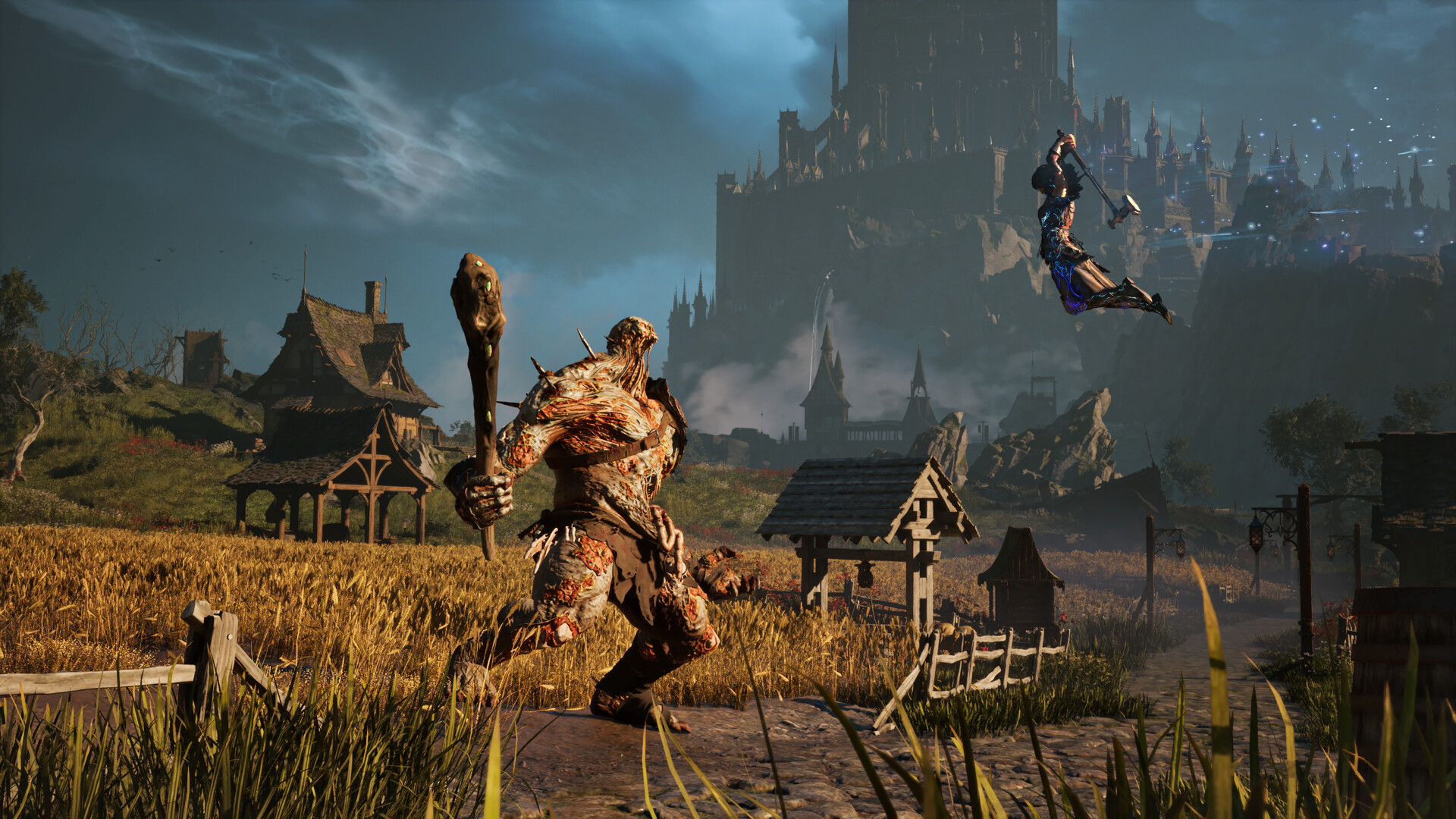
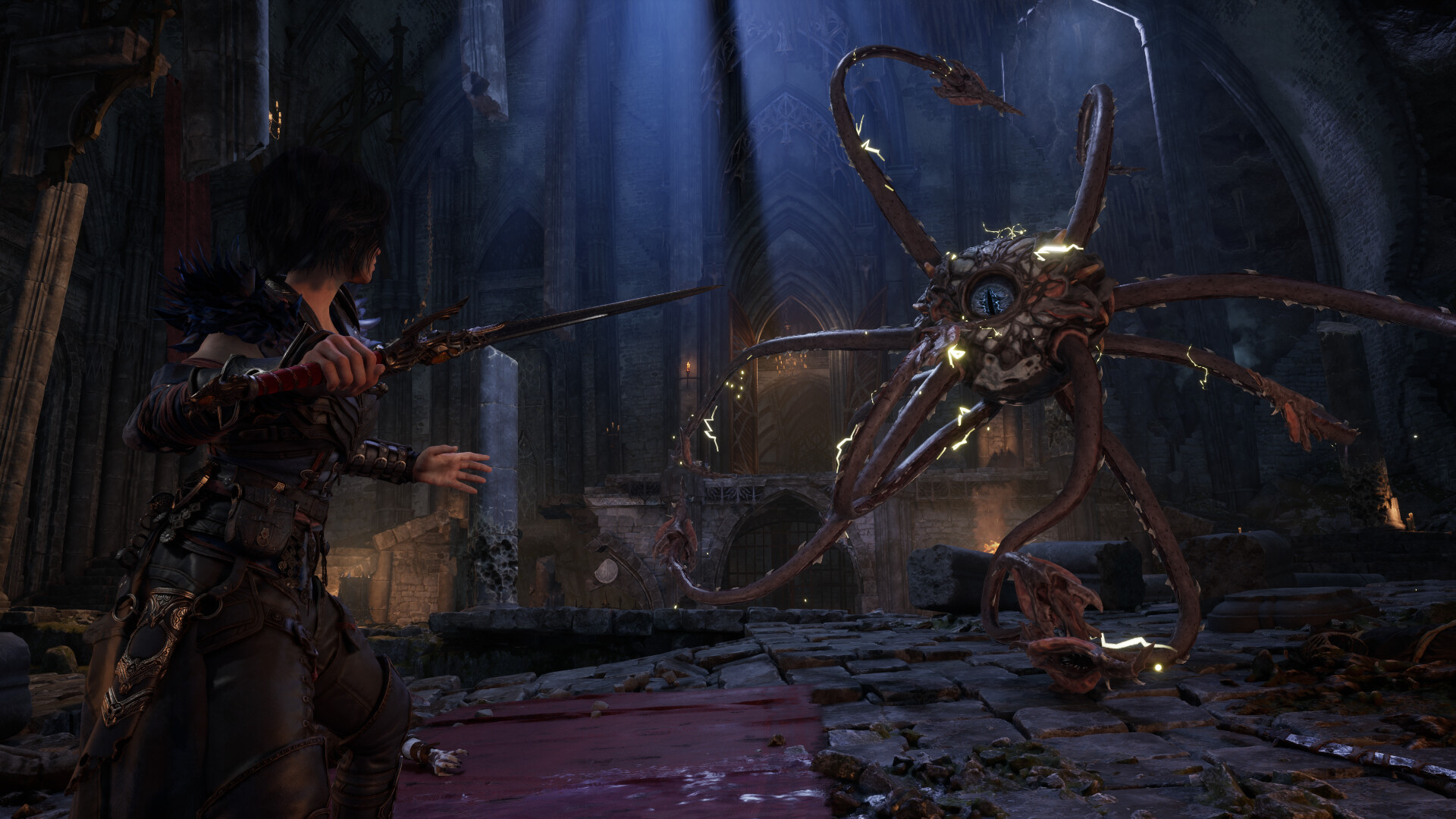
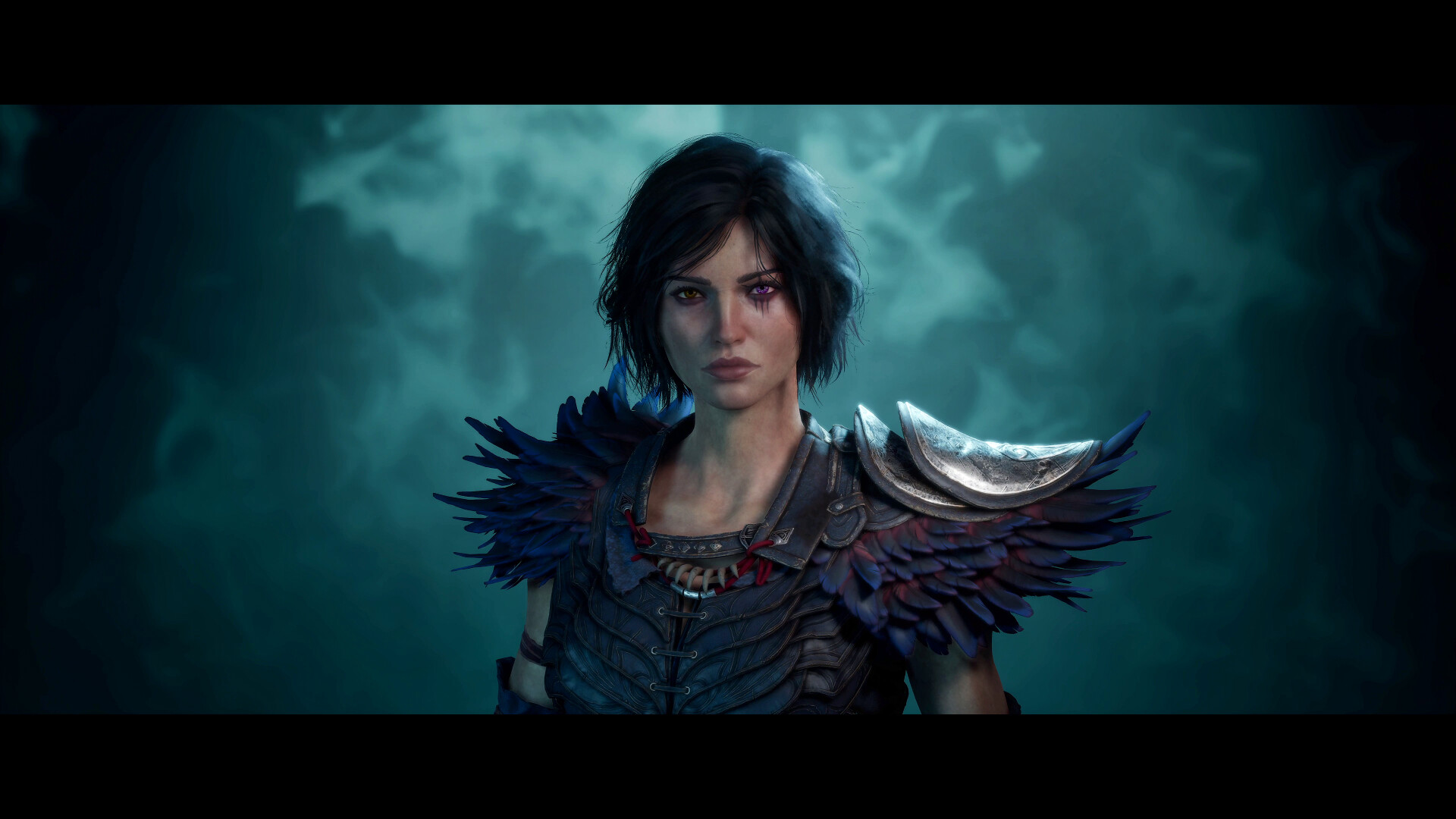
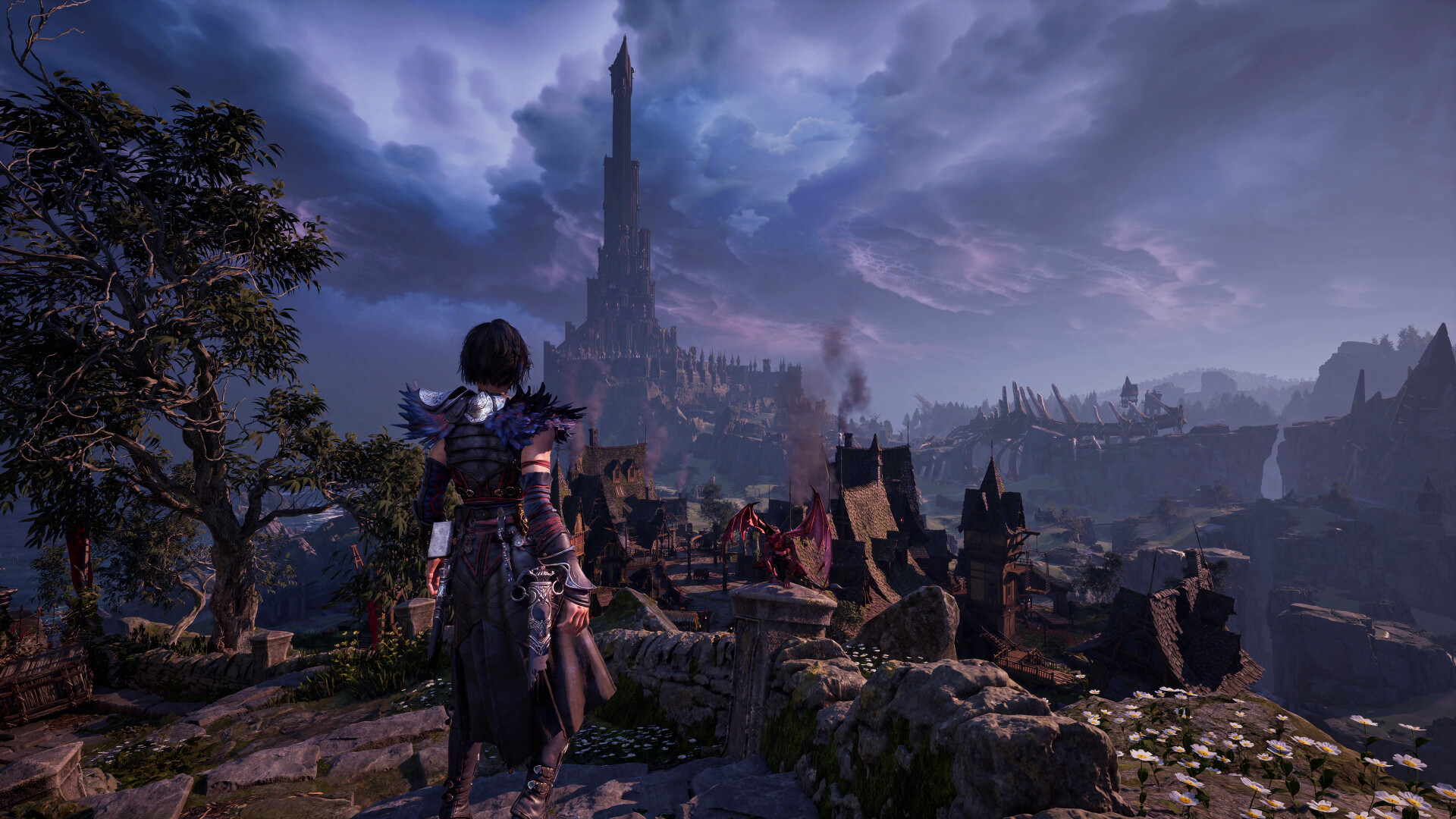
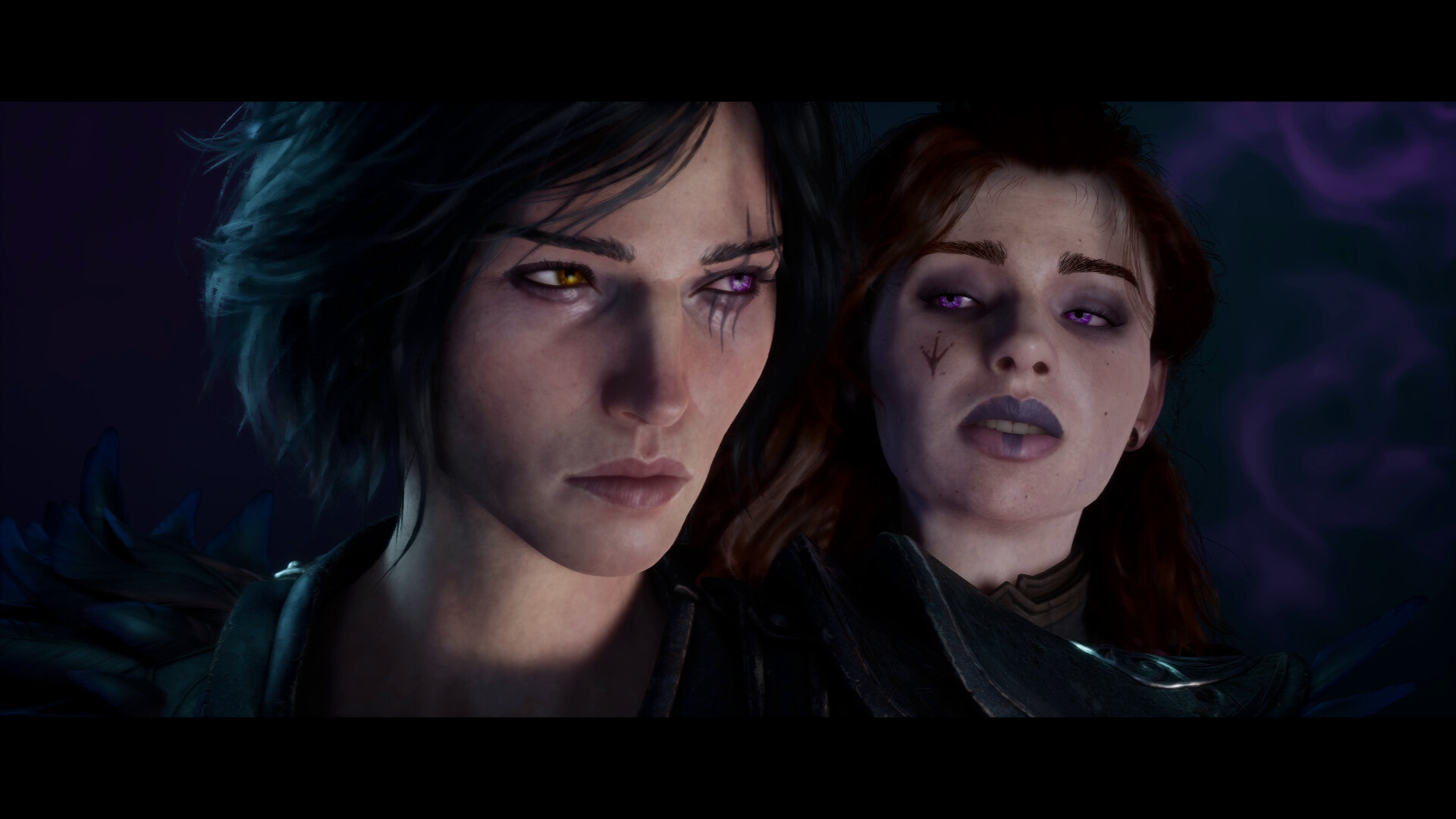
Screenshots via the game’s Steam store page · © their respective rights holders.
What’s confirmed about Warlock: Dungeons & Dragons
Here’s what Invoke, Wizards of the Coast and the Steam listing have actually put on the record — the setting, the pact, how magic works, what progression looks like — with the open questions flagged at the end. Wizards’ own store pitch sets the tone, and it is worth reading as marketing rather than fact: play Kaatri in a D&D-inspired open world and wield forbidden magic to bend the rules around you, where across exploration and combat every challenge is a test of creativity, preparation and cunning. The Epic Games Store listing carries a longer version of the same copy: Kaatri uses clever spellcraft to explore the world, overcome challenges and defeat monsters in creative ways, summoning otherworldly melee weapons of unique tactical value while facing the malevolent creatures lurking in the shadows. That is a video game description rather than a spec sheet, but it is the publisher’s own words, and it lines up with what the reveal actually showed. What follows is the part that is actually documented.
Darkon — the part of D&D nobody adapts
Warlock is not set in the Forgotten Realms, and Invoke is blunt about it. Darkon is a Domain of Dread: one of the pocket realms sealed off behind impenetrable mist that people spend their lives trying to escape, not enter. Kaatri walks in on purpose, looking for someone she cares about, which makes her a stranger in a strange land and the player a stranger alongside her. The twist Invoke has built the premise on is that Darkon’s Dark Lord — the thing that normally rules a Domain of Dread — is rumoured to have escaped, leaving the land leaderless and, in VP of Creative Jeffrey Hattem’s words, “on the brink.” Skev, an imp who actually lives there, tags along to explain the place; Invoke says he is not just commentary and carries gameplay utility too.
The pact — a shortcut with a bill attached
Kaatri is a seasoned weapons master, not a scholar. Where a wizard studies for years and a cleric prays, a warlock bargains, and that is the whole hook: Kaatri takes the shortcut to power because her goal will not wait. Her patron is Tasha, an ancient witch queen and one of D&D’s most recognisable figures, brand new to this story and performed by Maggie Robertson. The two talk through a telepathic bond, constantly. Invoke describes Tasha as chaotic, with intentions that are often unclear, and says the pact holds only because their interests happen to line up. Wizards of the Coast president John Hight put the frame on it at announcement: warlocks wield powerful, otherworldly magic, “but it always comes at a cost.”
Magic is a toolbox, not a hotbar
The design idea Invoke keeps returning to is that a spell is a tool you can point at any problem, not an ability with one sanctioned use. The reveal made the case by using the same spells twice in different jobs: Black Tentacles ripped a weapon out of an ogre zombie’s hands in one shot and formed a makeshift platform up a wall in another. Six spells from the tabletop have been named so far — Eldritch Blast, Gust of Wind, Levitate, Black Tentacles, Witch Bolt and Fae Switch, the last a 4th Edition spell rebuilt for real time that swaps Kaatri’s position with a monster’s. Two are new to the game: Tasha’s Leash, ethereal tendrils that grab objects or enemies and pull or throw them, and the Downpour ritual, which soaks the ground so lightning does more work. Cantrips can be used whenever; the heavier spells run on cooldowns and slow time while you aim them. Three more spells are named on the official site that we had not listed: Misty Step and Otherworldly Leap among the cantrips, and Fey Switch as an advanced spell — and Wizards is explicit that this is partial, saying only part of Kaatri’s spell list is shown. The teaser series that ran up to the reveal was built the same way, one spell at a time: Fey Switch on 22 August, Witch Bolt on the 23rd, Gust of Wind on the 24th and Levitate on the morning of the 25th, hours before the gameplay reveal itself.
Melee and magic — Pact of the Blade
Kaatri is a Pact of the Blade warlock, which in tabletop terms means she can conjure a weapon out of nothing, and in this game means she can summon one mid-fight. A hammer showed up in the reveal. Hattem describes combat as a dance: magic opens the gap, melee closes it. Finishing moves exist and there are a lot of them, but they are earned — which one you get depends on how far along you are and which spells you have picked up.
Progression — the good spells are optional
You level up, in the ordinary way: more stamina, more damage taken, more damage dealt. But the core of progression is magic, and most of it is found rather than granted. Raw Magic is scattered through Darkon; sensing it is the ability Tasha unlocks at the start of the reveal, and spending it is how spells get upgraded and reshaped to a playstyle. Guay called the consequence out himself, and called it a little scary as a developer: some of the best spells are entirely optional, so two players can finish the game with different toolkits and different memories of it. Gear works the same way — armour sets change how Kaatri looks and plays, and talismans and magic items synergise with particular spells. There is a limit, and Guay named it: she stays a weapons master turned warlock. “She won’t become an assassin.”
The open world — dense on purpose, and barely mapped
Invoke is a team of ex-Ubisoft open-world people — Far Cry, Watch Dogs, Guardians of the Galaxy, Deus Ex — and they say out loud that they wanted to change the formula they came from. The map is deliberately minimalistic: no waypoint chain, no icon carpet. The world is big enough to run from mountains to ocean but built for density rather than distance, because, as Guay put it, nobody should be looking at fifteen minutes of travel. Some areas only open once you own the right spell, which ties traversal to magical progression instead of to a key item. Difficulty modes are confirmed, precisely because how strong you are depends on how much you chose to explore.
What it is not
It is worth being clear, because the title invites the wrong expectation. Warlock is not a party-based CRPG and it is not Baldur’s Gate 4. There is no dice rolling, no character creation into a class of your choosing, no companions to build a party from, and Steam lists it as single-player only. Guay: “we’re not trying to simulate the D&D tabletop rule one-for-one.” The other side of that is a deliberate low bar for entry — Hattem says D&D knowledge should never be a barrier, the team keeps people with almost no tabletop experience on hand as a check, and the lore rewards are layered in as deep cuts for the people who will catch them.
Open questions
Everything about when and how much. No release date beyond the year, no price, no demo, no Steam Deck rating, and no system requirements — Steam lists OS, processor, graphics and additional notes, Epic adds a recommended column next to the minimum one, and every one of those fields reads TBD. Age ratings are further along than the Steam page suggests: the Epic Games Store listing shows an ESRB rating of Mature 17+ for blood and gore, intense violence, partial nudity and suggestive themes. There is still no PEGI rating. Steam’s own content flags name frequent violence or gore, strong language and partial nudity, and the storefront’s regional ratings put it at 18 in Germany and Brazil and mark it as banned in Indonesia. Nothing has been said about post-launch content, and no console-specific detail beyond the platform list.
Who Warlock: Dungeons & Dragons is for
Single-player, action-first, and at least a year out — here’s who that suits, and who is being sold the wrong game by the title.
- You want a systemic action game where spells are tools you combine, not buttons you rotate
- You liked the exploration-first, low-guidance end of the open-world genre
- Ravenloft and the Domains of Dread are the corner of D&D you always wanted adapted
- You are happy playing solo and want a single authored protagonist
- You want a party-based CRPG with dice, builds and a character creator
- You want co-op or multiplayer — Steam lists single-player only
- You need a date, a price or a spec sheet before you get invested
- You want the Forgotten Realms — this is a different, darker part of the setting
One wording change worth noting, because it will show up in older coverage: the December 2025 press release called Kaatri a “veteran warrior”, while every August 2026 description says “veteran weapons master”. Same character, sharper phrasing — not a redesign.
More Warlock: Dungeons & Dragons videos
Videos via YouTube · they only load when you press play.
Warlock: Dungeons & Dragons questions, answered
What is Warlock: Dungeons & Dragons?
An original third-person, single-player action-adventure game set in a dark fantasy open world inspired by Dungeons & Dragons, developed by Invoke Studios and published by Wizards of the Coast. You play Kaatri, a seasoned weapons master who makes a pact with the witch queen Tasha to wield otherworldly magic against dark powers. It was announced on 11 December 2025 and first shown in motion on 25 August 2026.
When is the Warlock: Dungeons & Dragons release date?
There isn’t one yet. The game is scheduled for 2027, and that is all anyone has said — no month, no quarter, no day. The Steam listing reads simply “2027”. The gameplay reveal on 25 August 2026 did not narrow it. This page updates the moment a date lands.
What platforms is Warlock coming to?
PC, PlayStation 5 and Xbox Series X|S. On PC it is listed on both Steam and the Epic Games Store. The Steam listing is Windows-only, with no macOS or Linux support claimed and no Steam Deck compatibility rating so far.
Is Warlock an RPG like Baldur’s Gate 3?
No, and Invoke says so directly. Warlock is a real-time action-adventure with RPG systems layered in — you level up, find gear and upgrade spells — but there is no dice rolling, no party, and no class you pick at a character creator. Studio head Dominic Guay: “we’re not trying to simulate the D&D tabletop rule one-for-one.”
Where is Warlock set?
In Darkon, one of Dungeons & Dragons’ Domains of Dread — not the Forgotten Realms or Greyhawk. A Domain of Dread is a realm sealed behind impenetrable mist that people usually want out of, not into. Invoke’s hook is that Darkon’s Dark Lord is rumoured to have escaped, leaving the land without a ruler.
Who is Tasha, and who plays her?
Tasha is Kaatri’s patron: an ancient witch queen and a long-running figure in Dungeons & Dragons lore, appearing here in a brand-new incarnation. She is played by Maggie Robertson, known for Lady Dimitrescu in Resident Evil Village and Orin the Red in Baldur’s Gate 3. Her role was confirmed at Gen Con 2026, in July.
Do I need to know Dungeons & Dragons to play it?
No. Invoke has designed around that explicitly — VP of Creative Jeffrey Hattem says D&D should not be a barrier to entry, and the team uses colleagues with little tabletop experience as a check on it. Kaatri arrives in Darkon as a stranger and learns the place as you do. Players who know the lore get deep cuts on top rather than a prerequisite.
Is Warlock multiplayer or co-op?
No. Steam lists Warlock as single-player, with full controller support and Family Sharing, and every description from Wizards of the Coast calls it a single-player action-adventure. No co-op or multiplayer mode has been announced.
Still open: a release date, a price, a demo, a Steam Deck rating, system requirements and a PEGI rating. This page updates the moment any of them lands.