
LORE LIBRARY VOLUME 01
The Ordering of Azeroth
Titans, Old Gods and a world remade.
The Ordering of Azeroth is the titans’ conquest and reshaping of a world ruled by the Old Gods. They defeated the elemental lords, imprisoned the Old Gods and reshaped the land. The Well of Eternity would empower life in the world that followed.
This guide is for World of Warcraft: Forever players starting Warcraft lore. You will learn who fought, how Azeroth changed and where to read the original Classic book. Knowing this history helps you understand titan ruins, the earthen and the buried threats you encounter in Azeroth. Classic history is the starting point; later lore is clearly labelled.
On this page
- Before the ordering: the Old Gods and the elements
- Who were the titans, the titan-forged and the keepers?
- The elemental lords and their imprisonment
- How Azeroth was reshaped
- The Well of Eternity: the older story and later additions
- The Old Gods and the Ordering of Azeroth: the original book
- Where this chapter sits on the timeline
- World of Warcraft: why the ordering still matters
- Sources and continuity notes
Before the ordering: the Old Gods and the elements
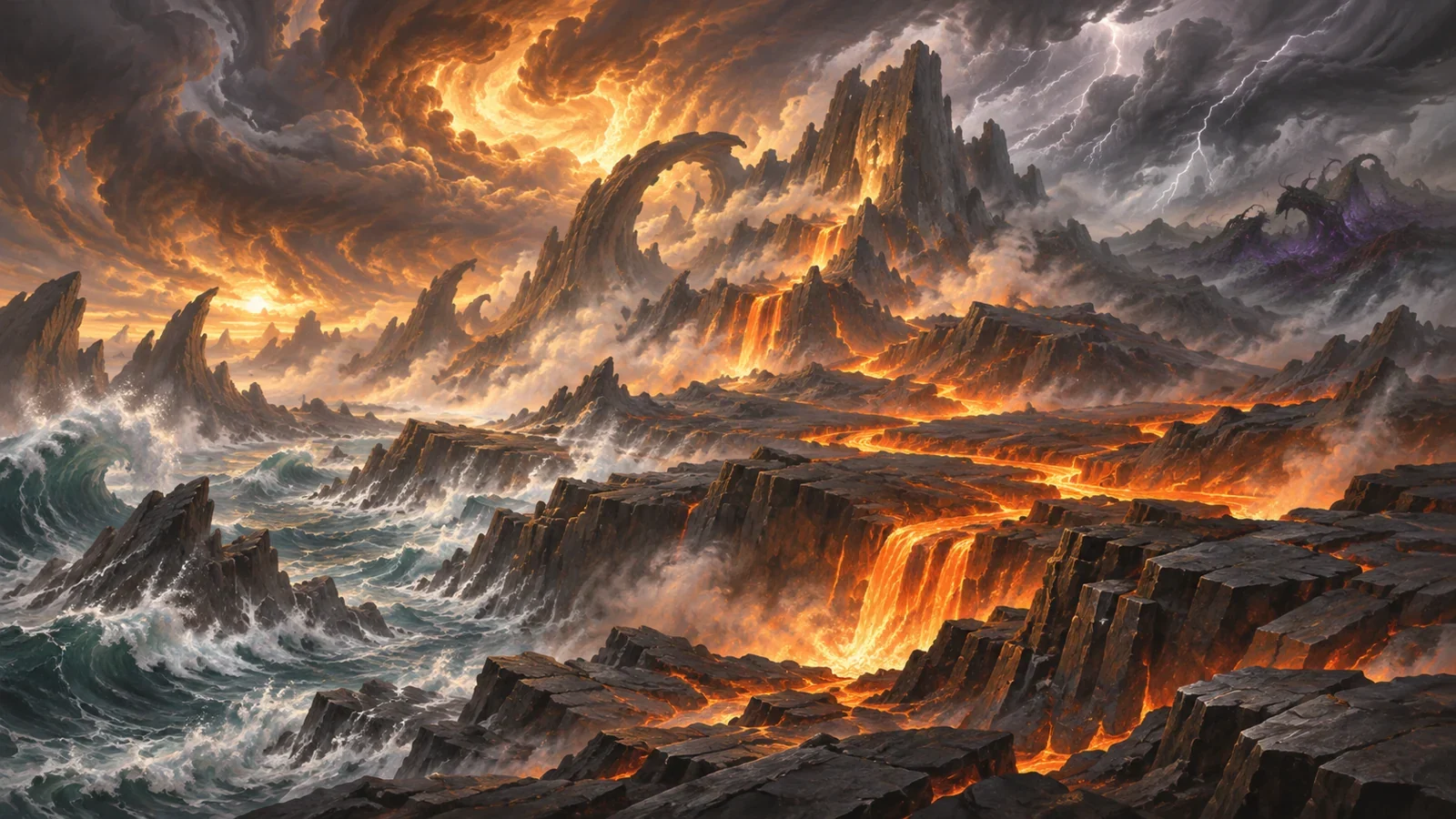
Before the titans arrived, the Old Gods ruled the Black Empire. Later lore describes these invaders as parasitic beings associated with the Void. Their corruption spread through Azeroth; the elemental lords served them.
The elementals were Azeroth’s chaotic forces of fire, air, earth and water. These raging spirits embodied natural powers; their lords commanded armies under Old God rule.
The titans encountered hostile elemental beings serving dark masters: the Old Gods. The Pantheon waged war against those armies to take control of Azeroth.
Who were the titans, the titan-forged and the keepers?
The Pantheon is the group of mighty titans directing the ordering. Later accounts explain that the titans created servants to fight and work for them. Such colossal titans risked damaging a small world like Azeroth.
| Group | Their place in the story |
|---|---|
| Titans | Direct the ordering and grant power to their servants. |
| Titan-forged | Beings made from materials such as stone and metal, created to carry out that work. |
| Keepers | Empowered leaders among the titan-forged, with particular responsibilities. |
The earthen were workers made of living stone. Later lore explains how the Curse of Flesh changed titan-forged bodies from stone or metal into flesh, connecting their story to mortal races such as the dwarves. The keepers led the titan-forged; they were not members of the Pantheon.
The elemental lords and their imprisonment
Ragnaros, Al’Akir, Therazane and Neptulon commanded the Old Gods’ armies. These lords served as the most powerful elemental lieutenants, each ruling a different element:
| Elemental lord | Element | Domain in later lore |
|---|---|---|
| Ragnaros | Fire | Firelands |
| Al’Akir | Air | Skywall |
| Therazane | Earth | Deepholm |
| Neptulon | Water | Abyssal Maw |
The assault broke the Old Gods’ citadels; their combined forces scattered. The elementals were banished from the physical world to what the Classic book calls an abyssal plane. In that account, the Old Gods’ power had kept the elementals tied to Azeroth. Later accounts explain the Elemental Plane as separate, connected domains, fashioned by Ra and Helya to contain them.
This matters because banishment and destruction have different consequences. The Elemental Plane provides a prison and a place where elementals can reform. Defeating an elemental threat does not mean its entire element has disappeared from the world.
The Old Gods were imprisoned as well, ending their open rule. Later lore names Ulduar in Northrend as Yogg-Saron’s prison. Imprisonment contained their power without ending their ability to corrupt others.
How Azeroth was reshaped
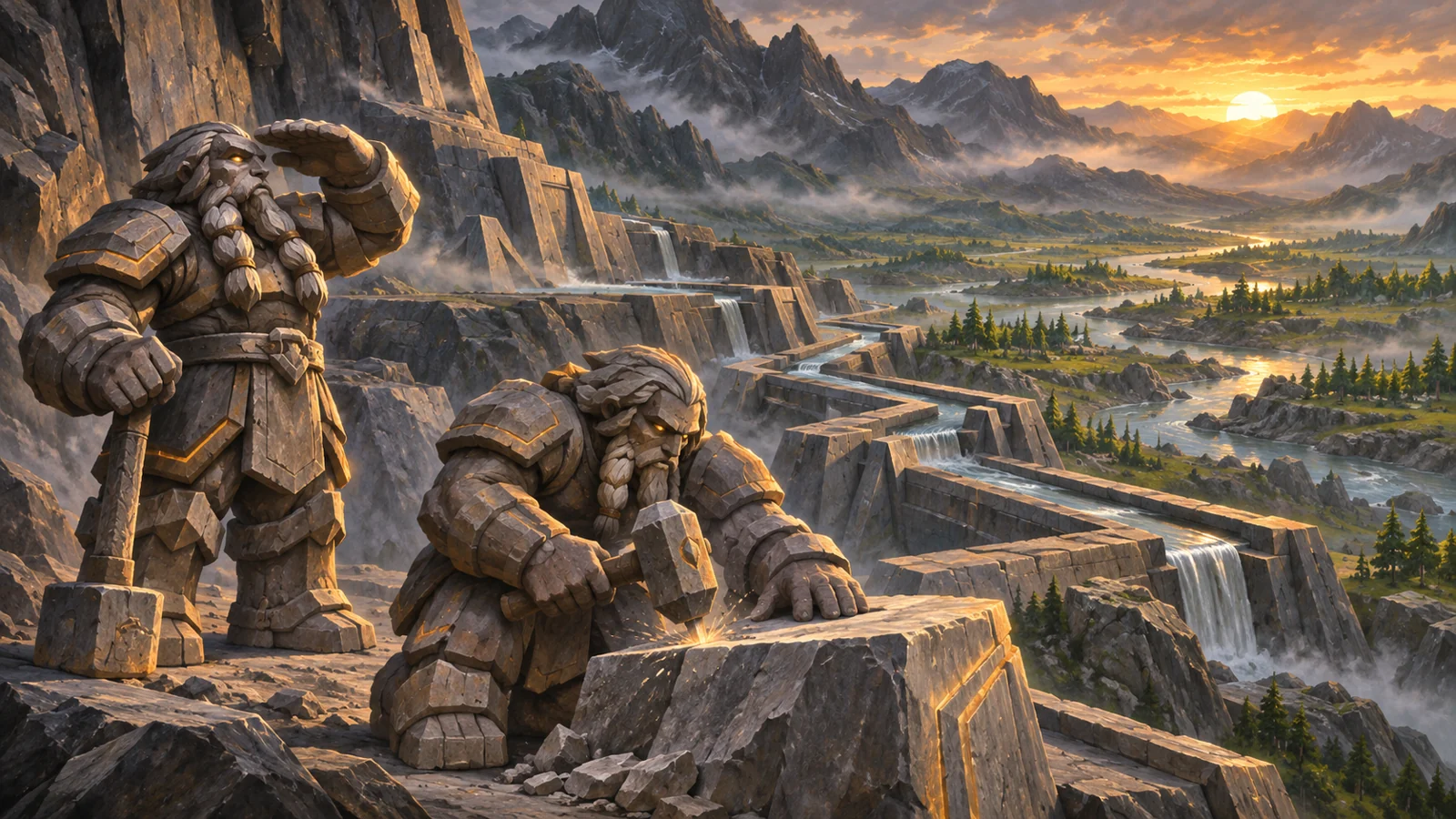
After the threat was contained, the world settled and nature calmed. The titans empowered their servants to reshape Azeroth. Earthen cut tunnels and caverns below ground; gentle sea giants altered the sea floor, opening seas and raising dry land. Mountains, waterways and new life gradually took shape across the primordial landscape.
The titans named the resulting primordial continent Kalimdor. Its name means “land of eternal starlight.” This is ancient Kalimdor, before the Sundering split the world; the name does not yet mean only today’s western continent.
Later accounts give these workers more specific tasks, from earthen construction to machines maintained by other titan-forged. The titans moved beyond conquest, leaving caretakers to maintain their work.
The Well of Eternity: the older story and later additions
The Well of Eternity is a magical lake at the continent’s center. Its potent energies make it a fount of life. Plants and trees thrived in the land’s rich soil. It becomes essential to the story of the night elves, although their empire belongs to a later chapter.
In the Classic telling, the titans crafted this magical lake. Chronicle-era lore supplies a much more violent origin. Aman’Thul tears the Old God Y’Shaarj from Azeroth, leaving a wound through which the planet’s arcane lifeblood escapes. The keepers stabilize that wound, and it becomes the Well of Eternity.
That later explanation also gives the titans a reason to imprison the remaining Old Gods: attempting the same removal again could cause further catastrophic harm to Azeroth. The planet’s living world-soul is central to this account.
Chronicle adds the world-soul and Y’Shaarj’s removal to the older version. Those details are later context here; this chapter does not claim they have been revealed by a Forever quest.
The Old Gods and the Ordering of Azeroth: the original book
The full title of the Classic in-game text is The Old Gods and the Ordering of Azeroth. This Crit Pick chapter is a guide to its subject, rather than a reproduction of the book.
The book is found in the following documented Classic locations:
| Zone or city | Reading location |
|---|---|
| Ironforge | Hall of Explorers |
| Undercity | Apothecarium, near the herbalism trainers |
| Darnassus | Argent Dawn embassy on the Craftsmen’s Terrace |
| Blackrock Depths | The Domicile |
| Wetlands | Menethil Keep |
| Original Scholomance | Hallway between the Chamber of Summoning and Viewing Room |
These locations refer to Classic. The corresponding reading objects have not been checked in Forever.
The original website text counted four; a later version replaced that number with five. Eventually the website removed the count, while the game book kept five. This version history does not establish the final number of Old Gods in Forever.
Retail also has an Annotated edition in the Zskera Vaults on the Forbidden Reach. It is a later in-game version, not a verified Forever reading object.
Where this chapter sits on the timeline
The ordering has no precise calendar date here. The Classic account spans many ages, long before the mortal kingdoms and the War of the Ancients.
- The Old Gods and their forces dominate ancient Azeroth.
- The titans’ intervention brings war and imprisonment.
- The world is reshaped under their direction.
- The Well of Eternity supports the world that follows.
This is a reading sequence, not a claim that every act of construction happened after every battle. Later accounts add detail to events within these broad stages.
World of Warcraft: why the ordering still matters
Titan ruins become easier to read once you know that their builders left servants and records behind. Uldaman is a useful example: the Discs of Norgannon and the lorekeeper connect the earthen to the origin of the dwarves. You do not need the entire cosmic family tree to understand why those records matter.
The ordering left a world of prisons, ruins and guardians. Those are the threads to watch for as you explore Azeroth.
From here, return to the lore library to follow the next planned volumes. For the boundary between Warcraft’s established history and this new branch, read where WoW Forever fits into the lore.
Sources and continuity notes
- The original in-game book and its Classic locations — transcribed primary game text and version notes.
- Old Gods — reference for the later cosmological account.
- Titan-forged — servants, keepers and world-shaping work.
- Elemental Plane — later explanation of elemental confinement; non-canon RPG material is excluded.
- Well of Eternity — the later account of Y’Shaarj and Azeroth’s wound.
- Curse of Flesh — later explanation of the titan-forged becoming mortal.
- Yogg-Saron — Ulduar as an example of an Old God prison in later lore.
- Discs of Norgannon — Uldaman’s records and the earthen connection.
- Blizzard’s Forever panel recap — the official starting point for Forever’s setting.
Prepared 6 November 2026. Classic background and later context are labelled separately. Forever-specific locations and changes remain subject to verification.
YOUR READING JOURNEY
Azeroth has a beginning.
Load your account progress to keep your place.