Guild Wars 2 Review (2026): A Casual's Verdict
A casual returning player's Guild Wars 2 review for 2026, focused on the open-world and PvE game — written for anyone weighing a comeback or a first try.

A casual returning player's Guild Wars 2 review for 2026, focused on the open-world and PvE game — written for anyone weighing a comeback or a first try.
Guild Wars 2 is the rare large MMO you can ignore for years and jump back into in a single evening, because nothing about your character expires while you're away. More than a decade after launch it's still one of the most approachable games in the MMO genre, and for an open-world casual who spreads their evenings across several games and plays for the vibe rather than the leaderboard, it's the easiest MMO I can recommend in 2026.
The catch is the flip side of that strength: the design that makes it so low-pressure is what frustrates anyone who wants the game to hand them a goal. It points you at everything and pushes you toward nothing.
Guild Wars 2 at a glance
| Model | Buy-to-play, no subscription fee. The base game is free. |
|---|---|
| Progression | Horizontal — gear tops out at exotic/ascended and stays relevant for years. |
| Best at | Open-world events, exploration, mounts, account-wide rewards. |
| Combat | Dodge-based and busy; group play leans hard on melee stacking. |
| Newest expansion | Visions of Eternity (28 October 2025) — the sixth. |
| Reviewer's lens | Casual support/heal main, open-world celestial condi, ex-WvW, returned after a multi-year break. |
Where this verdict comes from
A review is only useful if you know whose taste it runs through, so here is mine. I'm a casual in the specific sense that I play one to three hours in the evening after work, not to climb anything. I like variety too, so Guild Wars 2 is one of several games in my rotation rather than the only thing I touch. I chase meta events, explore the maps for completion, solo the odd champion when I want to think, and fold into a zerg with other players when I don't. I also love jumping puzzles, the trickier the better — usually on a mesmer, so I can drop a portal and skip the people who hate them past the worst parts. I heal and support far more than I deal damage, and in the open world I live on celestial condition builds that forgive my mistakes. I'm also a map-completion person who cleared Heart of Thorns to the last point of interest and enjoyed the hunt.
Two things shape every opinion below. First, I have never picked a main, because I'm in love with four professions at once — mesmer, elementalist, engineer and ranger — and I'd rather keep four characters I enjoy than perfect one I've grown bored of. Second, I'm a ranged player at heart in a game that mostly wants me in melee. If that sounds like you, this verdict will travel. If you're a raider chasing benchmarks or a one-character loyalist, weight it accordingly.
What new players are signing up for
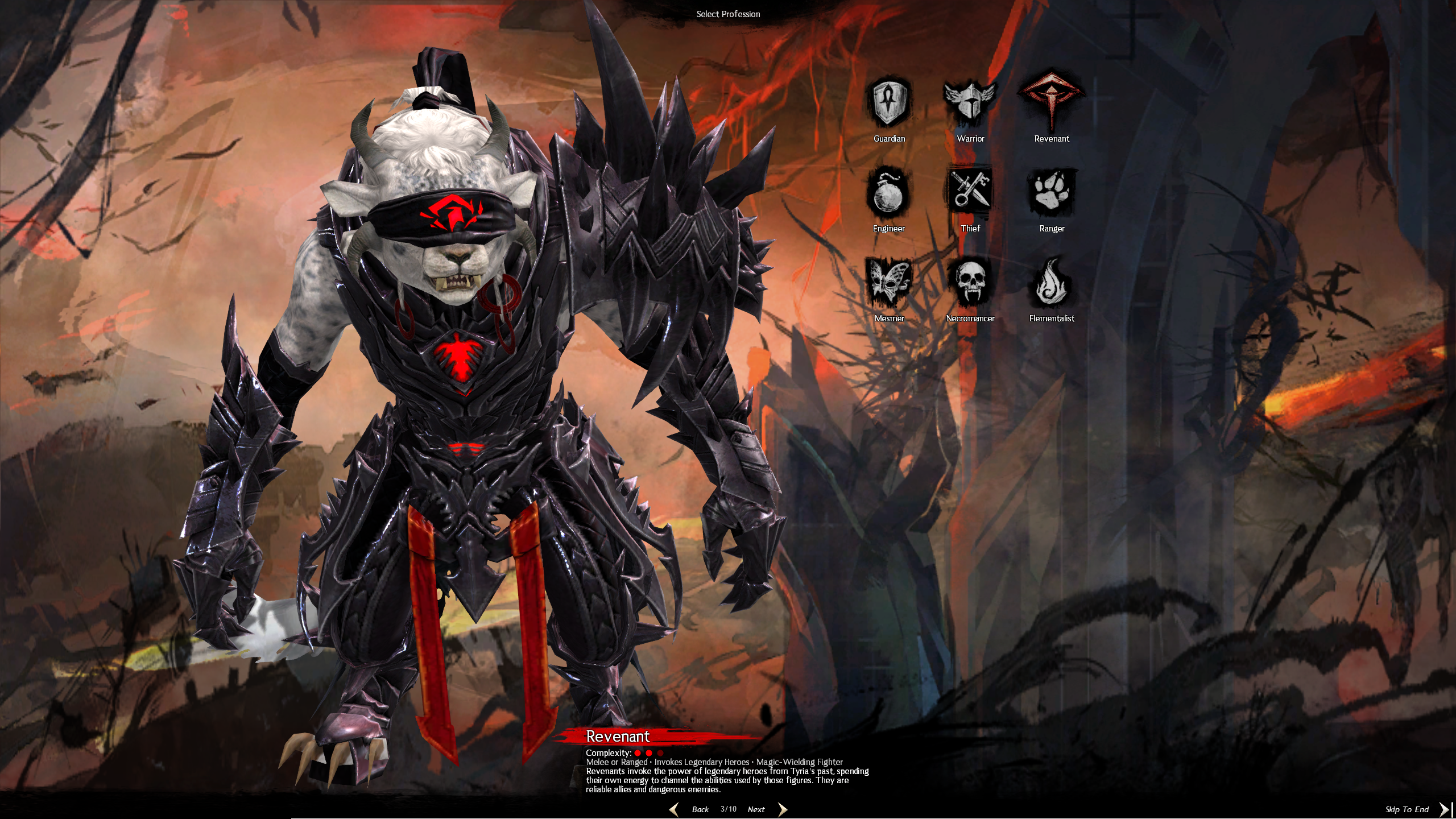
New players create a character — character creation is generous with body, face and dye options — then level to 80 in the free base game mostly by following their nose. Professions vary in how much they ask of you: necromancer is forgiving for a first character, while revenant and elementalist are the fiddly ones to learn. Renown hearts and dynamic events carry you across each zone, you pick up weapon skills and utility abilities as you go, and you hit the cap faster than the genre norm. Hero points scattered across the maps later pay for your elite specializations. The idea is that the climb to 80 is the tutorial, and the whole game — open-world metas, gearing, achievements, the expansions and the endgame — opens up from there.
Above 80 the progression goes wide instead of up. Masteries replace levels: you spend mastery points on account-wide perks like gliding, mounts and map tools, and each expansion adds new masteries rather than a bigger number to grind. Access to those systems, and to most of the things worth caring about, comes bundled with owning the expansions. When something stumps you, typing /wiki in chat opens the official wiki on whatever you have selected, which fills most of the gaps the game leaves unexplained.
The headline feature is the lack of a grind
Horizontal progression is the design choice that defines Guild Wars 2, and it's the main reason to play. Gear has a ceiling, that ceiling barely moves between releases, and a maxed character from years ago is still current the day you log back in. Progression is basically flat, so there is no gear treadmill resetting your effort every patch and no catch-up tax for taking a break — the stuff you earned stays earned.
Coming back after a multi-year gap, the absence of any grind to claw back wasn't a surprise — it's one of the things that drew me in originally, and it holds up exactly as advertised. The practical effect is a game you can boot up cold and play in twenty minutes with no homework, which is the trait that lets it live inside a rotation of other games when subscription-driven MMOs demand to be the only one. Buy-to-play with no subscription fee only sharpens that: leaving costs you nothing, in money or in progress, and the player-run trading post puts anything you still need a few clicks away when you return.
The open world is the main event
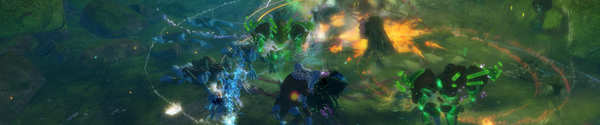
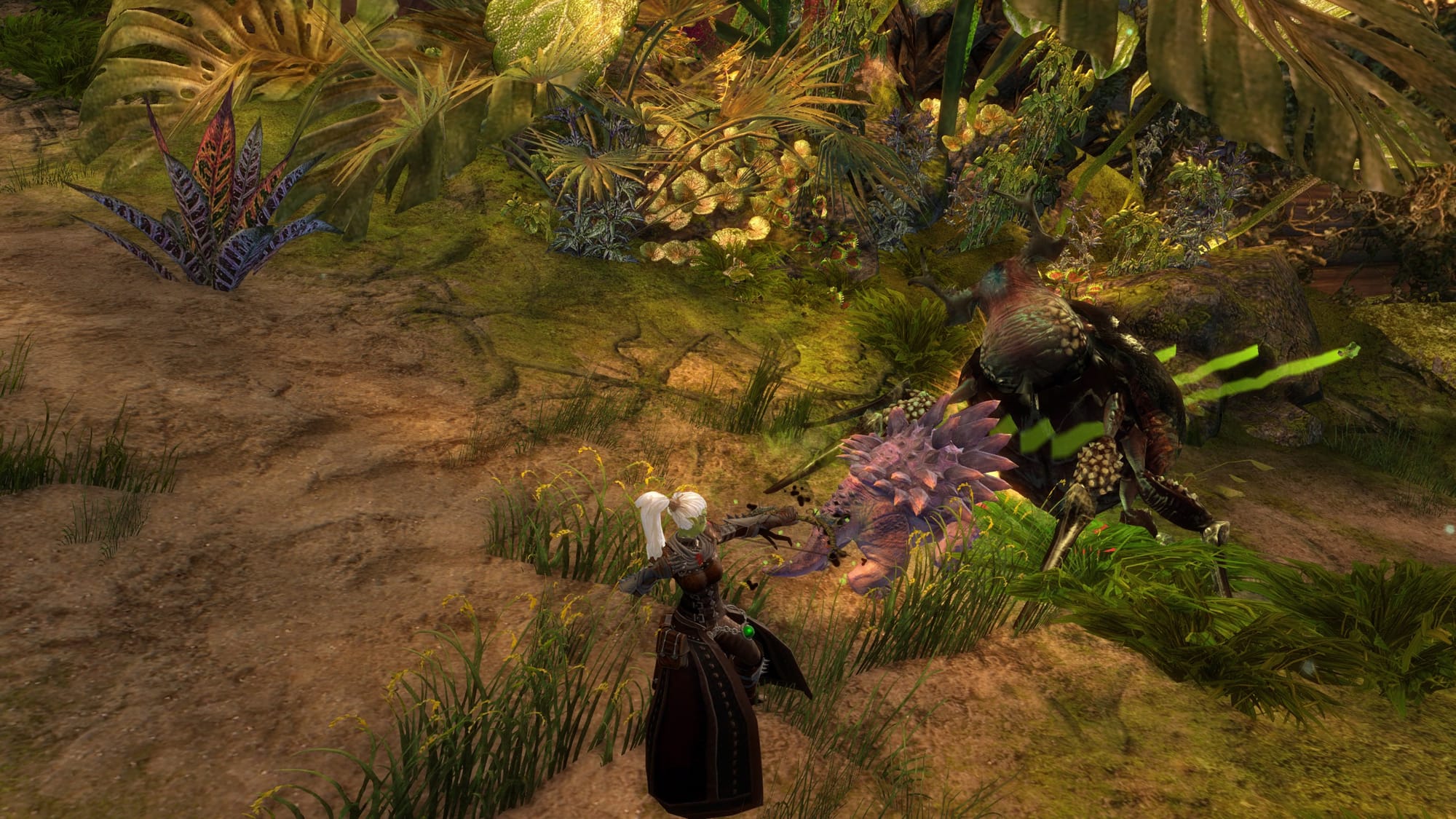
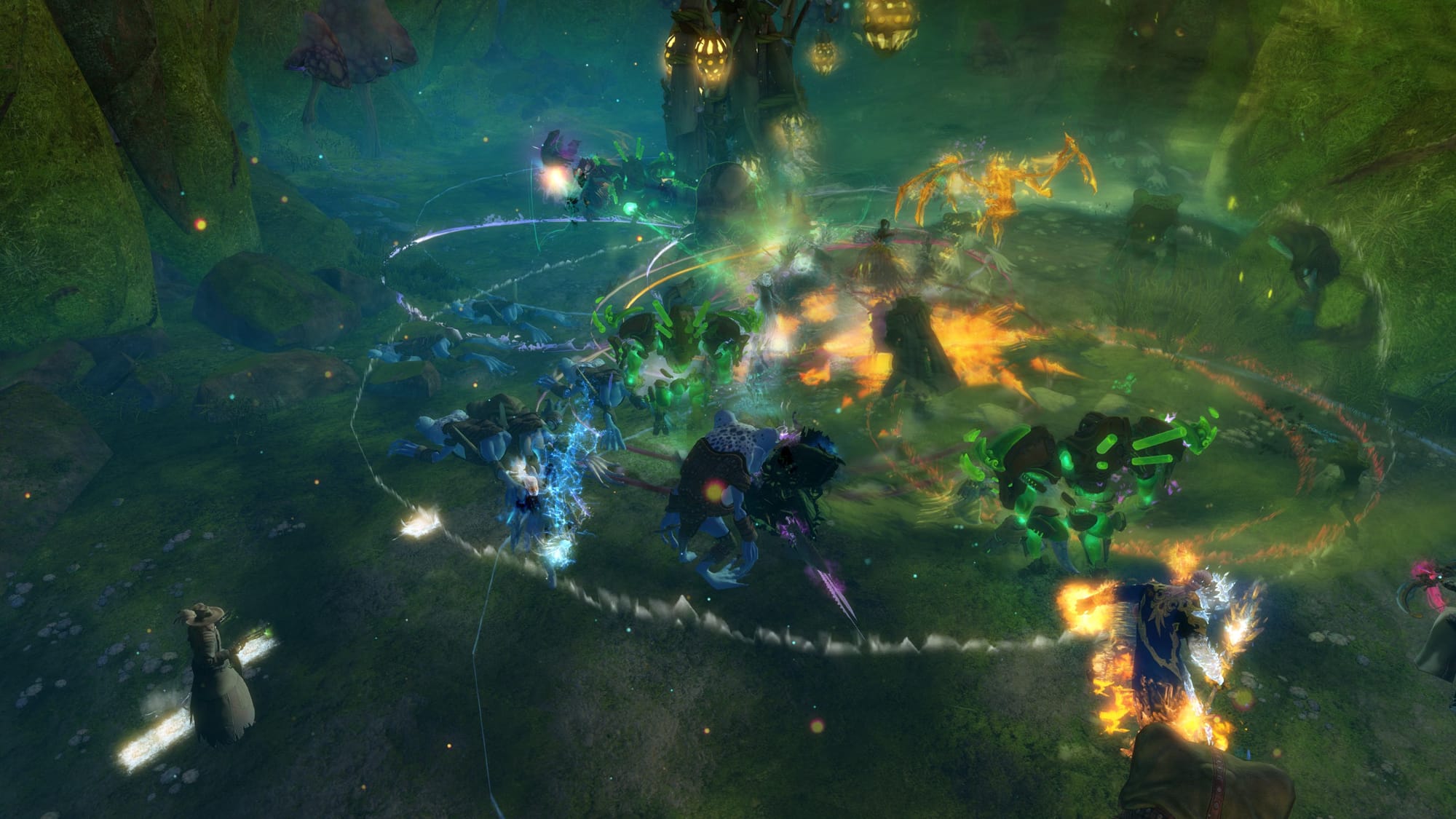
The open world is the strongest part of the package, and if there's a case for calling Guild Wars 2 the best MMO for a certain kind of player, this is it. Where World of Warcraft funnels its best content into instances, Guild Wars 2 puts it out in maps you want to explore. Events are dynamic and the big meta events run on shared timers, so showing up on a populated map means a boss goes down on a clock nobody had to organize. The scale of a full meta is awesome in the older sense of the word — dozens of other players converging on one fight — and the co-op is structural rather than social: strangers, or friends if you bring them, res you and tag into your events without a word or a party invite.
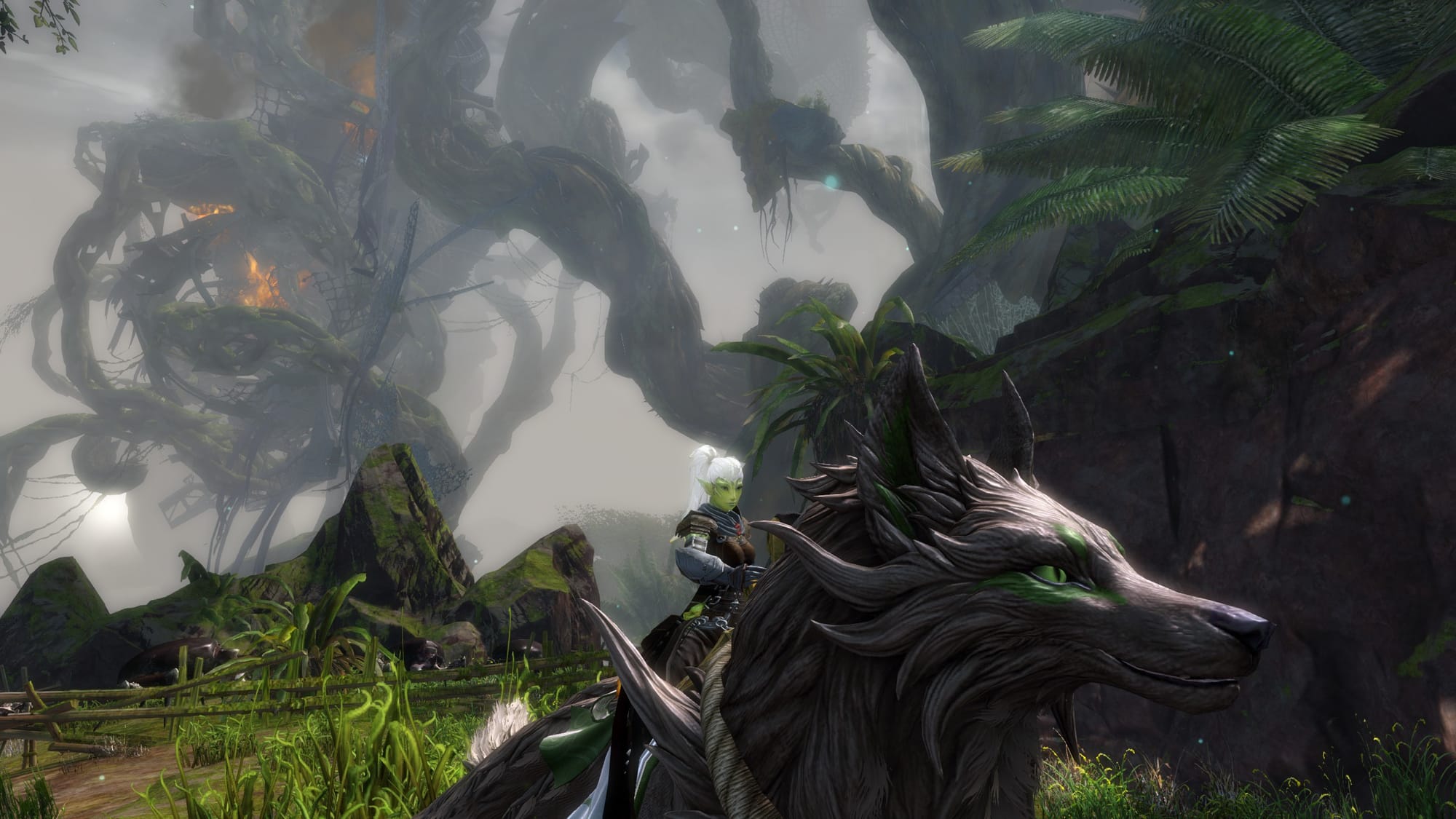
Nothing out here is competitive the way other MMOs are: resource nodes are instanced to you, and there's no kill-stealing or scramble over loot, so another player on your map is only ever a help. That design is a large part of why the community has its welcoming reputation. Mounts turn traversal into something to look forward to rather than endure.
This is where my hours go, and it suits the hour-after-work casual perfectly. Most players drift toward a couple of favorite maps and a meta rotation, and I can solo a champion on a night I want to focus or let a zerg carry the thinking on a night I don't — both are a complete session. The one external tool worth keeping open is an event timer, since knowing what spawns next is the difference between catching a meta and missing it by minutes.
Build freedom that rewards generalists
Nine professions, several elite specializations each, and legendary gear shared account-wide through the legendary armory mean the system is built for spreading across characters rather than committing to one. Roles are flexible too — support and healing are fully viable and satisfying, not an afterthought to damage, and a celestial condition setup makes a low-maintenance open-world build that survives being out of position.
This is the part the game tailored for someone like me. Rotating between mesmer, elementalist, engineer and ranger is cheap when progression and gear carry across your other characters, and treating the roster as a menu rather than a commitment is where I have the most fun. The same openness works against the opposite player, though — if your instinct is to find one optimal main and stay there, all this freedom reads as an absence of direction, which is the heart of the catch below.
The expansions come in two moods
Map design splits cleanly across the older expansions, and Heart of Thorns is the dividing line. Its maps are dense, vertical and demanding — dodge-or-die in the open world, with a layout that loses you three levels above where the marker says you should be — and players tend to either love them or hate them with little ground in between. I was firmly in the hate camp when I was younger and bounced off them hard. Coming back older, I love them, and clearing one to the last point of interest is now my favorite kind of evening.
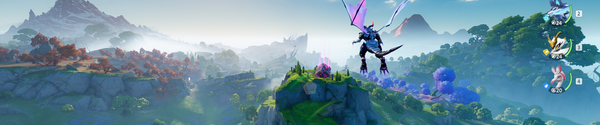
The other maps are gentler. Path of Fire and the deserts are the opposite mood: wide, readable, and built around mounts, which makes them the better fit when I'm running on empty. The range is a strength rather than an inconsistency — you can pick content that matches how much you have left in the tank that night, and both styles hold up years after release.
A long runway of story and new content
The main story is solid and, more useful for a returning player, there's a lot of it. The personal story and early expansions hold up on a replay — no spoiler alert needed here, since I'm keeping the plot beats out of it. From Path of Fire onward a lapsed player has years of Living World seasons and past expansions ahead, a steady drip of new content running up to Visions of Eternity in late 2025. Each expansion brings more than a region: new weapons, elite specs and new masteries that widen what your characters can do. A vocal slice of the community argues the game declined after Path of Fire; I'll be working through that stretch in the near future and will update this review if the later content doesn't justify itself.
Player housing is the feature I'm most curious about and the one I can't judge yet — unlocking the homestead sits further along than I've reached, so it stays outside this verdict until I get there. The home instance every account already has is a different thing: a small personal space with gathering nodes that makes a tidy daily routine for the players who enjoy that kind of upkeep. I'm not one of them, and I mostly leave mine alone.
How it looks and sounds
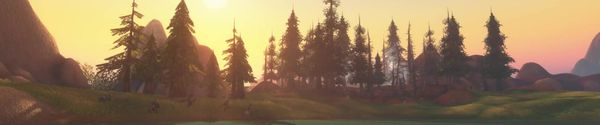
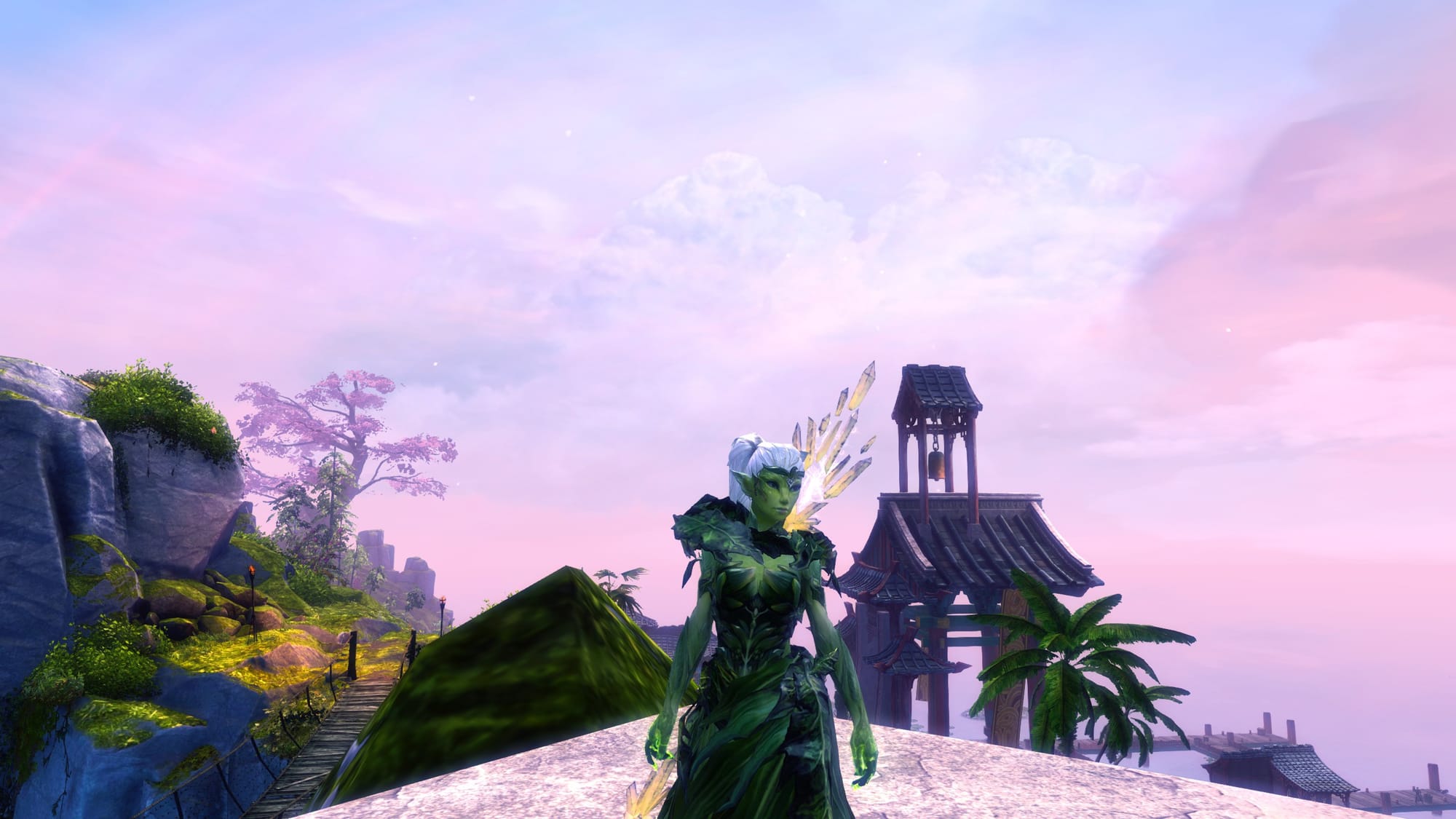
All these years past launch, the graphics lean on art direction rather than raw fidelity, and that's aged the game well — the skylines and vistas still land where sharper, grittier MMOs of the same kind look dated. The engine underneath is the weak link, though: it's CPU-bound and shows its age, so frame rates sag in a crowded meta zerg no matter how strong your hardware is. The music is among the best the genre has, the rare soundtrack I leave on instead of muting. None of this is the reason you'd play, but it's the kind of polish that makes the hours you've spent in a zone pleasant rather than purely functional, and it carries across the rest of the game's older maps too.
The catch
The freedom cuts both ways. Optimized play and a single-class main are entirely viable — a mature community scene fills the guidance gap, with sites like MetaBattle, Snowcrows and GuildJen serving meta builds for every profession and mode. What the game itself never does is point you anywhere: it offers everything and pushes you toward nothing, so the burden of deciding what to play and chase sits with you. That openness relaxes me now, but it's the exact thing that drove me off when I was younger, when I could never commit to a main and the game did nothing to help me choose. If you struggle to self-direct, the freedom can quietly turn into paralysis.
The alt-friendliness has a ceiling, too. Leveling new characters and playing every class is cheap; gearing them all in full ascended or legendary gear is a real grind, and the no-treadmill promise weakens the moment your standard for "ready" is a maxed set on all of them. Heart of Thorns can also turn from a good puzzle into a chore when you're not in the mood for it.
The monetization deserves both a fair word and a wary one. There's no pay-to-win — the gem store sells cosmetics and convenience, not power — and because you can convert in-game gold into gems, a patient player can buy most of it without ever spending real money, while the exchange runs the other way too, turning real money into gold for anyone who'd rather skip a grind. The wary part is the shop itself: its stock rotates in and out on a timer, which manufactures a steady low-level FOMO around skins and outfits, and a couple of the convenience items — extra bag and bank space above all — sit close enough to necessary that calling them optional undersells them.
My standing complaint is the combat's pull toward melee. Group content stacks everyone on the boss, and plenty of mechanics drag you into close range whether you want to be there or not, so a ranged preference is something you fight against rather than build around. The mage fantasy suffers most: elementalist staff exists and functions, but it's hard work for what it returns, and the profession's other weapons keep steering you back toward melee. For a game this generous with build options, a clean ranged-caster fantasy is the obvious thing it doesn't quite deliver.
Who it's for
- Open-world casuals who play in short evening sessions
- Players who keep several games in rotation
- Support players
- Generalists who'd rather run several professions than master one
- Single-class mains happy to follow a community meta build
- Anyone who wants an MMO they can leave for a year and rejoin without falling behind
- Players who need the game itself to set their goals and can't self-direct
- Anyone set on a pure ranged-caster fantasy
- Min-maxers who'll feel the gear grind the moment they try to max every class at once
If your real question is whether it's worth your time at all, that's covered separately in is Guild Wars 2 worth it in 2026.
FAQ
Is Guild Wars 2 worth playing in 2026?
For a casual, open-world player, yes — that's the verdict of this review. The longer, decision-focused answer lives in is Guild Wars 2 worth it in 2026.
Does Guild Wars 2 have a subscription?
No. It's buy-to-play with a free base game, and the cash shop sells cosmetics and convenience rather than power. There's no subscription fee, which is a large part of why the game survives long breaks.
Do I need to pick a main?
No — and you don't have to avoid it either. Gear is account-wide through the legendary armory and classes share progression, so spreading across several professions is cheap, while maining one class works well too, with mature community build guides for every profession. I happen to run four and rarely settle on one.
What's the newest expansion?
Visions of Eternity, released 28 October 2025 — the sixth expansion, adding new regions, elite specializations, and housing and crafting quality-of-life.
Is the open world still active?
On the maps I play, yes. Meta events still fill with players on shared timers, and crowds form without anyone organizing them. An event timer is the easiest way to see what's about to start.