
Echo Weaver: how its time-loop metroidvania works
How Echo Weaver uses knowledge and a spendable time loop, plus a spoiler-light checklist to decide whether its Steam demo fits you.
Echo Weaver is a time loop metroidbrainia: a metroidvania that makes learning its main form of progression. Moonlight Kids describes abilities you already possess but have to discover how to use, while your remaining time also pays for healing and trading. The useful question is whether you enjoy figuring out a route and trying it again with a better plan. This is a source-based explainer; Crit Pick has not tested the current demo for this article.
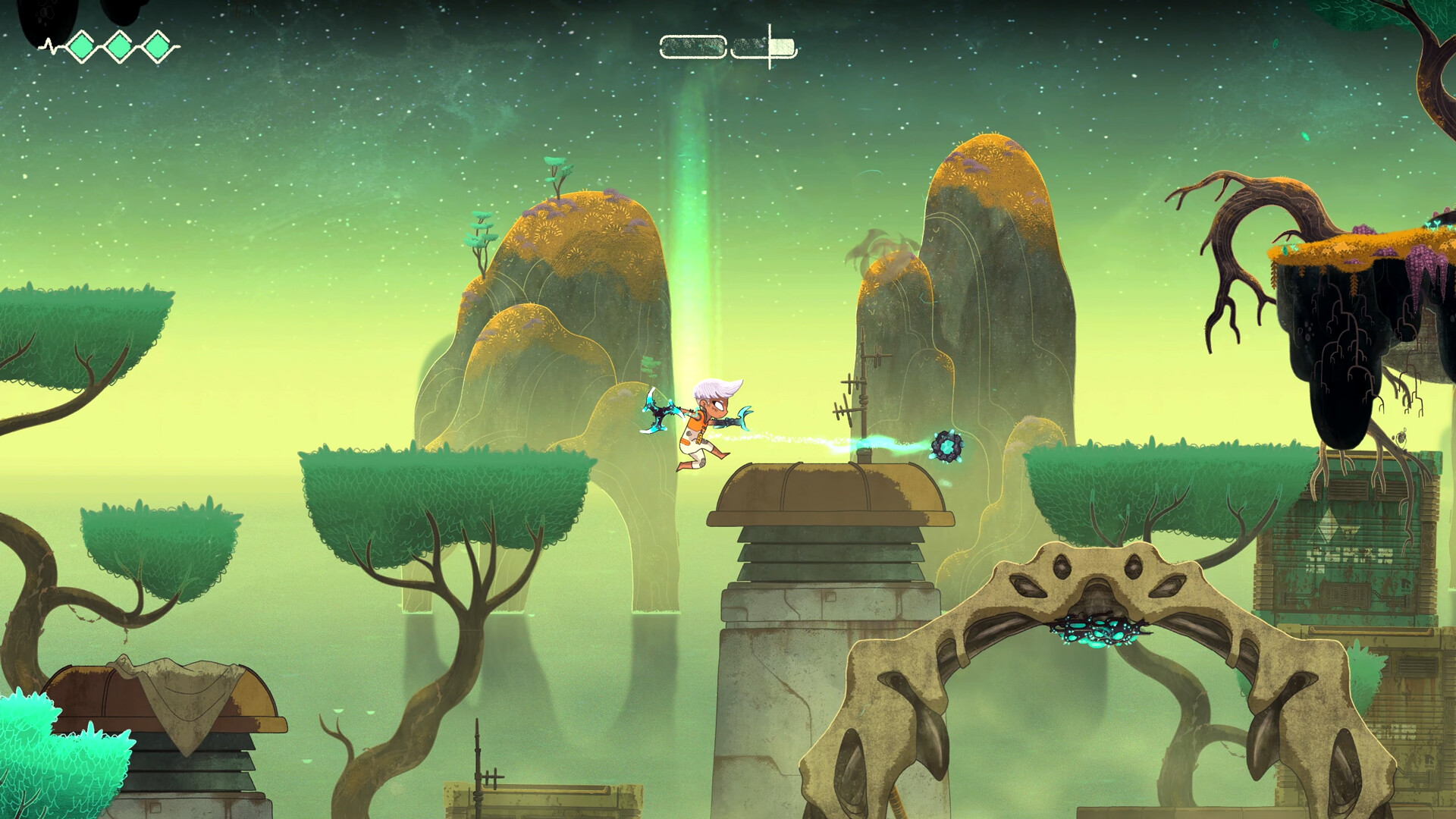
Moonlight Kids’ premise: secrets are your only upgrades
In a conventional ability-gated metroidvania, finding new equipment changes which obstacles you can pass. Developer Moonlight Kids describes a different starting point: the abilities are already available, and discovering their uses changes what you can do with them. The studio calls this a “metroidbrainia”. Moonlight Kids' game page.
The “only upgrades” claim makes information worth protecting. If you enjoy recognising an obstacle and returning with a solution, Echo Weaver puts that discovery at the centre. Reading an ability solution first could remove the part you came for.
Treat “knowledge-based” as a description of the progression model, rather than a promise that every route is open without conditions. Knowing what to do and having enough time to do it are separate problems.
Echo Weaver’s time loop: a resource to spend
Akupara describes time as a consumable resource. You grab pickups to extend the loop, then spend that time on healing, trades and opening routes. It also describes how the loop rewards rhythm and learned routes over raw reflexes. Those are the publisher's claims about the design, rather than a verdict on its difficulty. Akupara's Echo Weaver page.
Time becomes a valuable currency: healing can keep you going, but spends part of the same resource that limits the attempt. How much are you prepared to spend to reach the next thing you want to investigate?
Notice whether you understand that trade-off and begin the next attempt with a clearer plan.
Route planning has a practical consequence: GamingTrend's Samuel Heaney reports choosing paths partly for the time crystals along them. The route that keeps an attempt going can matter as much as the direct route to your destination. His example shows how time management can shape exploration.
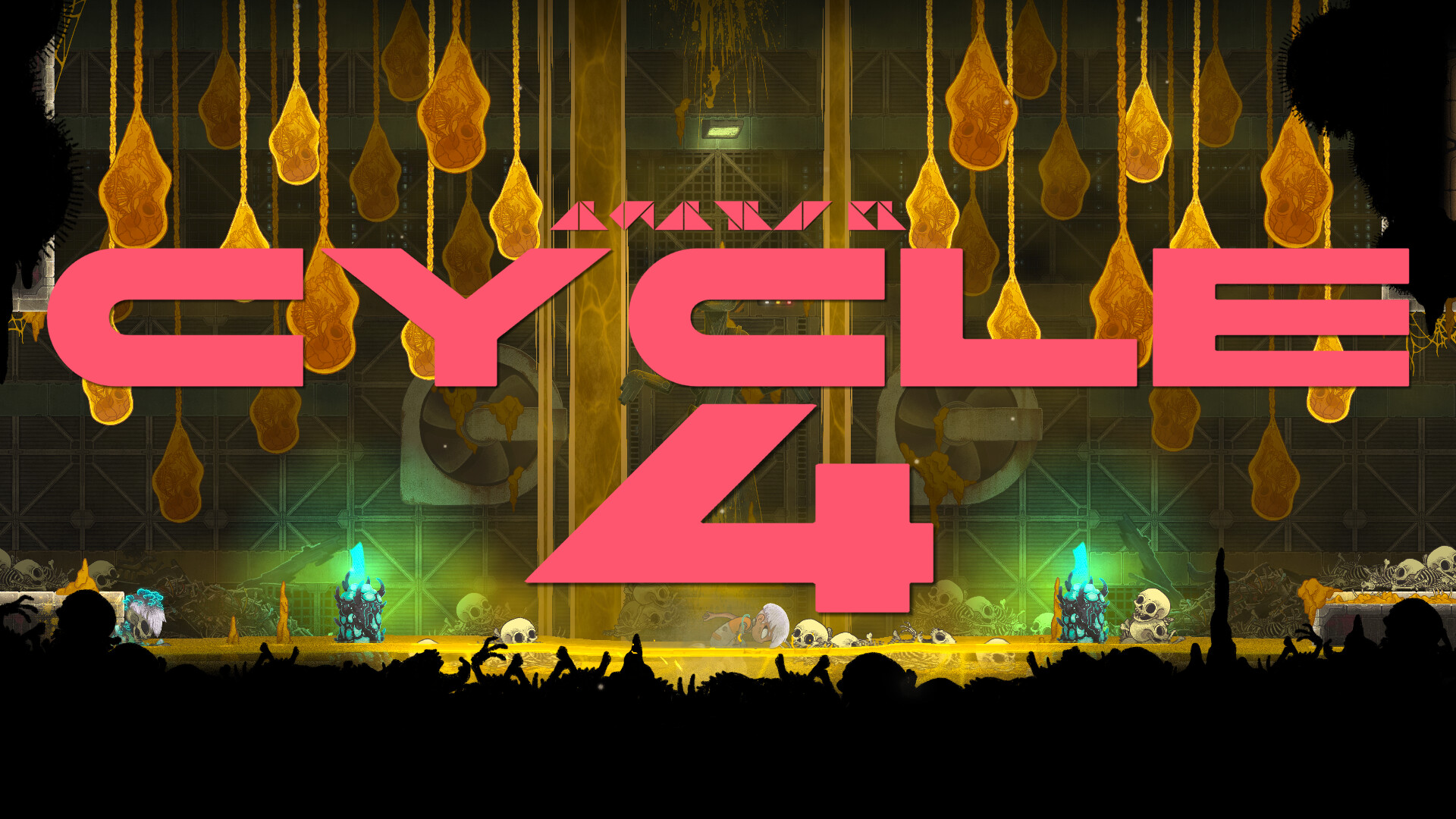
The glaive’s enigmatic power: opening the map
The alien glaive grants reality-bending powers, according to the Steam description. Learning how to use those powers lets you bypass obstacles, find hidden shortcuts and investigate new routes. Time-altering anomalies are part of Echo Weaver's premise too. Echo Weaver on Steam.
A new loop makes a familiar room worth revisiting when you have an idea to test. Watch whether you are understanding an action better or merely repeating it. How clearly Echo Weaver communicates those ideas needs a play test.
Provenance and the Gilded Ruin
You are the last Weaver, exploring Provenance, a ruined society caught in a time loop. The Steam listing frames its story around rebuilding paradise and discovering what the Congregation did to this utopia. Its “Gilded Ruin” heading describes the world you are investigating, rather than a separate game mode.
The advertised cast includes quirky survivors: a pizza-slinging cat who guides you, a leader protecting refugees after the Collapse, and a cleric preaching doom. Understanding the people trapped alongside you is part of the mystery. That gives exploration another purpose alongside finding powerful secrets: you are learning about a place and its inhabitants. These are premise details from Steam, with puzzle solutions left out.
A fixed world, not a random run
In a launch article on Xbox Wire, Akupara’s head of publishing, Buddy Solá, explains that Echo Weaver has no random or procedurally generated world. When the timer runs out, the cycle restarts. This distinction matters: you can return to test an idea against a familiar layout, rather than first having to learn a different map.
The publisher describes a progression from feeling lost to discovery and mastery. Treat the infinite time loop as repeated chances to learn, rather than unlimited time within an attempt. Its practical appeal depends on whether each reset gives you a reason to try again.
Use the Echo Weaver demo to test the loop
The clock does not land the same way for everyone. Noisy Pixel's Sophie Vale found the short loops inviting, and repeated attempts took the pressure off. Game Informer's Kyle Hilliard describes the opposite frustration when a loop ends after difficult platforming challenges, just before a checkpoint. Their contrasting experiences give you a useful demo question: does repeating a route make you eager to improve it, or does the reset interrupt the discovery you wanted to finish?
The free Steam demo still has an Install Demo option as checked on 9 October 2026. Its listing describes the same knowledge-led, time-loop premise.
Try this spoiler-light check while you play:
Choose an obstacle or route you want to understand, without looking up its solution.
After an attempt, write down one thing you learned, if anything. A useful discovery can be small.
See whether that knowledge gives the next attempt a purpose.
Does it make planning interesting, or keep interrupting the part you enjoy?
This is a way to evaluate the premise, not a walkthrough or a report of Crit Pick's playthrough. It does not establish the demo's length, coverage of the full game or save transfer.
Who Echo Weaver may suit
Consider Echo Weaver if you like puzzles, learning routes and turning a failed attempt into a better plan. Pay particular attention to your tolerance for revisiting spaces: repetition can be satisfying when you are testing an idea, and frustrating when you do not know what to try.
If collecting a new ability is your favourite metroidvania reward, check whether learning the glaive's power gives you that satisfaction here.
Steam positions Echo Weaver for fans of Outer Wilds and Ori and the Blind Forest. That comparison points towards discovery and traversal; it does not establish that the pacing, movement or difficulty will feel the same. The demo is a more useful test of fit than another game’s name.
Echo Weaver release and availability
Echo Weaver was released on Steam on 8 October 2026. Moonlight Kids developed it and Akupara Games published it. The full-game listing provides Windows and macOS requirements. Check the Steam store for current pricing and compatibility.
Echo Weaver FAQ
When was Echo Weaver released on Steam?
On 8 October 2026. That is the full game's release date shown on Steam; the demo has its own listing and history.
What does knowledge-based metroidvania mean here?
Moonlight Kids describes abilities that are available before you understand how to use them. Learning their uses is the progression hook. That does not mean every route is free of time costs or other conditions.
Is there still an Echo Weaver demo?
Yes. Steam showed a free demo on 9 October 2026. Follow the demo link above for current availability; this article does not promise that demo progress transfers to the full game.
Is this an Echo Weaver review?
No. This article explains the developer's and publisher's descriptions and offers questions to test in the demo. It contains no hands-on verdict, rating or puzzle solutions.
Who developed and published Echo Weaver?
Moonlight Kids developed it; Akupara Games published it. Their official game pages and the Steam listing are the sources used here.
Sources and method
Sources checked on 9 October 2026: Moonlight Kids' game page, Akupara's game page, the full-game and demo Steam listings, the publisher’s Xbox Wire launch article, and the linked launch reviews from GamingTrend, Noisy Pixel and Game Informer. Those reviews describe their authors' experiences with the full game; they do not establish the current demo's behaviour. The demo checklist and player-fit questions are Crit Pick's analysis. They are not observations from playing it.