
Steam Next Fest October 2026: 34 demos to try
34 Steam demos for October Next Fest: slime companions, guild management, solo raids and more, with video chapters and direct Steam links.

Ride a slime, decide which adventurers survive a contract, or tackle raid bosses without finding a group. These 34 Steam demos give you very different jobs. Pick the kind of decisions you want to make, then use the video chapters and Steam links to take a closer look.
Steam Next Fest October 2026 runs from 19–26 October. It ends at 10:00 a.m. Pacific on 26 October, which is 18:00 in Berlin after the clock change. Individual demo windows vary: the festival ending does not guarantee that a particular demo will stay available or disappear that day.
Watch on YouTube, or use the individual chapter links below.
Creatures & quiet progress
World of Slime
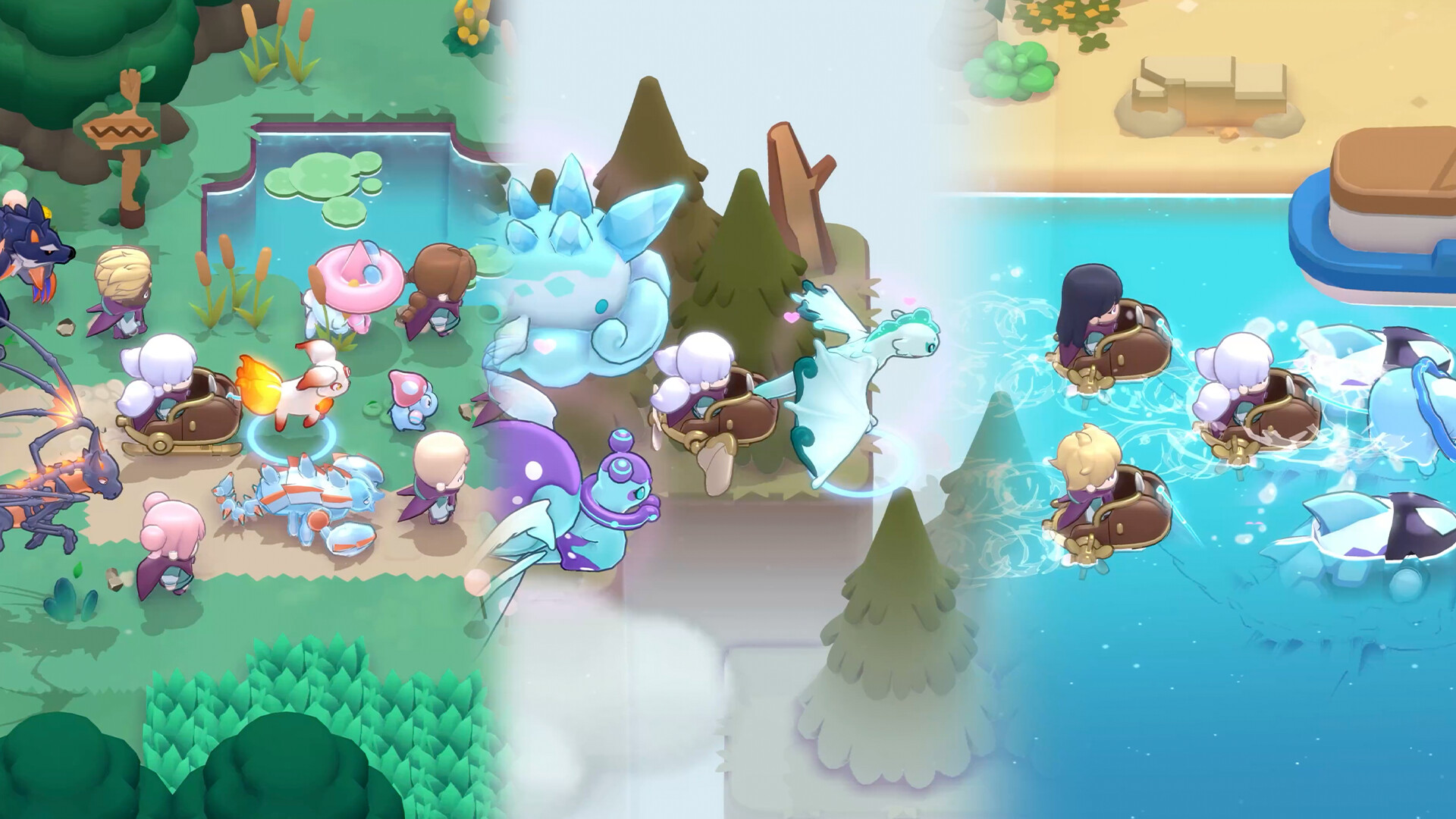
Collect slime companions and use their abilities to open new routes through an online world. Finding another slime can mean crossing water, pulling a sled or clearing a path that was blocked before.
More details
You collect slime companions through field capture, fishing and synthesis, then take them exploring in an online world. Building your collection and strengthening bonds unlocks abilities such as crossing water, pulling sleds and clearing blocked routes. The useful part of finding a new slime is where it lets you go next. TEAM42 also links the companions to battles and puzzles; this is a preview of its systems, not a hands-on verdict.
Never Wither
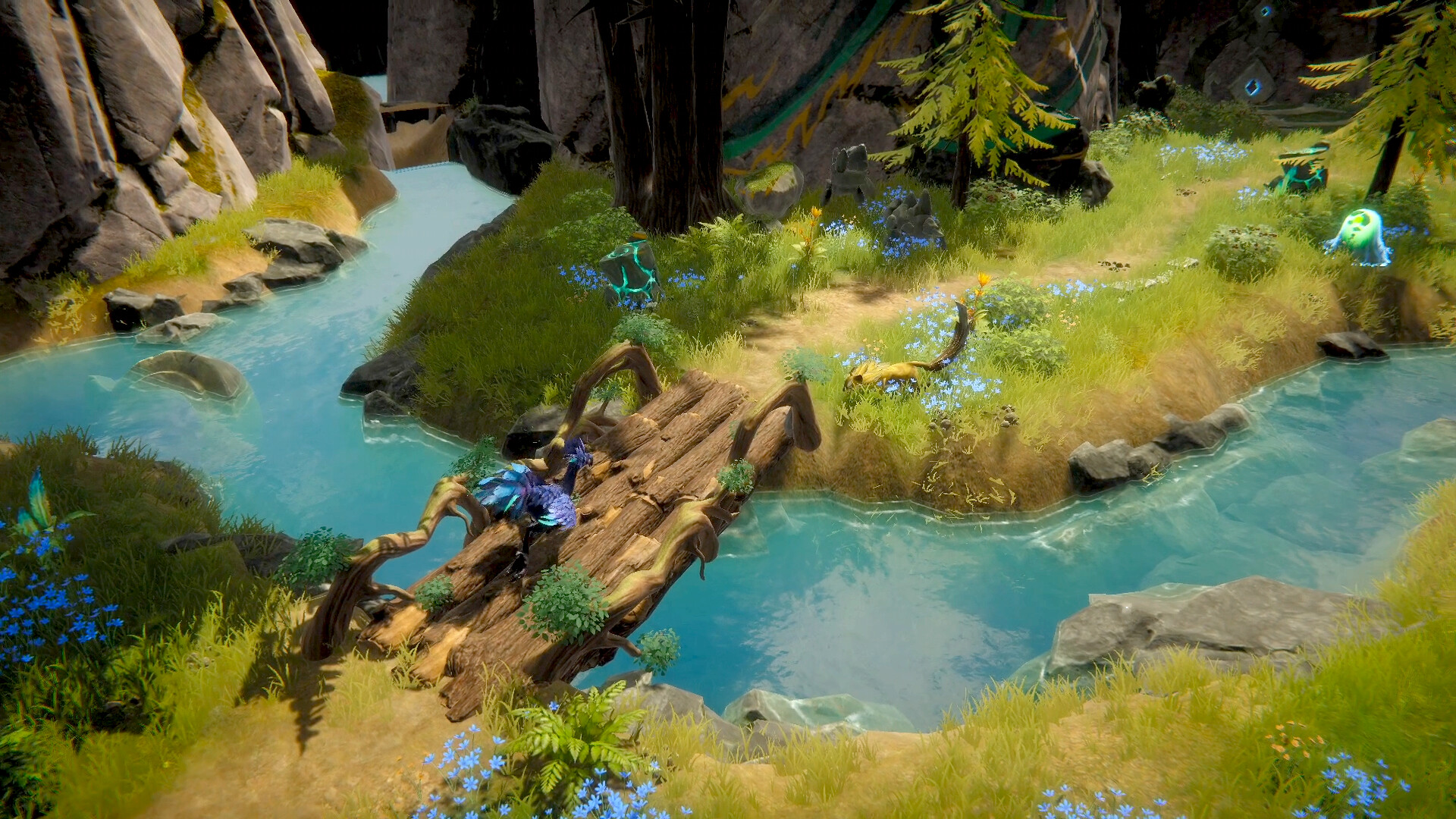
Possess creatures and use their bodies in real-time fights, then put them to work at your settlement. Your collection supplies both combat options and workers; the demo has reported memory-related crashes.
More details
This is a survival-crafting action RPG where you possess creatures and directly use their forms and abilities in real-time combat. The developers describe charging and knocking enemies back as a Rock Dog, then switching to an archer form for a ranged attack. Your collection becomes a set of bodies with different jobs. Back at your settlement, creatures can gather resources, work or even become structures, including Mudballs turning into farmland. You switch between fighting in those forms and organising the creatures working at home. The demo has reported memory-related crashes.
Wish Upon A Llama
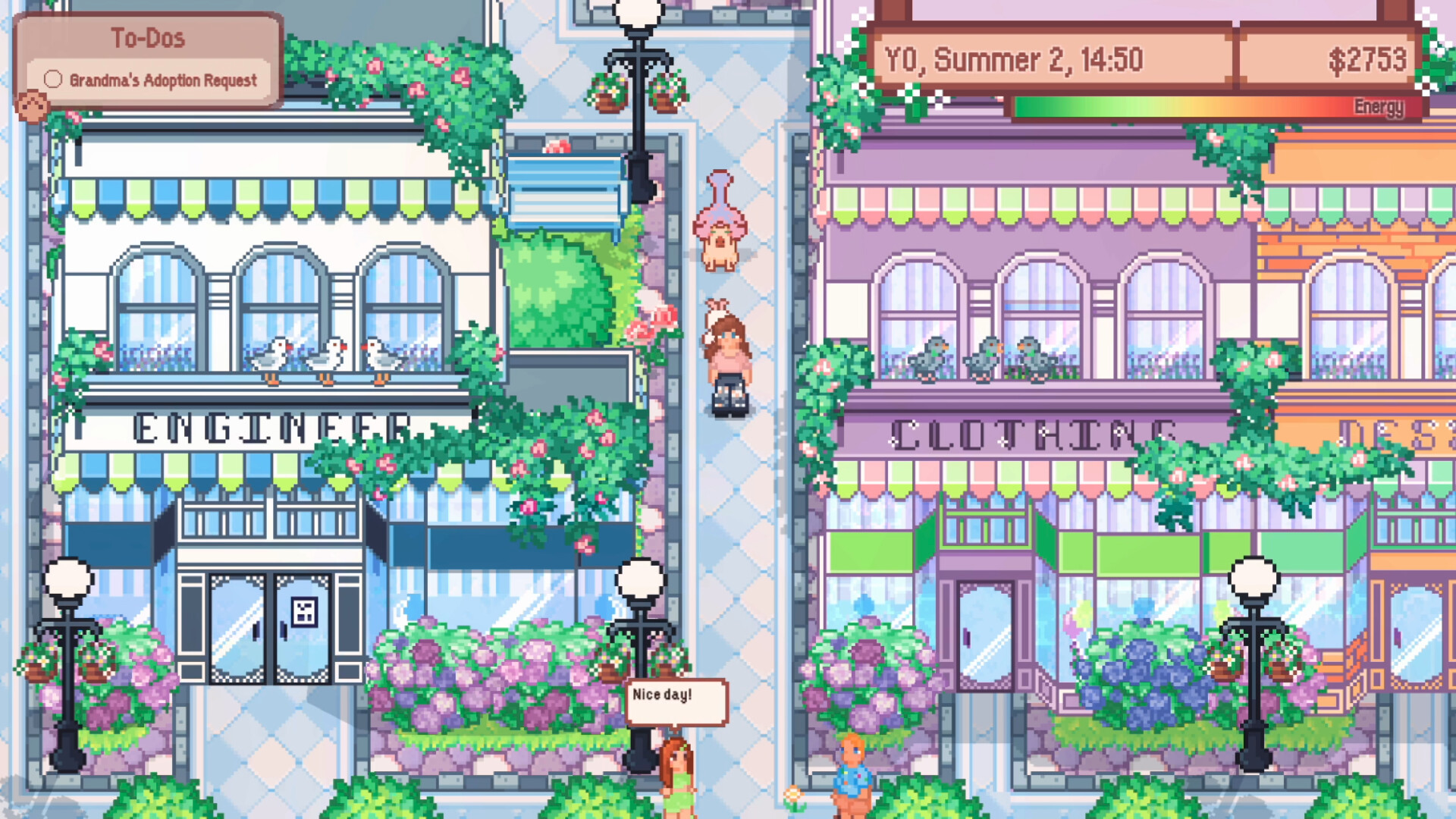
Breed animals whose babies inherit colours, patterns and other traits from their parents. You choose the pairings, care for each generation and find suitable homes through your ranch and adoption centre.
More details
You run a ranch and an adoption centre, raising animals over successive generations. Babies inherit traits from both parents, including colours and patterns, so choosing which animals to breed helps shape what you discover next. You still need to care for them, take them on walks and find suitable homes. The collecting is tied to breeding and daily care, with town relationships alongside it. If discovering different animal families sounds more appealing than another field of crops, that's the particular part to look at here.

Tiny Harbor
Send fishing boats out, use their catch to expand the harbour and choose what to upgrade next. The operation can run beside your other desktop windows, with automation keeping the boats working between check-ins.
More details
You begin with a dock and fishing boat, send boats out and use the catch to grow the fleet and production. You can help the operation along yourself or automate it. The harbour docks beside your other desktop windows, so the game is designed to keep progressing while your attention is elsewhere. You check in to choose the next expansion or upgrade, then leave the boats working while you do something else.
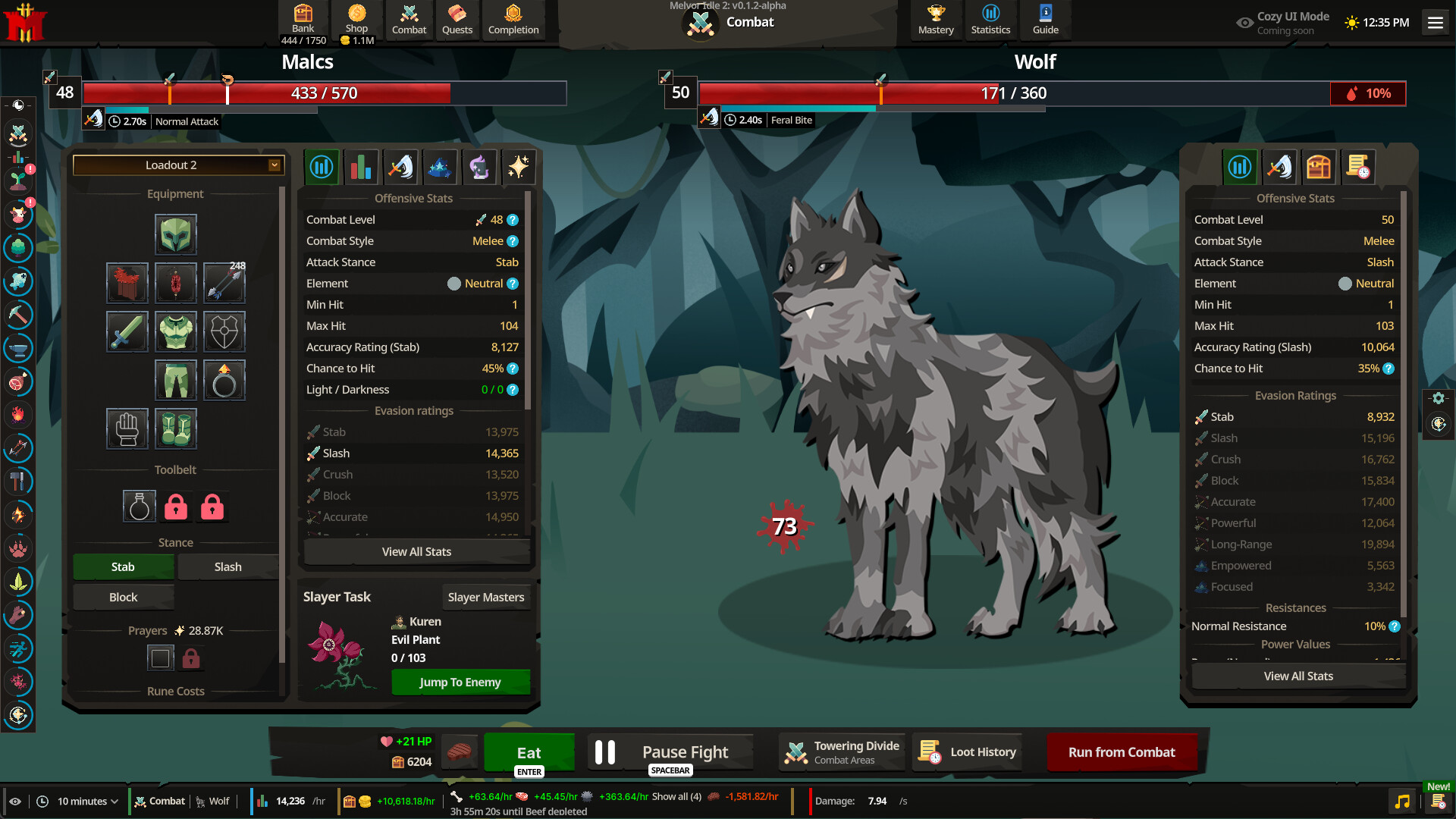
Melvor Idle 2
Choose which skills to train and build the equipment and resources that support them. The idle RPG demo includes the first story act and a level-60 skill cap, with saves convertible for Early Access.
More details
This is an idle RPG built around choosing what to train and how different skills support each other. You set an activity running, then work on equipment, resources and longer-term progression, with offline progress too. Combat is part of that longer-term planning, alongside the skills and equipment you develop. The sequel adds story quests, giving the training a route to follow. Its demo includes the first act and a level-60 skill cap, with saves convertible for Early Access.
Build, equip & manage
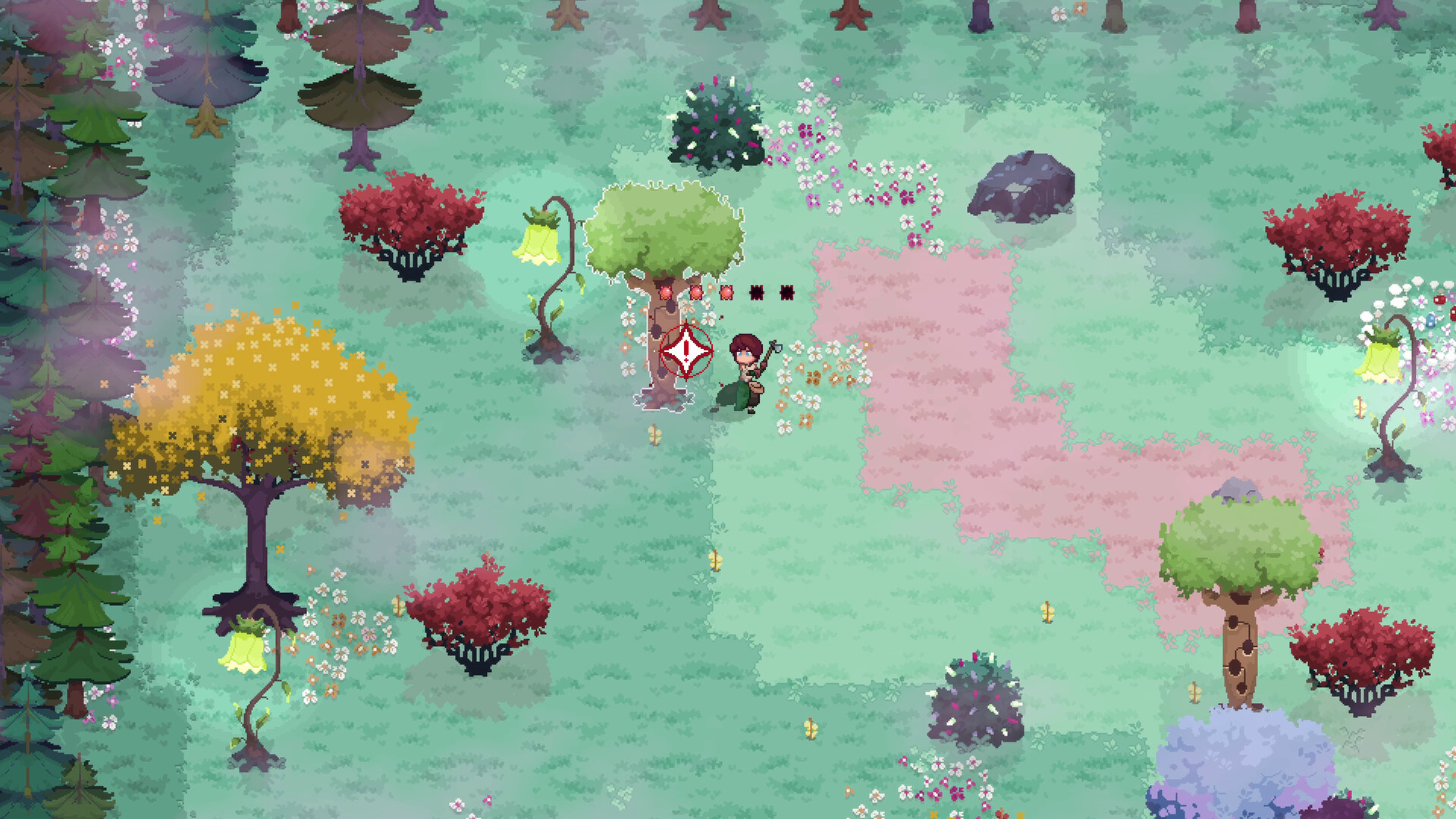
Teamcrafter
Gather materials, craft equipment and prepare a party for automated turn-based battles. You solve problems through the team and gear you bring, then use what went wrong in a fight to improve the next setup.
More details
You gather materials, craft weapons and armour, then equip a party that fights automated turn-based battles. You aren't choosing every attack during the fight. Your influence comes from the team and equipment you prepared, then watching where that setup succeeds or fails before changing it. The exploration and gathering give you the materials for those experiments. It draws on experience making the FFXIV Teamcraft tool, which fits the focus on planning and optimisation. A lost battle sends you back to reconsider the setup: the preparation is where you solve the problem.
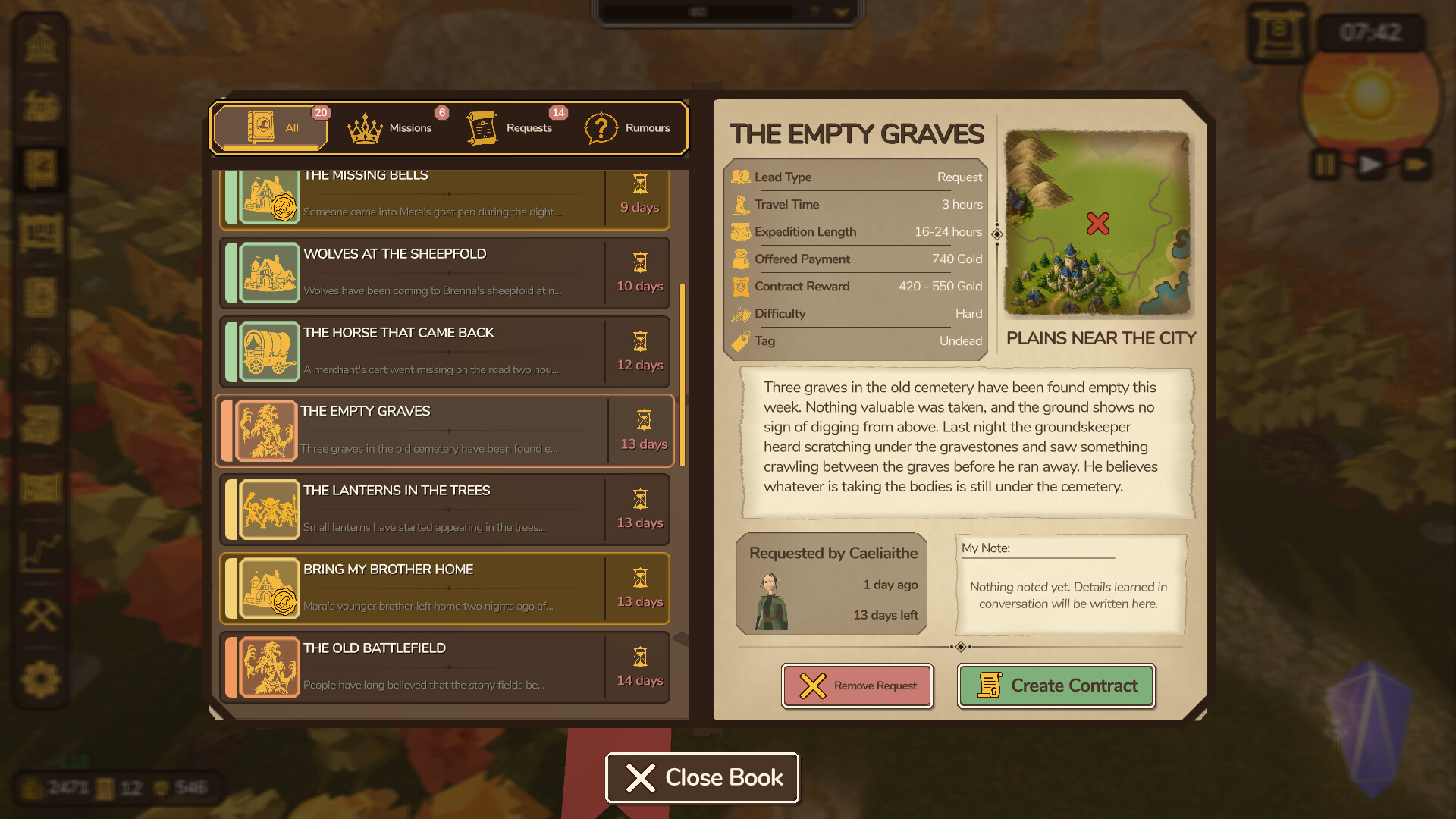
Adventurer’s Guild Manager
Turn requests into contracts, set the terms and approve the adventurers who take them. They return with loot and reports—or do not return—so judging who can handle a job has consequences beyond your balance sheet.
More details
You receive requests, write them into contracts and set the reward, required rank and terms. Adventurers decide whether the work suits them, but you approve who goes. They return with loot and reports, and some don't return at all. Your decisions happen around assigning and supporting the adventure, rather than personally swinging a sword through it. Scroll-making adds a hands-on task: you trace runes, with accuracy affecting the result. Expect a guild-management routine built around judging jobs, visitors and resources, with consequences for the people you send out.

Agromatic
Build production chains by assigning workers to farming, mining, cooking and manufacturing. Every new hire also needs wages and housing, so more output is only useful if the business can cover its growing costs.
More details
Workers are the automation. You assign people with different traits to farming, mining, cooking or production, and lay out the facilities that turn resources into goods. Those people need salaries and housing, so expanding a production chain also creates costs you must cover. The developers frame it as running a company, rather than surviving with a colony. The interesting decisions are whether the output justifies another worker or building, and how to keep the operation supplied. You manage the system instead of directly controlling a farmer through every task.
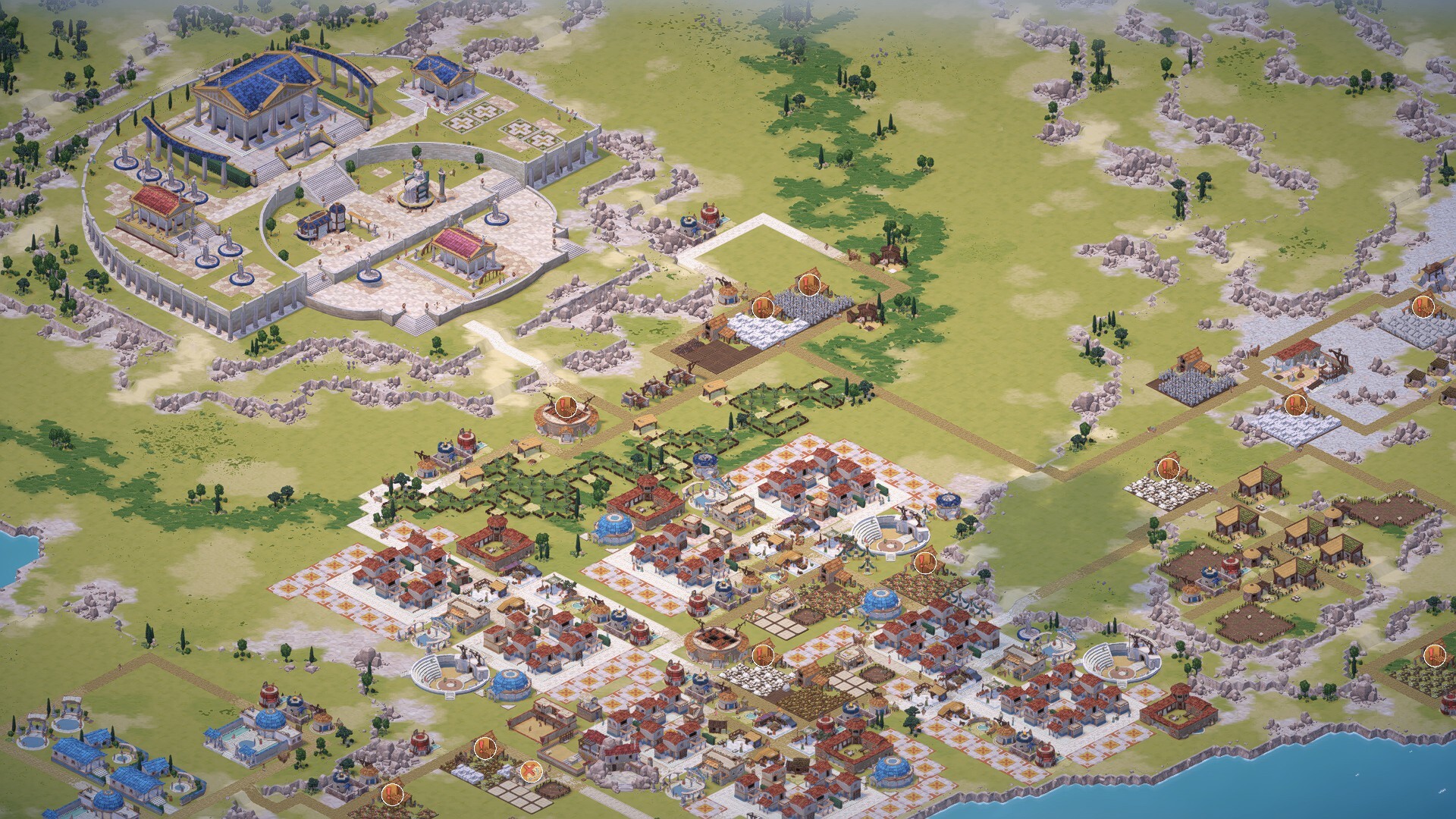
Theos: Cities Of Myth
Build a Greek city around a sanctuary to your patron deity. Roads, production and trade must keep citizens supplied while you find room for the god’s demands in the same working economy.
More details
You build a Greek city around a sanctuary to a patron deity. Roads, production and trade keep citizens supplied, while the god has demands of their own. The planning is about making those needs work together: a grand religious centre still needs a functioning city around it. Expect a city-builder focused on arranging and maintaining that economy, with mythology shaping its identity. Triskell Interactive also made Pharaoh: A New Era, which gives useful context for the interest in classical city-building without making this the original Pharaoh team's game.
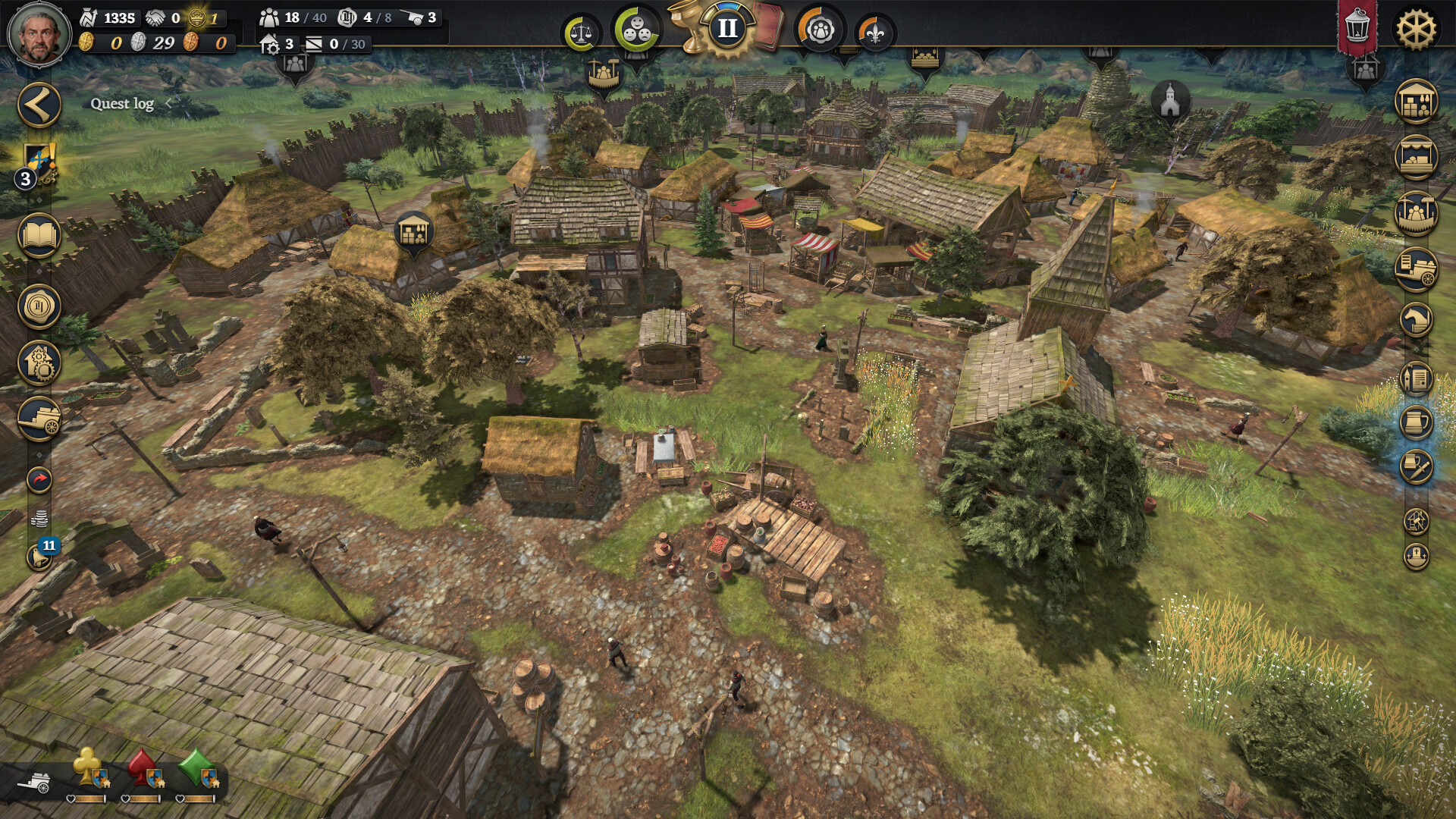
Rise of the Merchants
Produce goods in your settlement and send them out in trade caravans. The economy belongs to a persistent online world, so choosing what to make also means considering other players, trading partners and politics.
More details
Your settlement produces goods that can travel beyond its borders in trade caravans. You build facilities and expand the city, but the economy shares space with other players in a persistent online world. That makes trading partners, influence and politics part of the wider game rather than a decorative backdrop. Expect decisions about what to produce and where to send it, alongside developing the settlement that supports the business. The online requirement matters here: the pitch is participating in a shared trading world, not only designing a self-contained town.
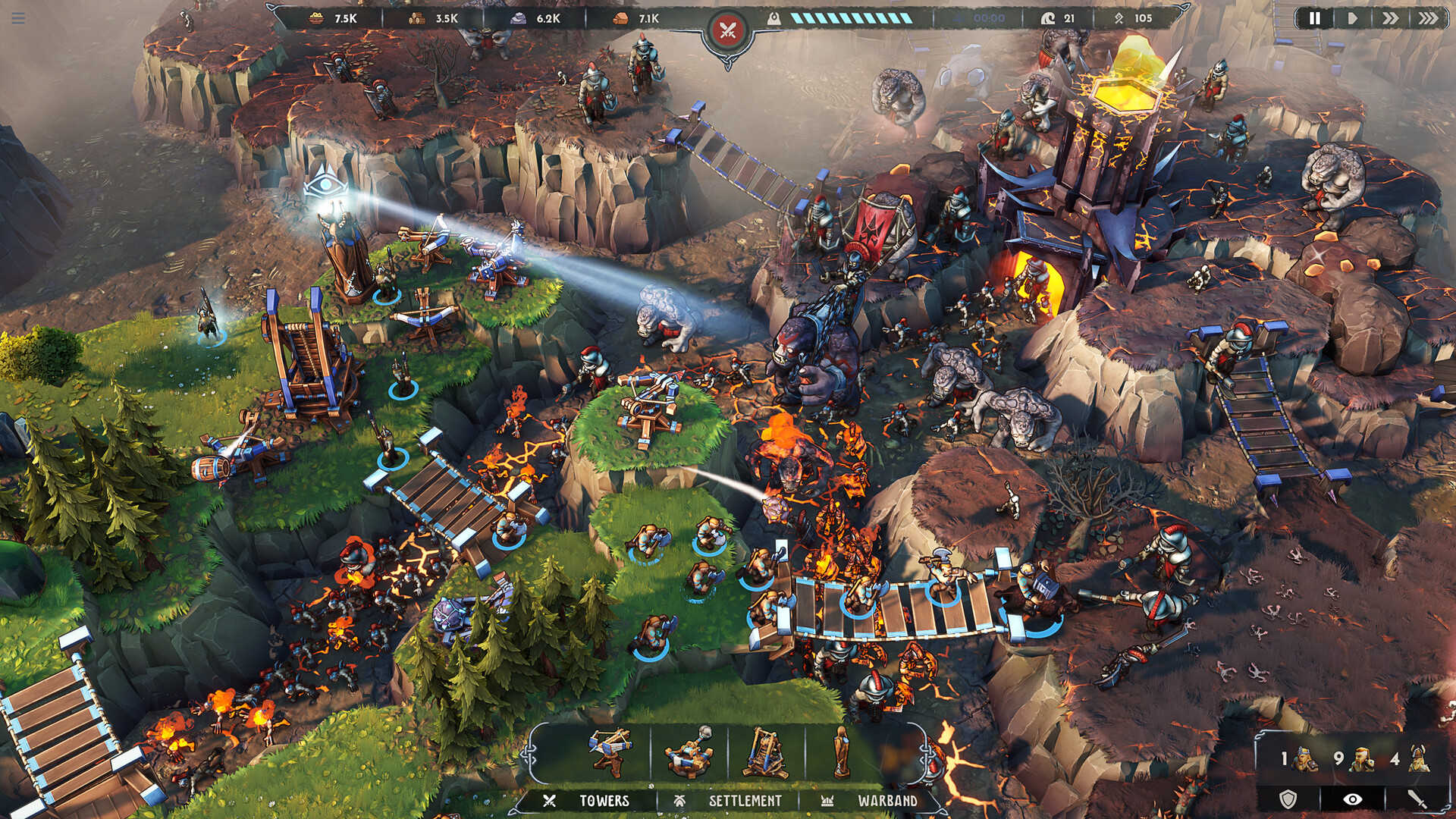
Dawn of Defense
Build towers and an economy, then command warriors directly in real-time battles. You need to hold your defensive line while moving troops and striking enemy strongholds to reclaim territory.
More details
You construct towers and an economy, then command warriors directly in real-time battles. Towers hold positions while the troops give you a force you can actively move and use. You also strike back at enemy strongholds to reclaim territory, so the map matters beyond placing a defence and waiting for another wave. Roguelite progression changes your options between attempts. Expect to split your attention between sustaining the economy, organising the defensive line and directing units when the fighting starts; the blend asks more of you than tower placement alone.
Plan the party
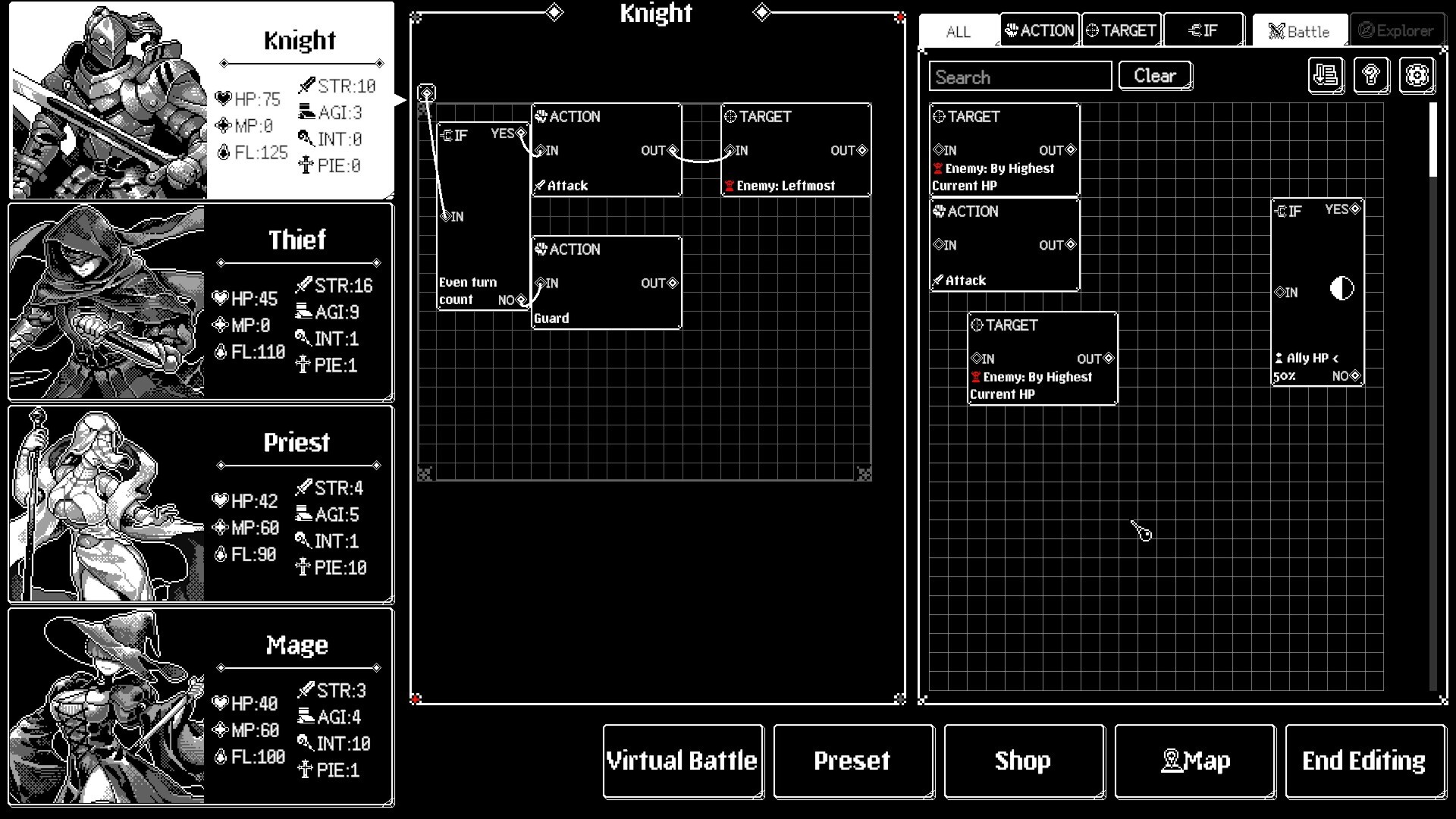
Dungeon Automata
Program your golems by connecting visual nodes for actions and targeting, then watch them tackle the dungeon automatically. When the plan fails, change the instructions and test again; faster reactions will not rescue it.
More details
You connect visual nodes to specify how your golems behave, including actions and targeting logic. Then you send the party into the dungeon, where it explores and fights automatically while you watch. If the plan breaks, the next step is identifying what went wrong and changing the instructions, rather than taking over with faster reactions. New nodes and parts expand the behaviours and party you can build. Expect repeated tests and adjustments. Developer Tomohiro Iizuka drew on his work as a software engineer: making an unreliable system finally work is the central pleasure.
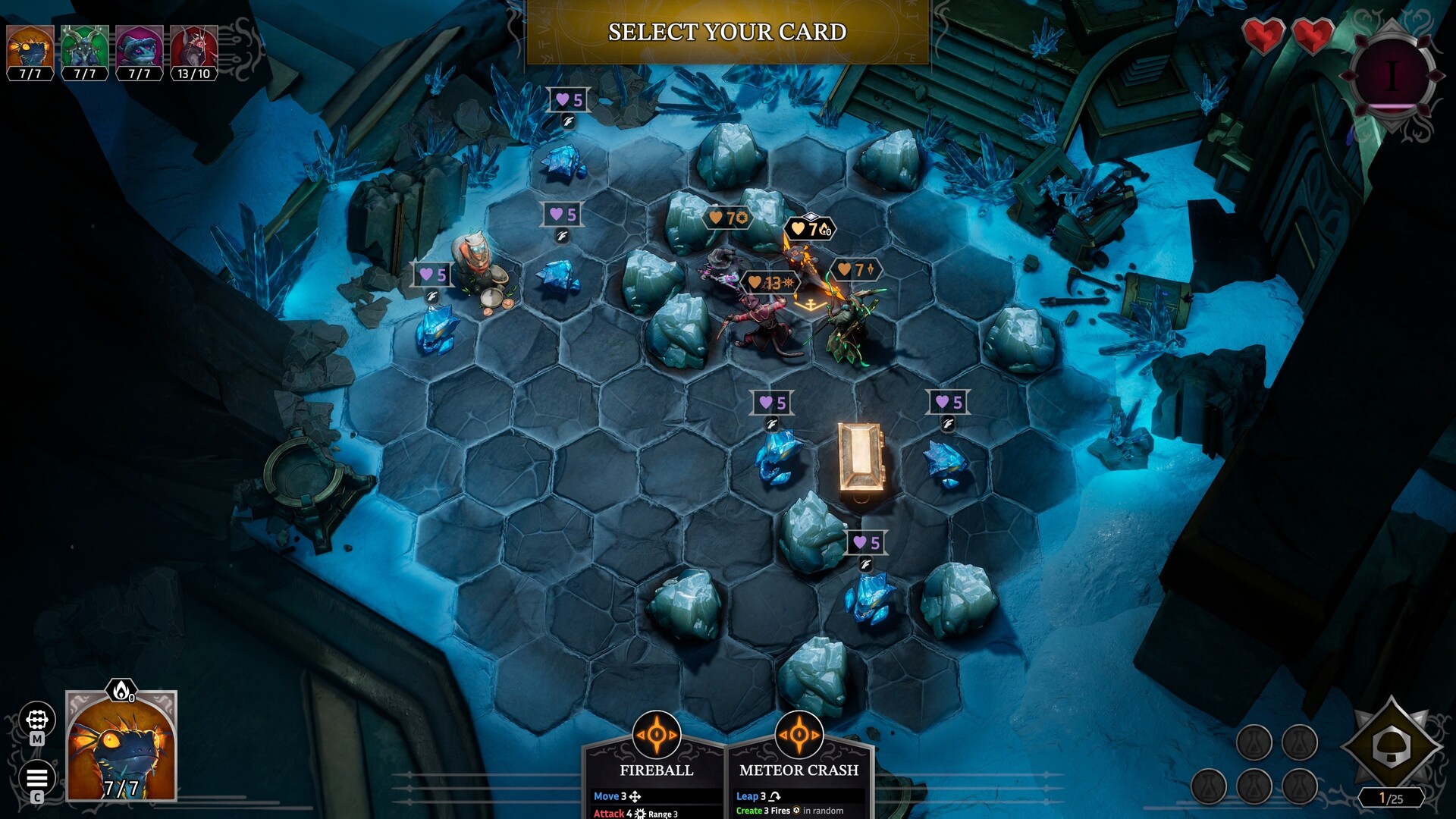
Shadowstone
Choose heroes whose abilities work together in turn-based battles. Push an enemy into lava or duplicate useful mushrooms, then adapt your party across roguelite runs alone or with friends online.
More details
You control a party in turn-based battles where positions and hero combinations matter. A Berserker can charge an enemy into lava; a Witch can duplicate healing or explosive mushrooms. Choosing the party is therefore also choosing which actions can set each other up. You can run several heroes alone or share the group with friends online. Expect time to plan your moves, but also roguelite runs where the rooms and tools change. The important question is what the heroes can do together, rather than which individual has the biggest damage number.
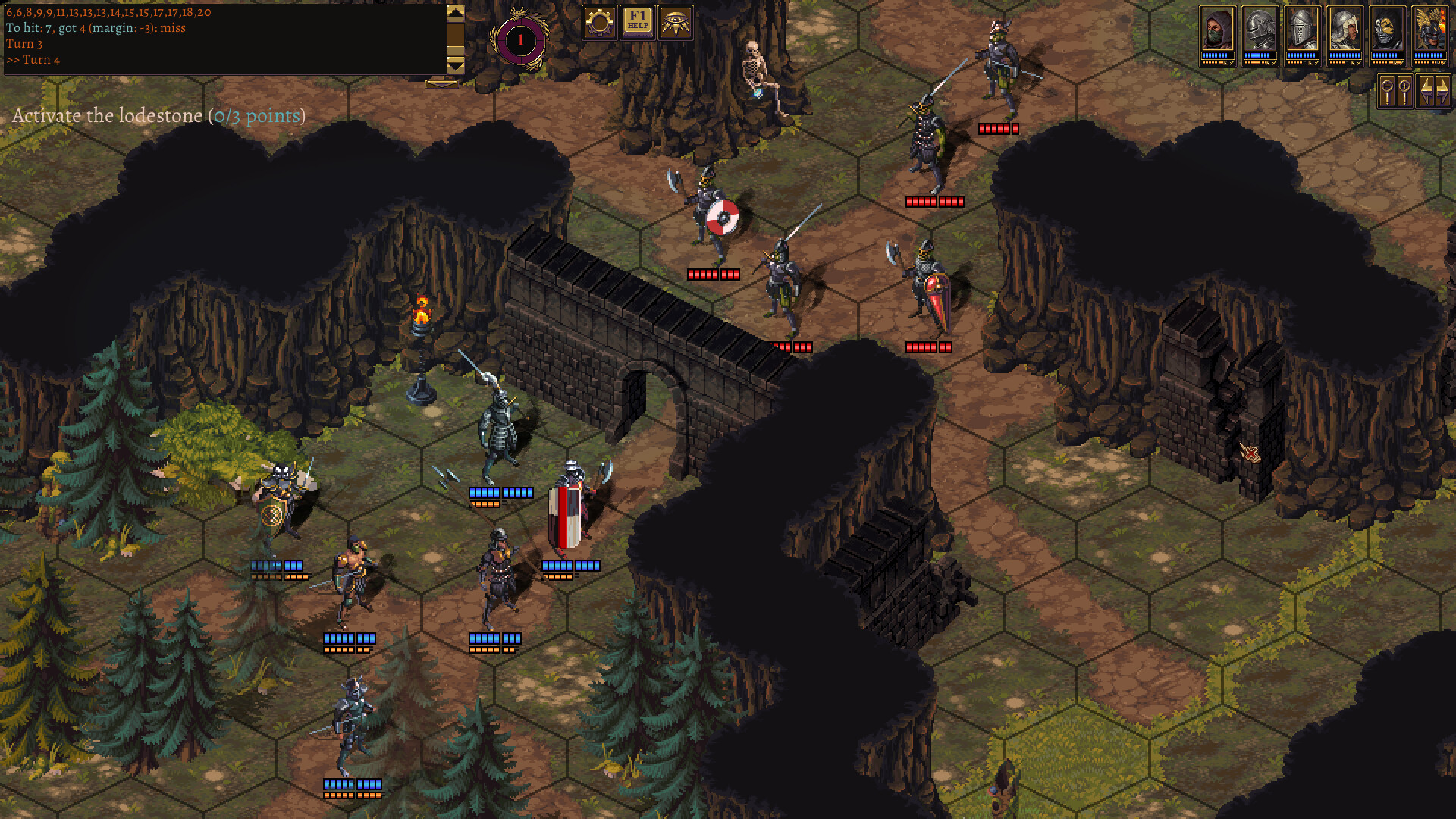
Zodiac Legion
Lead knights through turn-based dungeon raids where adjacent allies strengthen each other. Spreading out can open another approach, but it also removes support and leaves isolated units easier to bring down.
More details
You move a squad of knights through turn-based dungeon raids. Adjacent allies strengthen each other's combat capabilities, while an isolated unit is easier to bring down. That gives formation a direct consequence: spreading out can open several approaches, but it also removes support. Between missions, you develop the order's stronghold and manage its knights. Every move can change that support, so reaching an enemy also means considering who will be left exposed. The longer campaign supports the squads you actually take into those dangerous rooms.
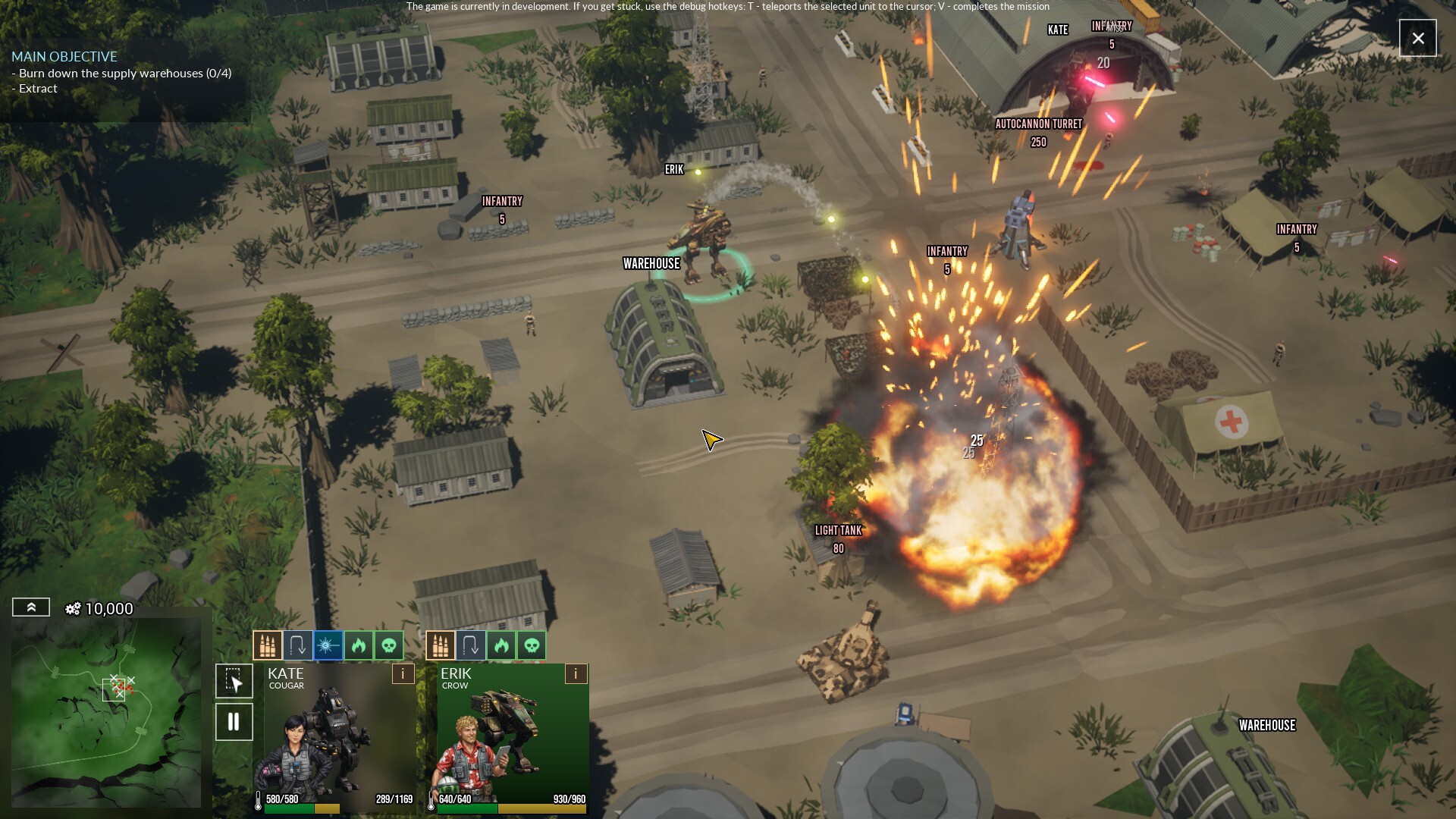
Merc Commander
Command a squad of mercenary mechs in real-time battles, then salvage equipment and repair the survivors. What you recover changes your next deployment, while the repair bill limits what your company can afford.
More details
You give orders to a small group of mercenary mechs while battles unfold in real time. The player role is commanding the squad, rather than personally piloting one machine through an action game. After a contract, you recover weapons and enemy machines, repair your forces and decide what the company can afford next. That links combat to the business: the equipment you salvage can change your next deployment, while repairs use limited resources. Expect tactical squad management and refitting between missions.

Starfinder: Afterlight
Build a crew and spend three actions per turn in tactical science-fantasy battles. Outside combat, dialogue choices and companion dilemmas shape the relationships within your single-player party.
More details
You build a crew in Paizo's science-fantasy universe, with companions ranging from android assassins to mystic prophets. Combat is turn-based and uses Starfinder's three-action system, so your turn is a limited set of actions to spend rather than an uninterrupted exchange of attacks. Classes and equipment shape the options you bring to that turn. Outside fights, companions have personal stories and moral dilemmas, with choices affecting their relationships. Expect a single-player party RPG that alternates tactical planning with dialogue and crew decisions, rather than an online group adventure.

Food Devils
Fight turn-based battles, turn monsters into ingredients and serve meals that strengthen the next run. Your restaurant also attracts adventurers, linking the team you recruit to the business you run between fights.
More details
You command a party through turn-based battles on grid maps, combining a Food Devil with human adventurers in roles such as warrior, shielder, mage and healer. Devil contracts change their skills and mobility. Monsters become ingredients, which become meals that boost your next run. Your restaurant's furniture also attracts different kinds of adventurers. That creates a practical loop: the fighting feeds the restaurant, and the restaurant supplies the people you take fighting. Your choices back home help determine who you can recruit and what that team can do on its next outing. The refreshed demo contains the prologue and the core loop.
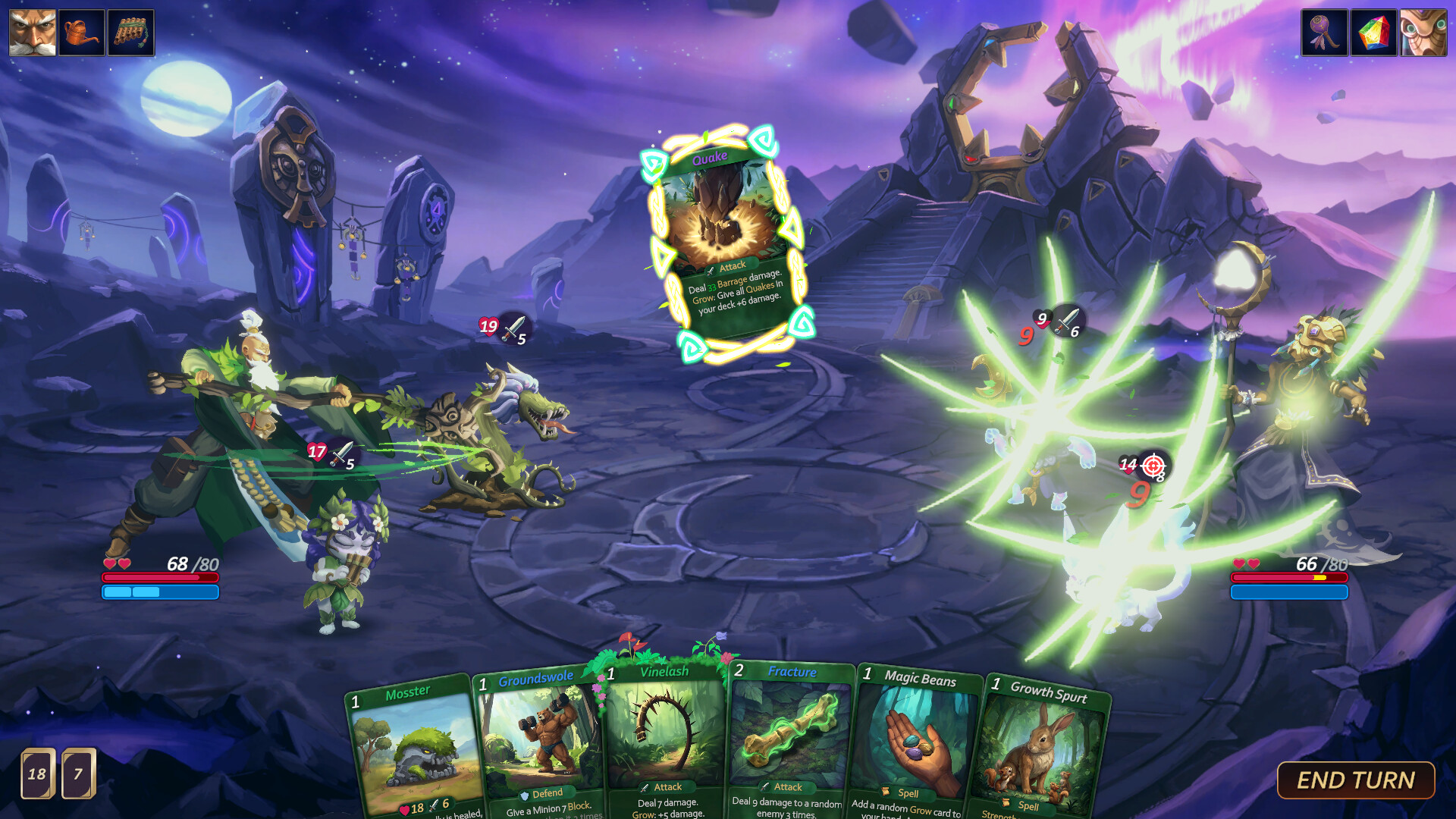
Backdraft
Pair a hero with a companion to combine elemental card pools, then draft cards and recruit minions. Each battle asks whether to clear the opposing board, protect your own creatures or attack the enemy hero.
More details
You start by pairing a hero with a companion, which adds a second elemental card pool to your run. Shop visits let you draft the deck, recruit minions and improve the setup. In battles you play cards and summon those minions to contest the board against another hero who also builds and plays a deck. Once cards hit the board, you must decide whether to remove enemy minions, protect your own or attack the opposing hero. A strong deck still needs a plan for the position in front of you. Solo runs and online opponents are offered.
Explore & fight
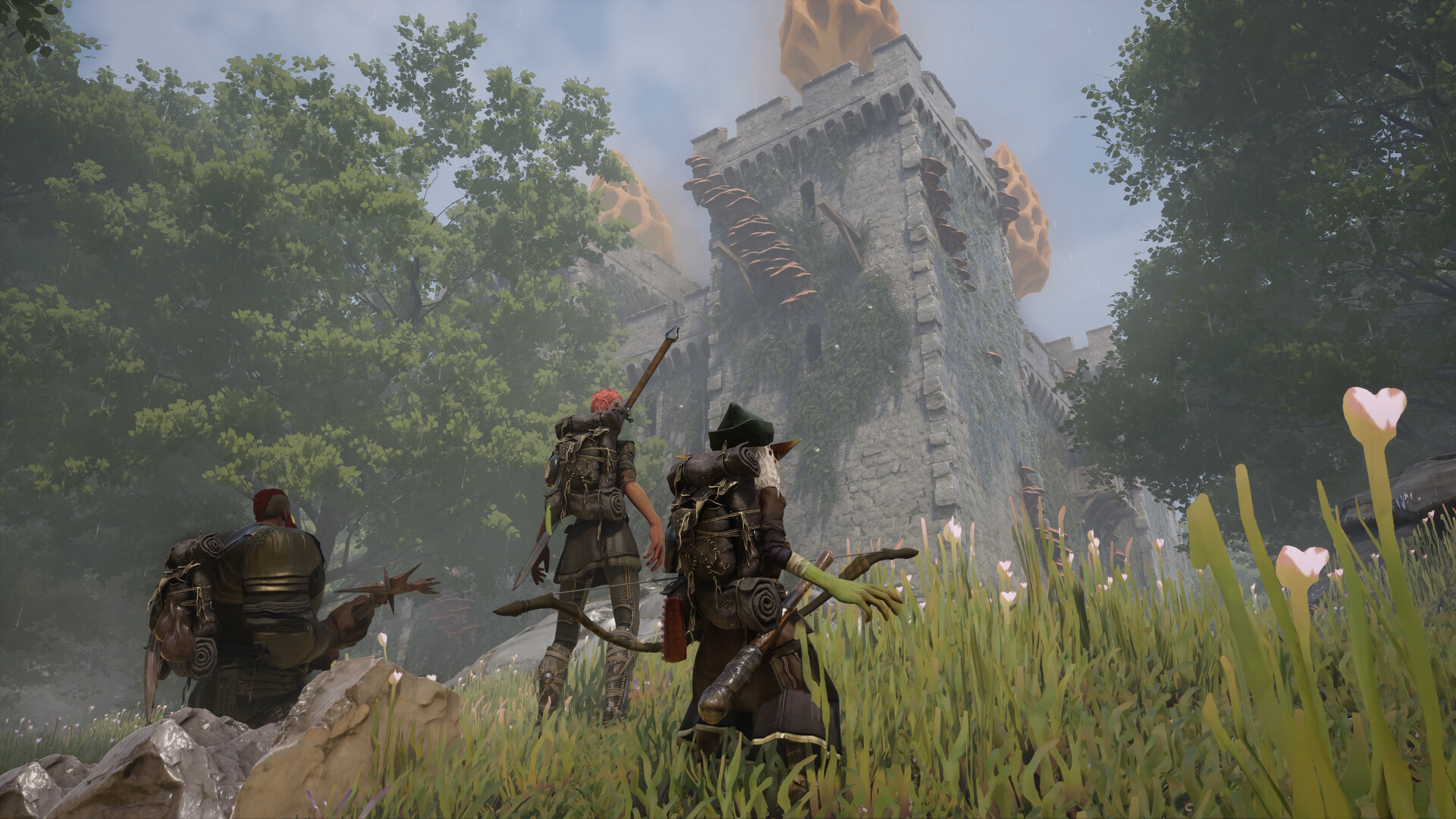
Wyldheart
Switch between weapons, spells and thrown concoctions in real-time fights, then return to town to prepare for another expedition. The demo supports co-op, but an offline solo campaign cannot later become an online one.
More details
Combat is real-time, with quick switches between melee and ranged weapons, spells and thrown concoctions. Flexible skill trees let you mix those approaches without committing to one fixed class. Outside fights, you pick up rumours, explore ruins and return to towns to craft, cook and prepare gear. Preparing a useful mix of tools gives you options, but you still handle the attacks yourself when a fight starts. The co-op design includes shared progress and drop-in play; in the demo, however, an offline solo campaign can't later become an online one.
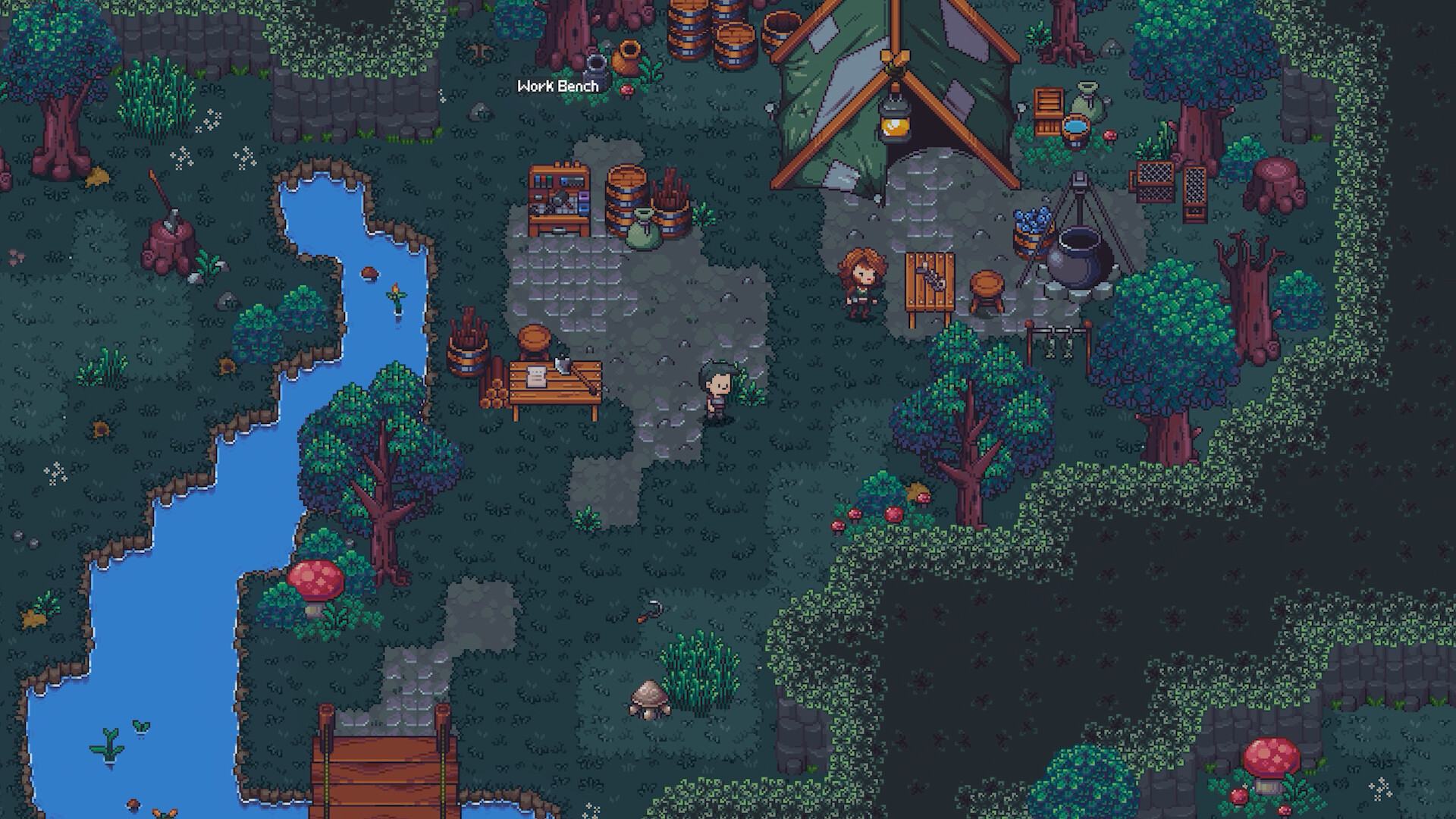
Emberville
Explore an underground prison and rescue people who help rebuild a ruined town. Weapon combos, positioning and timing drive the fights; crafting and rebuilding support the expeditions that bring those people home.
More details
You're exploring an underground prison and rescuing people who bring their trades back to a ruined town. The fighting is an active part of that journey: weapon-specific combos let you chain attacks, while positioning and timing matter against creatures and bosses. Classes can inherit active and passive skills from other classes you've learned, giving you another way to combine a build. Expect to learn how a weapon behaves as well as improve the character behind it. Rebuilding and crafting support those expeditions; the pixel-art town is only one half of the game.
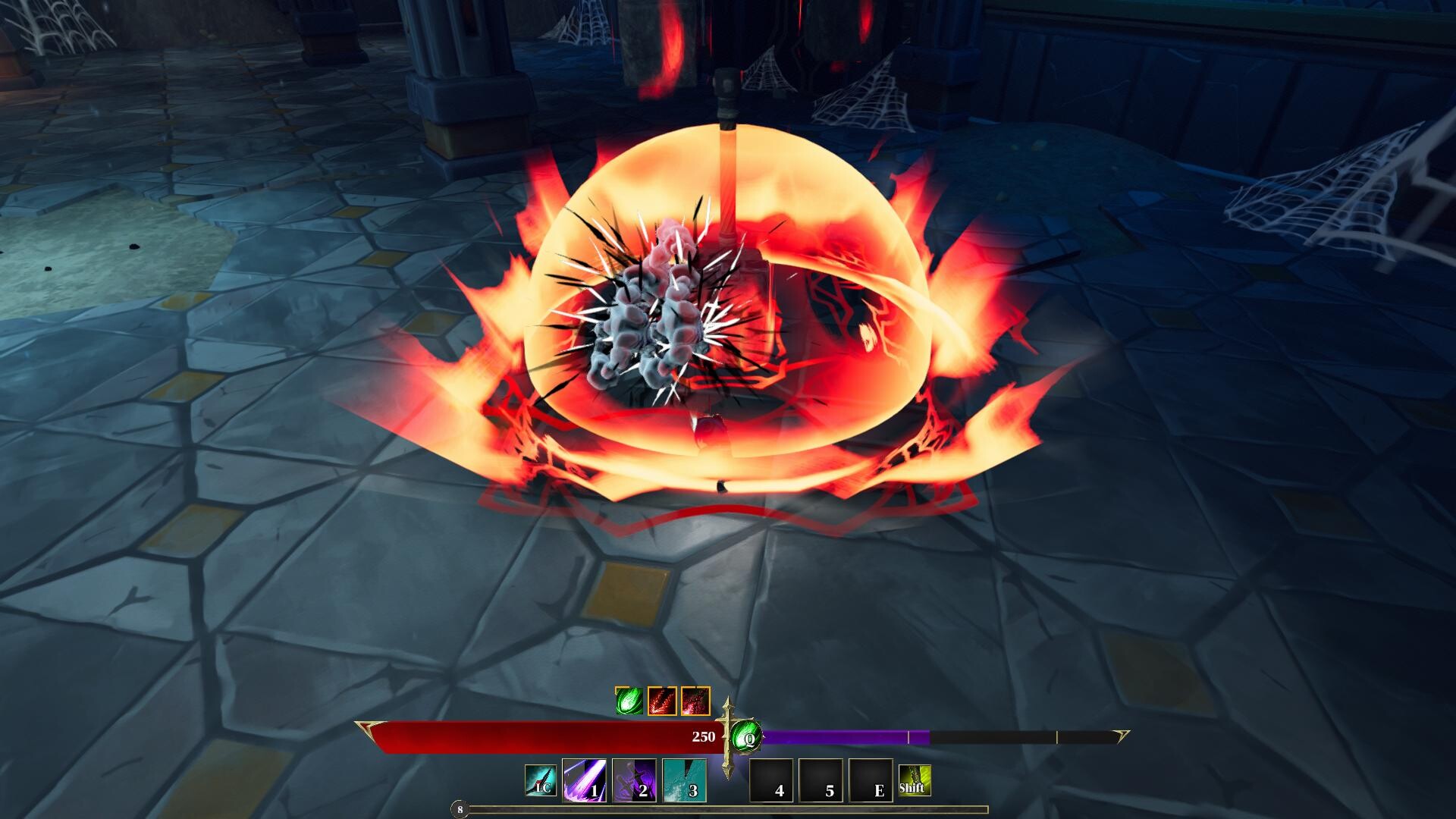
Sil and the Fading World
Fight multi-phase raid bosses alone, directly controlling one character while dodging mechanics and managing cooldowns. Build choices matter, but you still need to learn the encounter and execute the fight yourself.
More details
You directly control one character in third-person fights against multi-phase raid bosses. The developer describes dodging encounter mechanics, managing cooldowns and saving burst damage for the right openings. Equipment and specialisations change the build, but you still have to execute the fight yourself. Expect the attention and repeated learning associated with an MMO raid encounter, adapted for a solo player. It's aimed at the person who likes working out a boss but doesn't want to arrange a guild evening before every attempt.
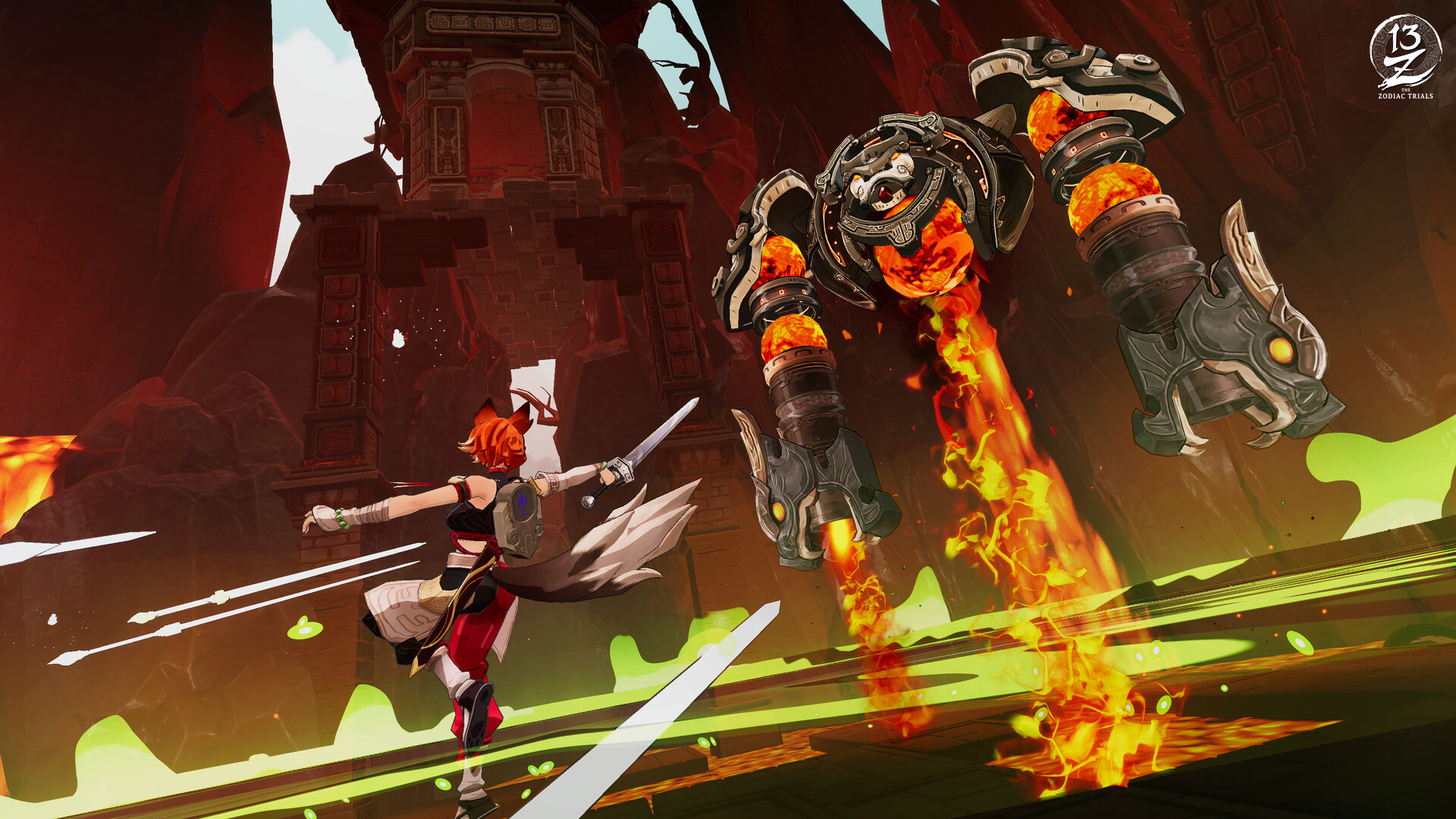
13Z: The Zodiac Trials
Choose an animal spirit and fight through arenas in a real-time hack-and-slash roguelike. Different characters change your basic fighting style, while upgrades shape each run; play solo or in online co-op for up to four.
More details
You directly control an animal spirit in a real-time hack-and-slash roguelike. The fox fights with a sword, while the raven uses feathers, so choosing a character changes the basic style you take into a run. Upgrades and modifiers then shape that style as you face arenas and guardians on the way to a thirteenth seat in the zodiac. Expect active combat and adapting a build across attempts, with solo play or online co-op for up to four. The exact timing demands and difficulty still need actual play before judging them.
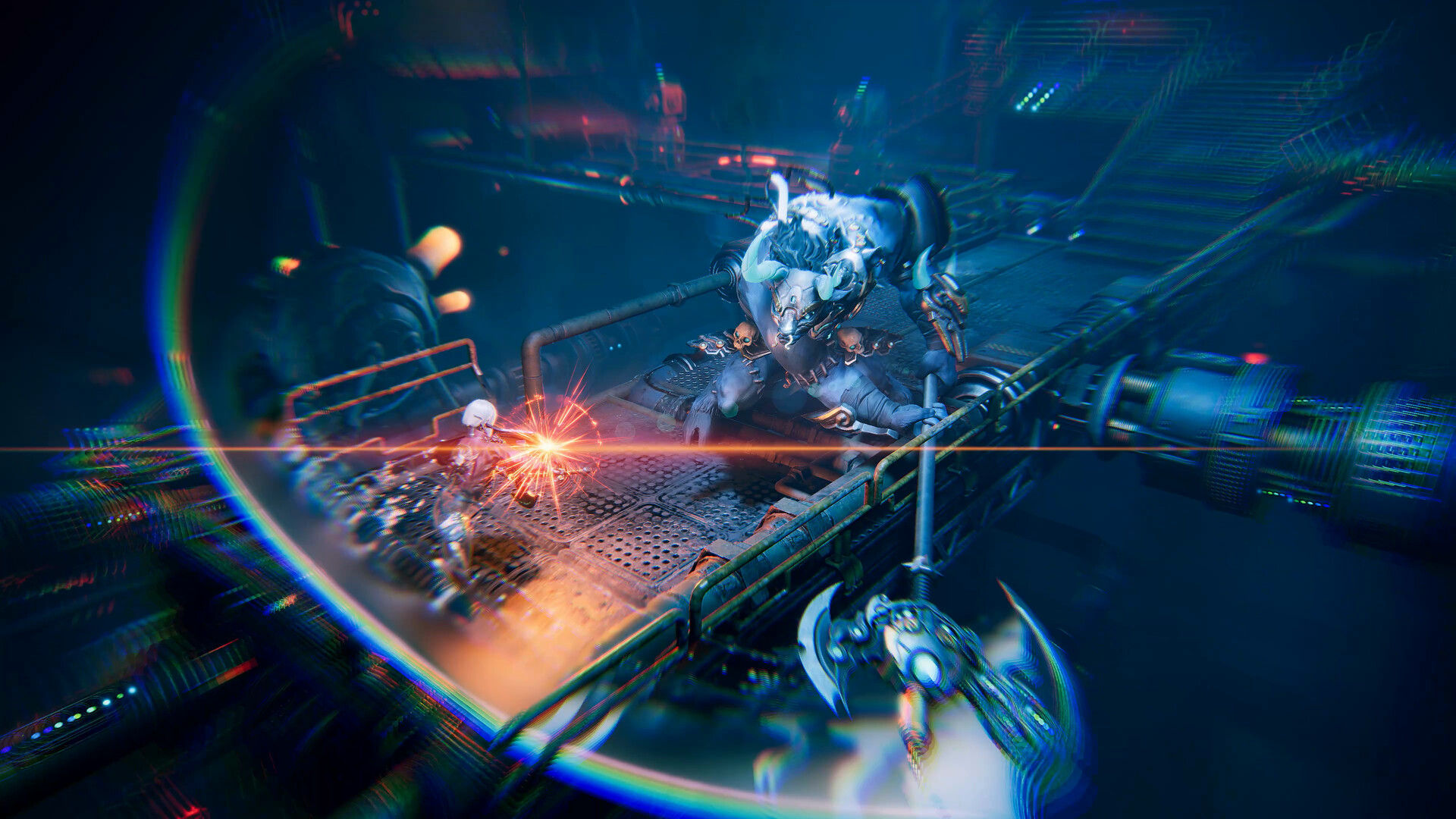
ReBlade: The Death Spiral
Fight mechanical creatures in a cyberpunk world inspired by Chinese mythology. Read enemy behaviour, balance attack with defence and adjust weapons, chips and augments as repeated resets reveal more of the world.
More details
You directly fight mechanical creatures in a cyberpunk world inspired by Chinese mythology. The combat is built around reading enemy behaviour and balancing attack with defence, so a stronger build still needs timing and control. Weapons, chips and augments let you change how you approach the next run. Your synthetic is trapped in repeated resets, and each attempt reveals more of the world and the way out. Expect an action-focused roguelike loop, rather than choosing attacks from a turn menu.
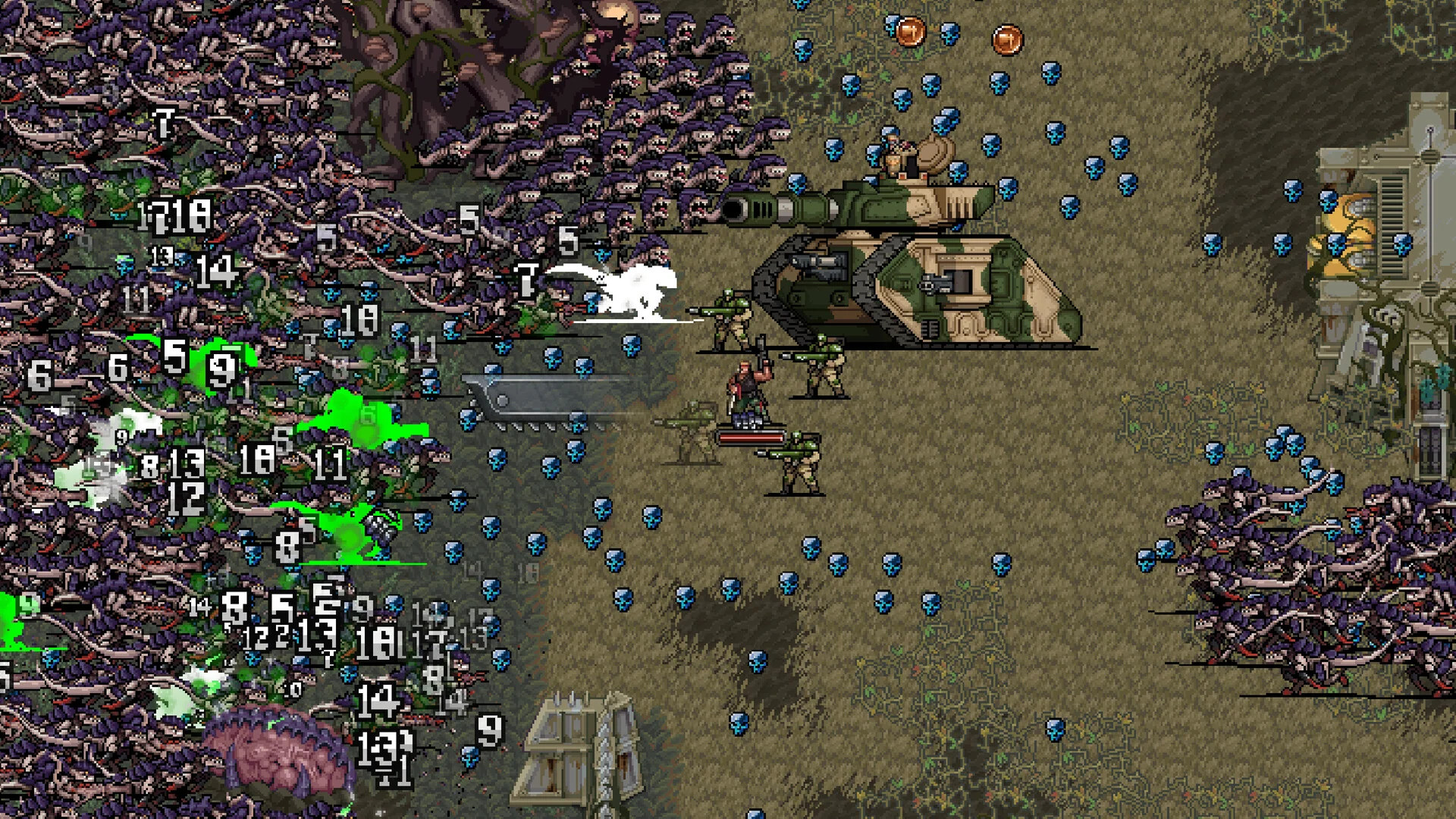
Warhammer Survivors
Steer a champion through enemy swarms and combine weapons with passive upgrades to unlock evolved forms. Some weapons aim automatically and others do not, so your build also changes how you handle the pressure.
More details
You steer a champion through swarms and build a growing set of weapons and power-ups as you survive. Some weapons aim automatically and others don't, so your weapon choice also changes how you handle the swarm. Weapons and passives can combine into evolved forms. There's also a squad system: an incompatible weapon can bring an ally who uses it for you. Expect movement, attack coverage and build choices under increasing enemy pressure, with characters from both Warhammer 40,000 and Age of Sigmar.
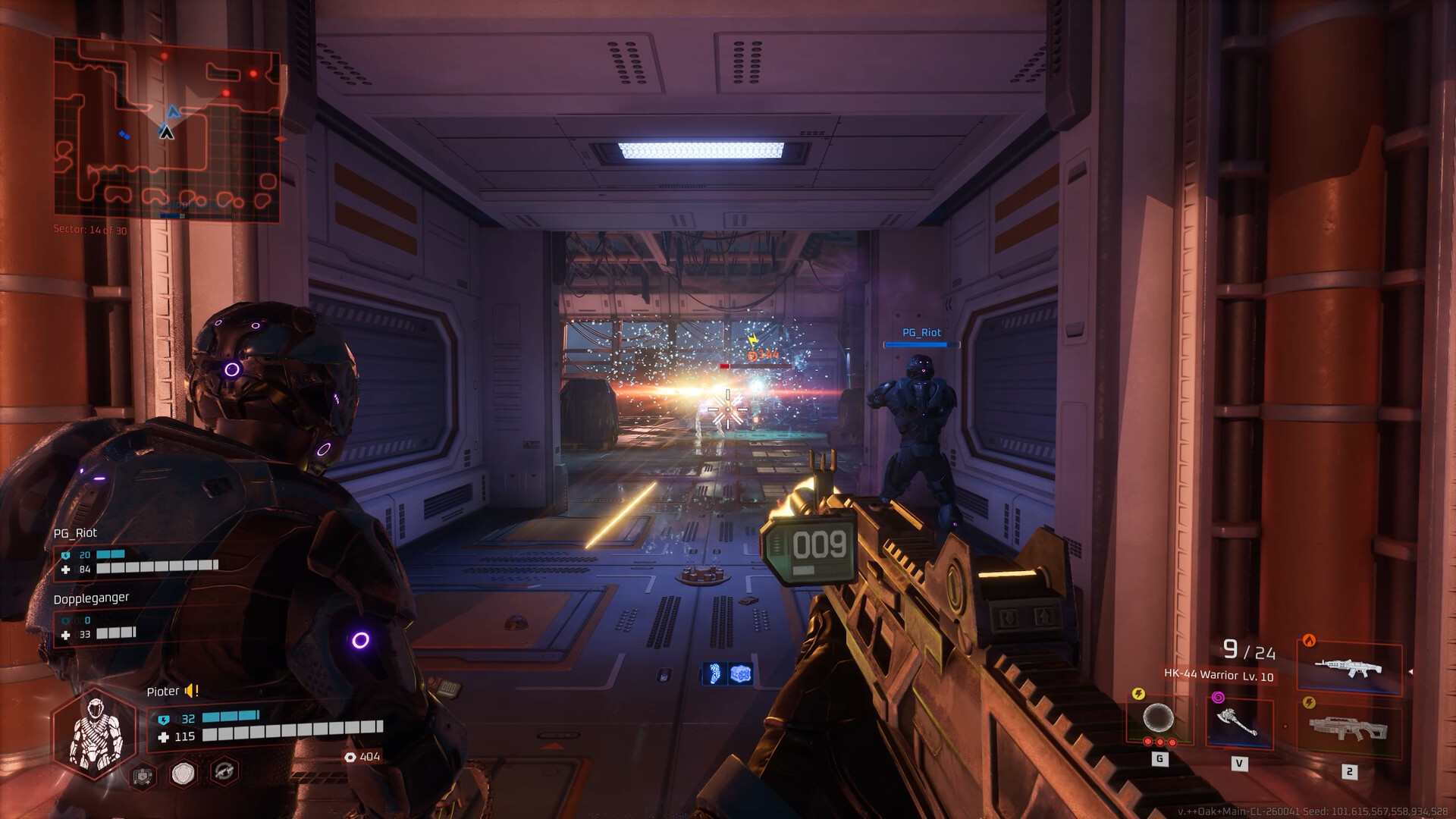
Deadzone Rogue 2
Aim and shoot through Monarch’s machines while choosing elemental weapons and augments for each run. The demo offers solo play and co-op, with PC and console cross-play while platform versions match.
More details
This is direct first-person shooting: you aim at Monarch's machines and use elemental weapons, augments and other run choices to shape your loadout. The roguelite layer sits around that action, with permanent upgrades available when your character is rebuilt after death. You need to land shots yourself while choosing upgrades that work with the weapons you've found. The demo supports solo play and co-op, including cross-play between PC, PlayStation 5 and Xbox while platform versions match. Online groups can use a server browser and drop-in play.
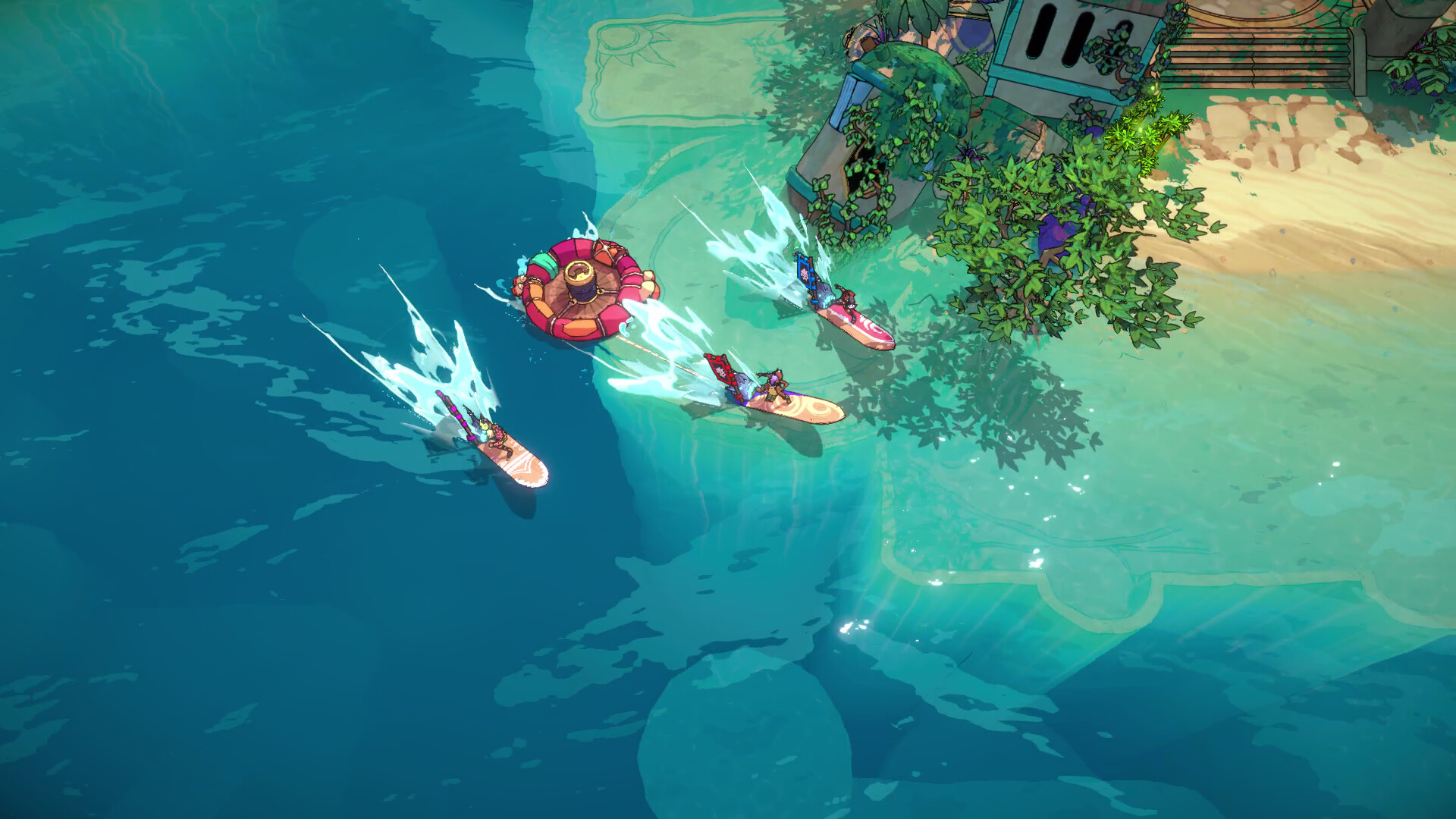
Surfpunk
Fight across islands, surf between them and tow a barge carrying your loot. Rising enemy pressure and an approaching tsunami turn another detour into a decision about how much of the haul you are willing to risk.
More details
You directly fight across islands with weapon classes that have different jobs. A sword supports fast melee movement; an anchor can pull teammates up cliffs; a guitar offers timed support effects. Between fights, you surf and tow a barge carrying your loot. Enemy pressure rises over time, and a tsunami eventually makes escape unavoidable. That turns one more detour into a real decision about the haul you're risking. Your team needs to fight, move the haul and agree when it's time to leave.
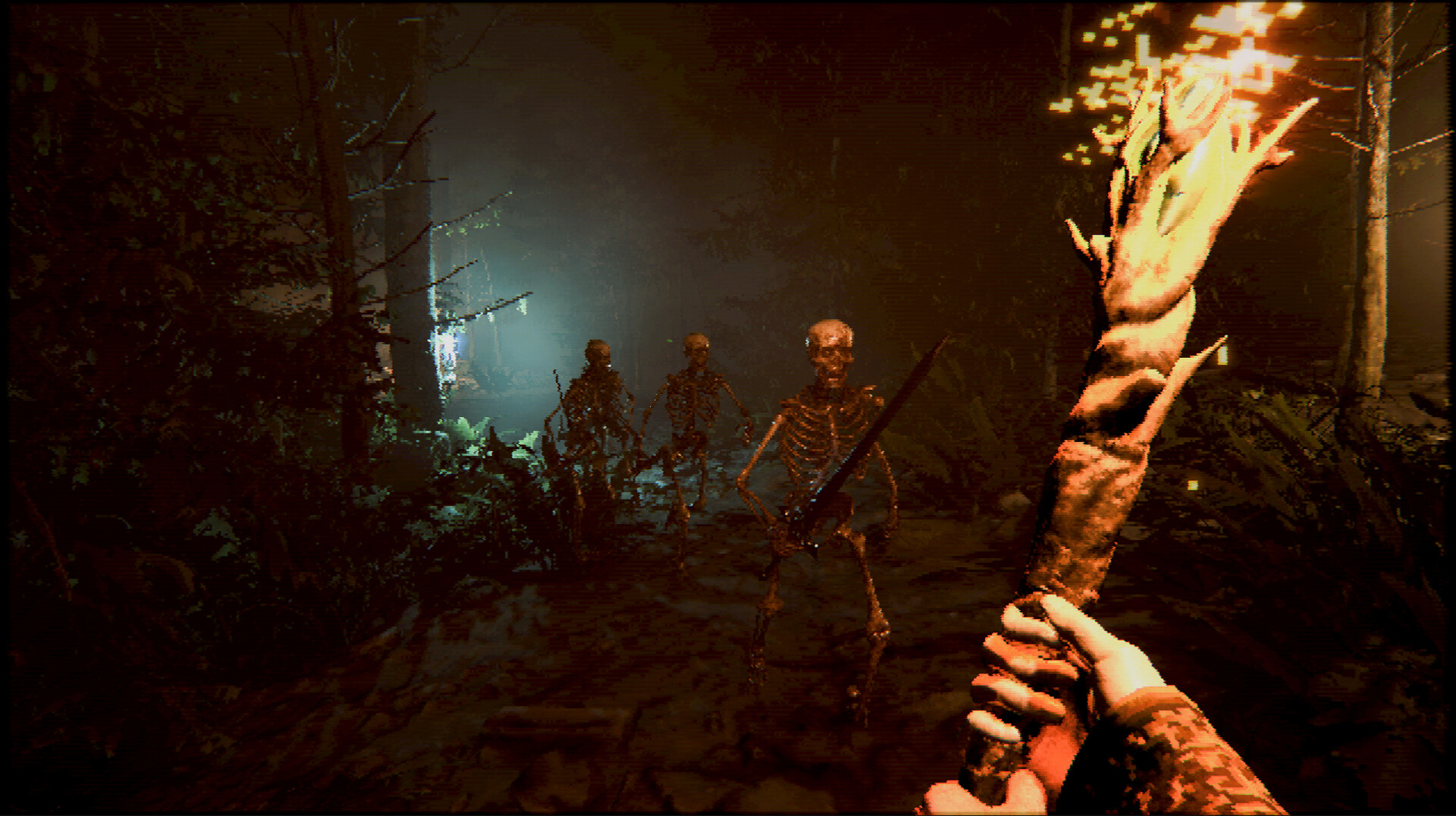
Ignite the Depths
Choose a class and actively fight through a hand-built labyrinth of routes, secrets and puzzles. Explore alone or with up to four players; the developers explicitly exclude forced PvP and extraction mechanics.
More details
You actively fight through a hand-built labyrinth, choosing classes with different weapons, abilities and team roles. You can attack from range with fireballs, fight with a blade or hold the front behind a shield. Routes, secrets and puzzles sit alongside the battles, giving the expedition more to do than clear waves. Expect active class-based dungeon exploration, solo or with up to four people. The developers explicitly exclude forced PvP and extraction mechanics, so other players aren't being presented as the threat waiting to steal the end of your run.
Strange, dark & gently spooky
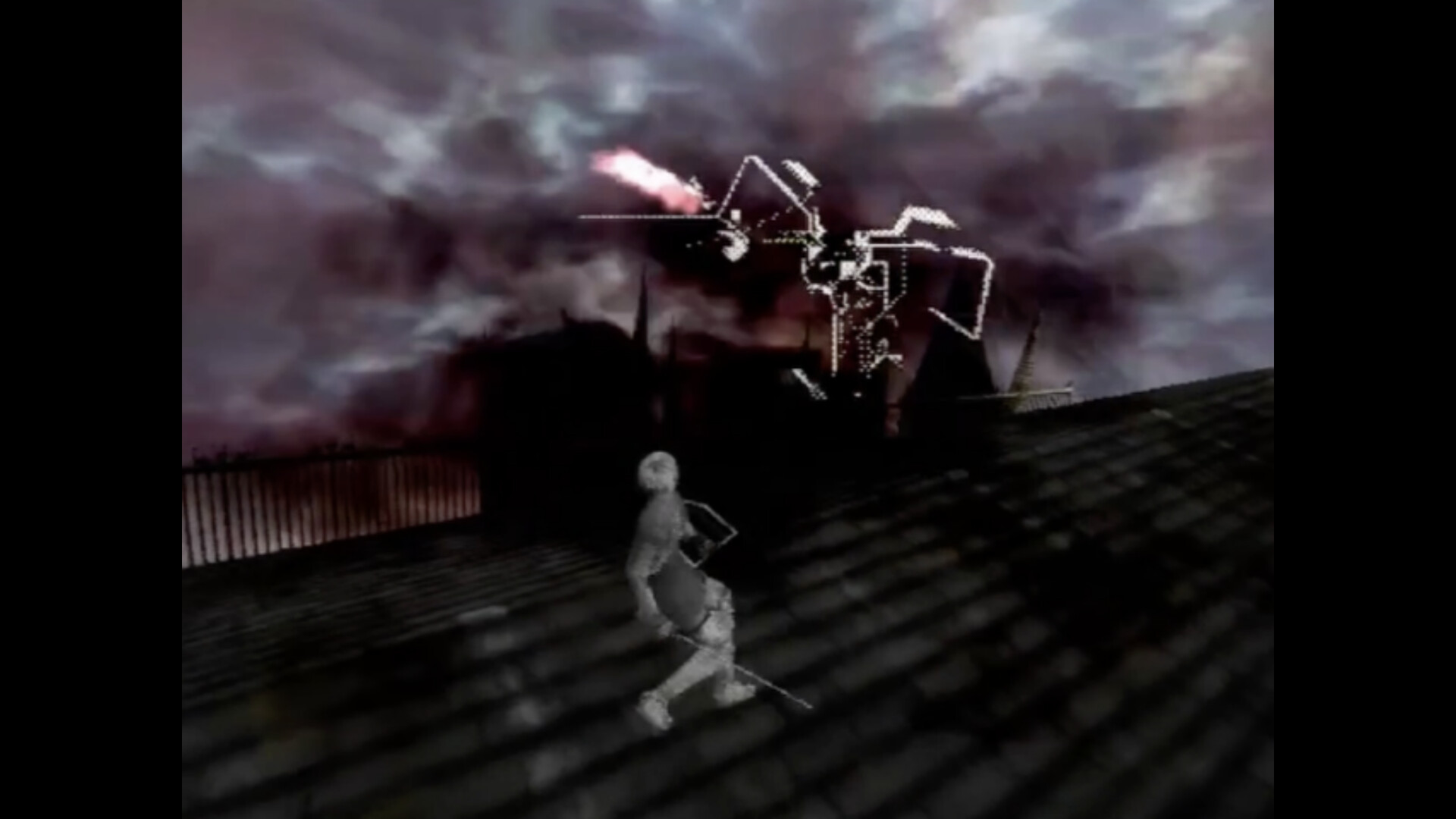
PRISON OF HUSKS
Guide a doll through a painted afterlife with weapons, magic and timed parries. There is no character levelling to grind past a difficult fight; the updated demo contains the first level and a boss.
More details
You directly control a doll through a painted afterlife, using weapons, magic and precisely timed parries against enemies and bosses. Its compact levels connect through secrets and shortcuts, so finding your way through the world is part of the challenge. There is no character levelling: a failed fight sends you back to reconsider equipment, strategy or execution instead of relying on a level grind. Expect a soulslike built around learning encounters and routes. The updated demo includes the first level and a boss, not the full interconnected journey.
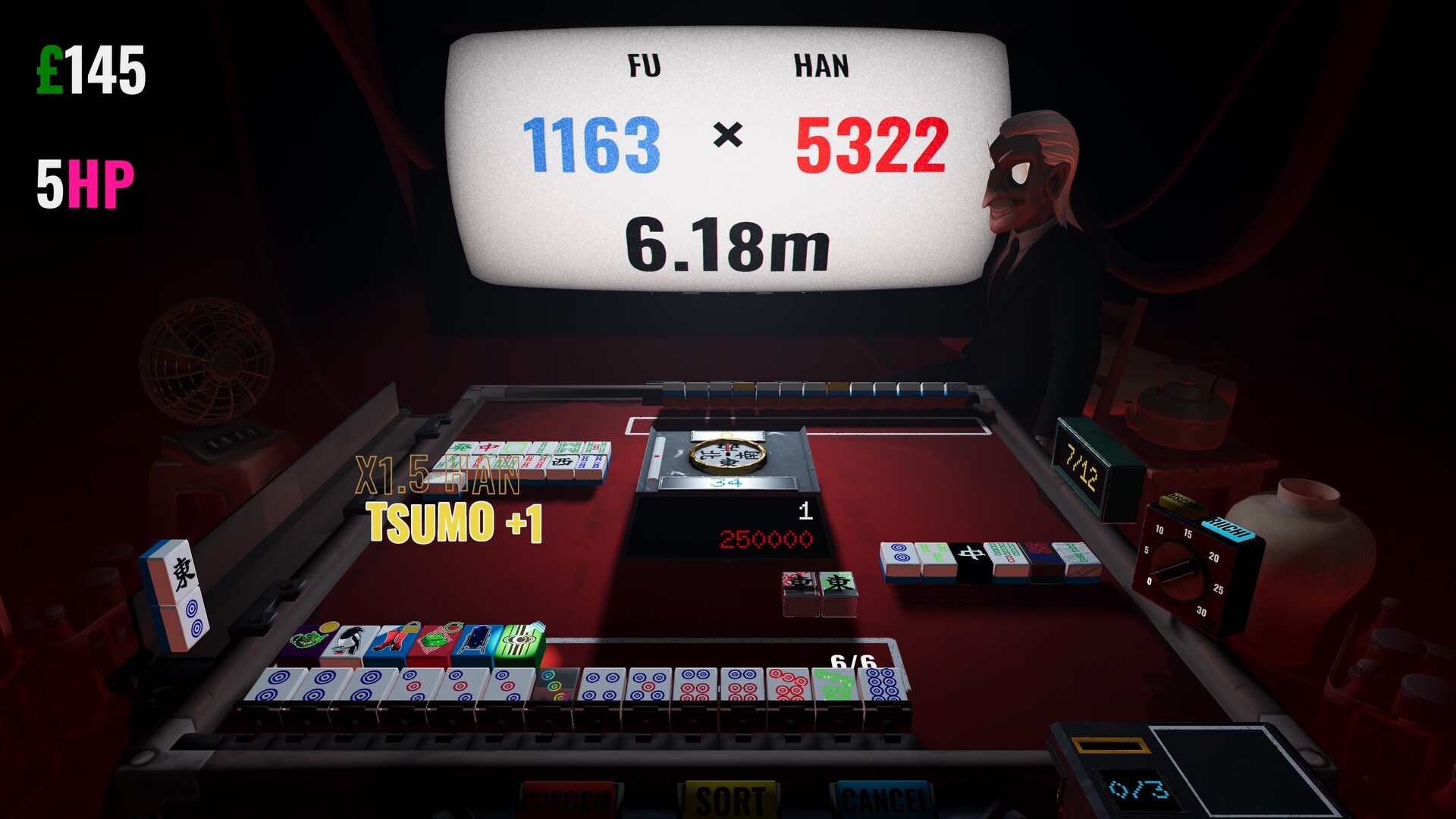
Hell Wait
Build riichi mahjong hands while jokers, tile enhancements and blessings change your scoring options. Discards can also help your opponent, giving the horror-themed table a risk beyond reaching the next score target.
More details
You build scoring hands in riichi mahjong, drawing and discarding tiles while an opponent sits across from you. Jokers change rules, tile enhancements and blessings improve your scoring, and each stage asks you to meet a higher target. Discarding can also help the opponent complete a hand, so the choices are about risk as well as your own combination. The threat to your fingers gives the table its horror framing. Expect a hand-building roguelike, not the solitaire matching game also called mahjong. A tutorial is included and some advanced rules are optional.
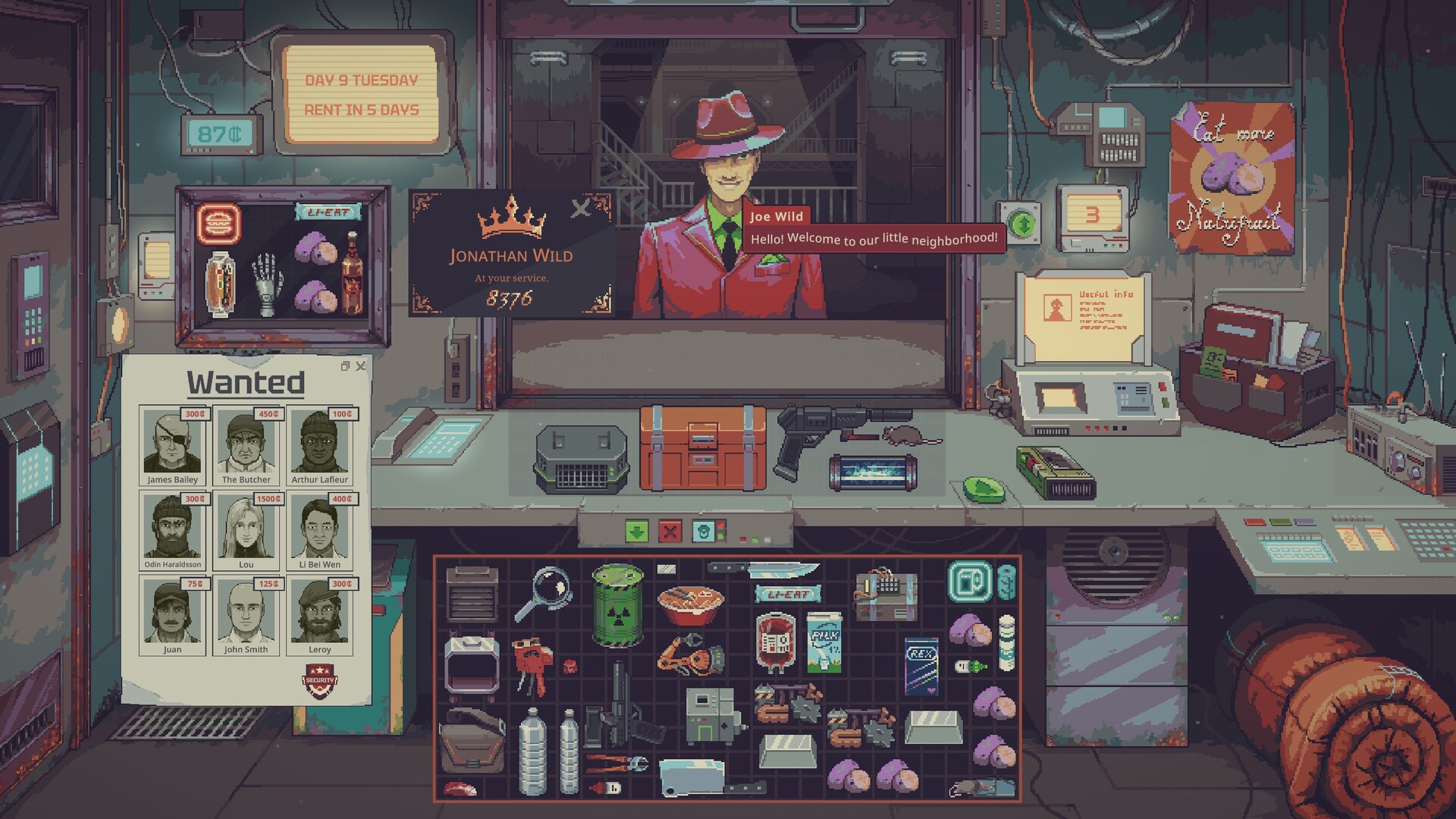
Probably Stolen
Run a space-station shop where rent rises and the stock is not always legal. Each customer brings a choice: sell, refuse, report them or look away, with money and faction reputation both at stake.
Read our Probably Stolen overview.
More details
You're running a shop on a space station where the rent keeps rising and the stock isn't always legal. Trading means deciding how to handle the person across the counter: sell, refuse, report them or look away. A customer may be linked to security or a rival faction, so money isn't the only consequence of a transaction. Crafting and smuggling feed the business, while reputation affects the trouble and opportunities around it. Keeping the shop open means weighing today's income against the attention a sale might attract.
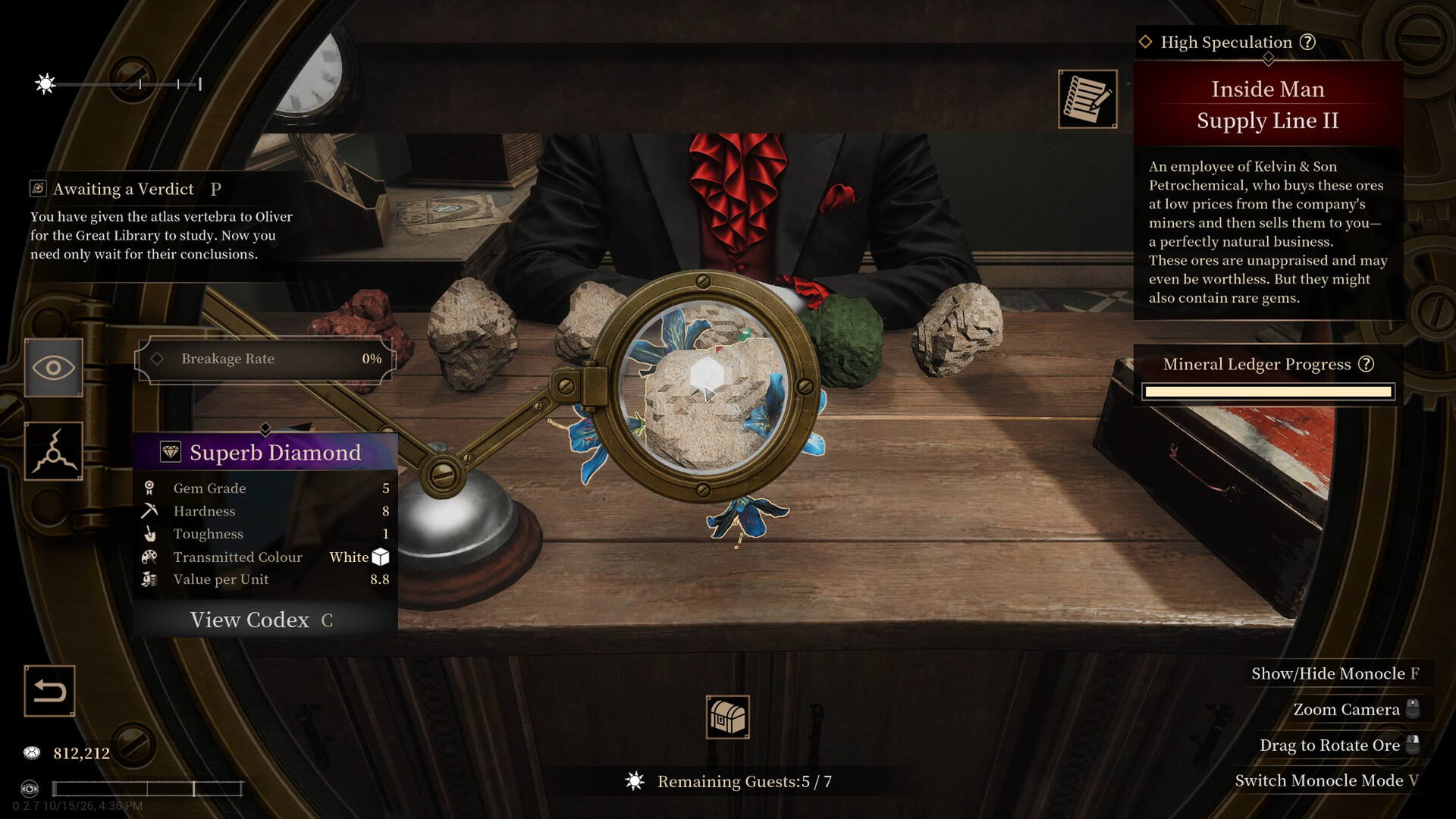
Abyssal Lapidary
Inspect ore, remove impurities, cut facets and set stones into jewellery at your own workbench. Increasingly strange clients arrive as your reputation grows, and some of the materials you handle are alive.
More details
You inherit a declining jewellery house and personally work the raw materials: examine ore, remove impurities, cut facets and set the finished stones into jewellery. Different minerals behave differently, so the craft is meant to involve how you treat each piece, rather than only choosing a recipe from a list. Your growing reputation draws increasingly strange clients in an underground Victorian city. Some stones are alive, making the object you're carefully handling part of the unease. Expect hands-on workshop tasks and a mystery around your materials.
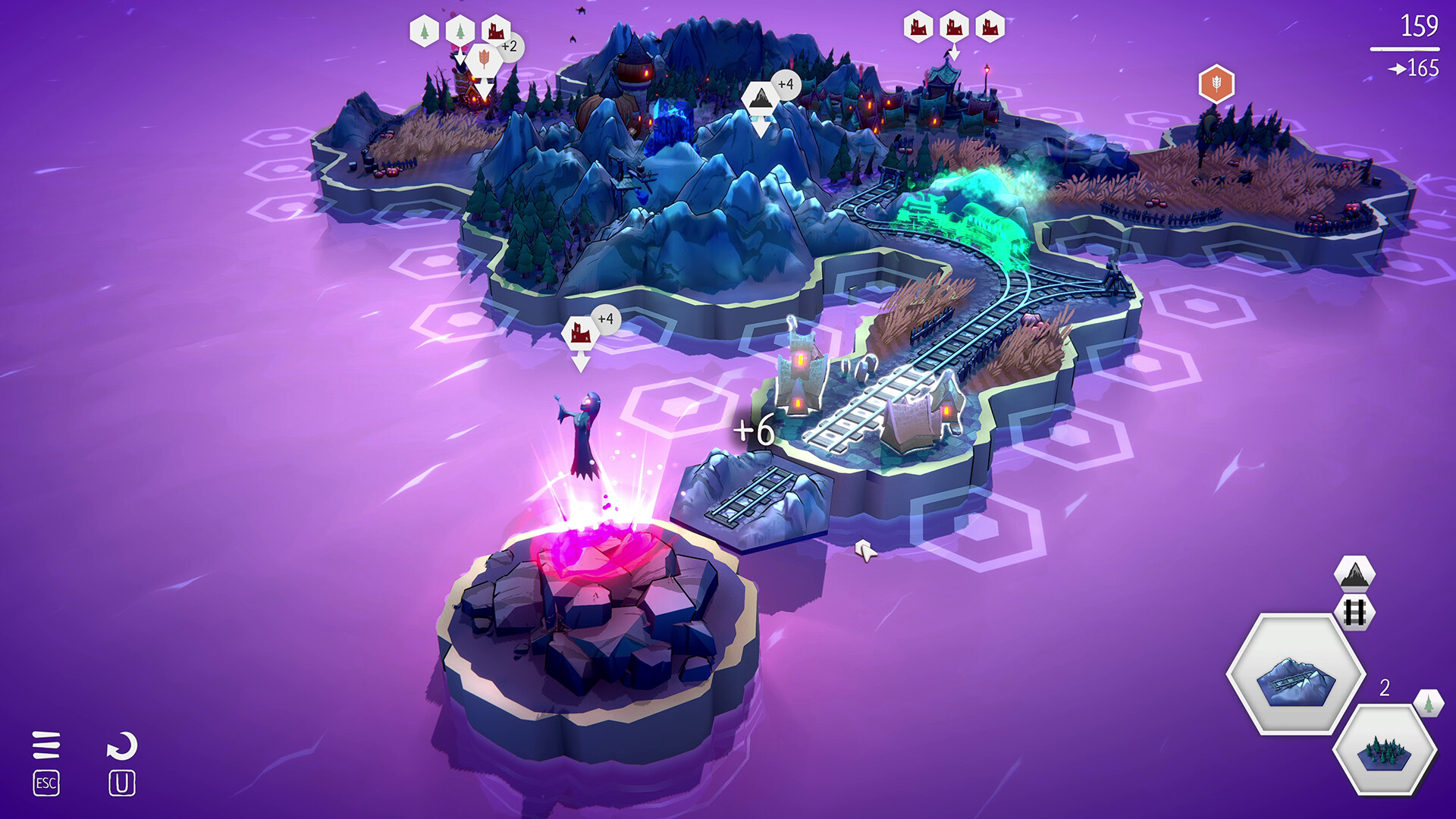
Fangtopia
Place landscape tiles to score points, complete landmark objectives and attract friendly monsters. Their habitats add another placement problem: a werewolf needs forest and a yeti needs mountains, with no timer forcing your next move.
Read our Fangtopia overview.
More details
You place hexagonal landscape tiles, matching terrain to earn points. Score goals provide landmarks, and completing their objectives unlocks more tiles to keep the world growing. Portals attract monsters whose habitats you then place: a werewolf belongs in a forest, a yeti in the mountains. That gives the landscape both a scoring puzzle and a place to accommodate creatures. There are no timers or scares, but placement still matters if you want a higher score. The monsters give you another reason to shape the terrain carefully, even with nobody rushing you.
Cause trouble & improvise
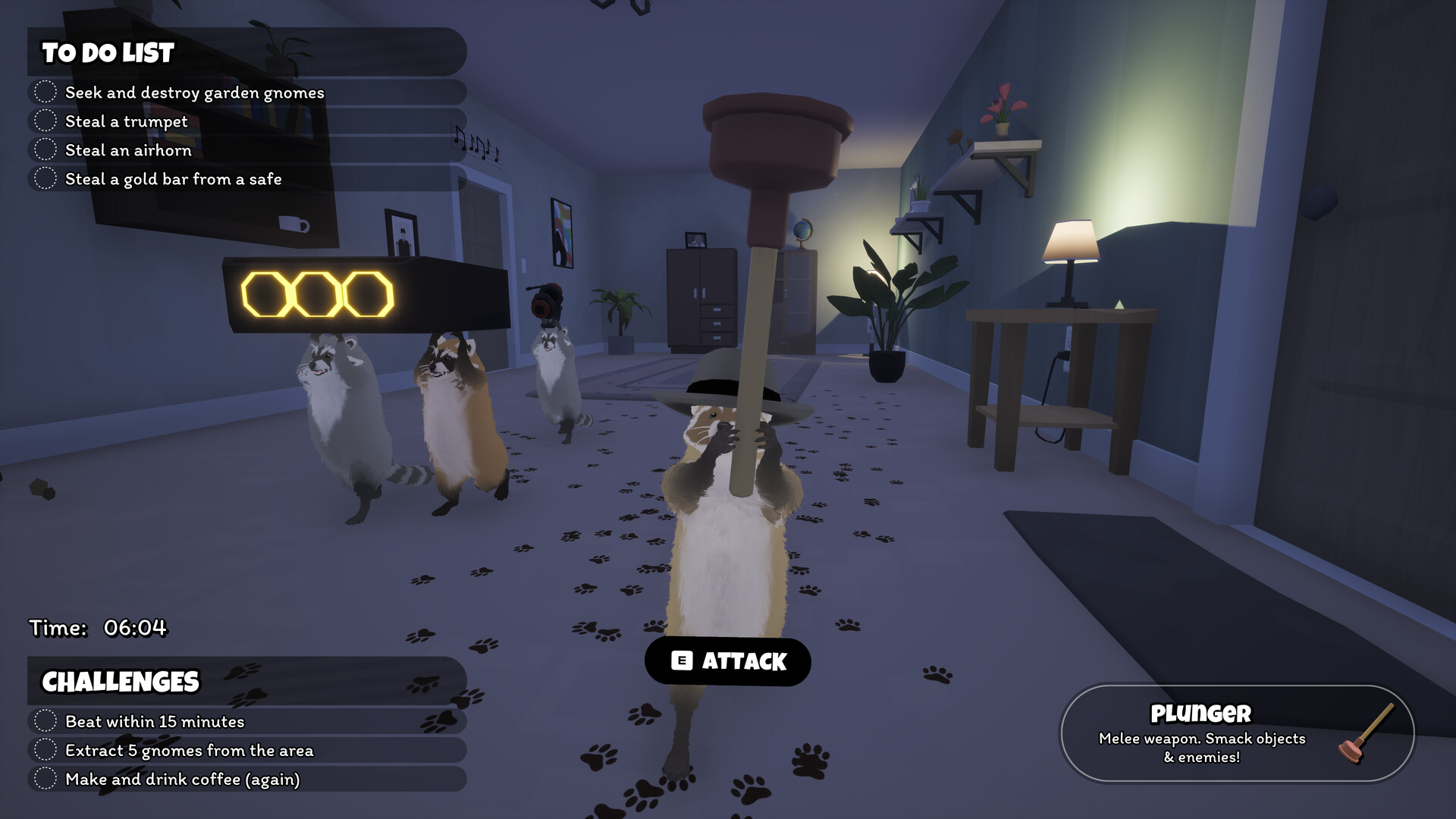
Dumpster Gang
Climb, squeeze through vents and steal as a raccoon, alone or with up to three friends. Heavy loot may need several players to carry it, while a pursuing exterminator can turn the job into a rescue.
More details
You directly control a raccoon that can climb walls, squeeze through vents and grab or throw objects. Missions are about stealing and causing trouble, but heavy loot can need several players to carry it, and a captured friend may need rescuing from the exterminator. Those little bodies change how you navigate an otherwise ordinary place. Expect physical co-operation and improvising around accidents while a pursuer threatens the job. You can play alone or in a group of up to four; the cute animal cast doesn't make every mission a relaxed walk.
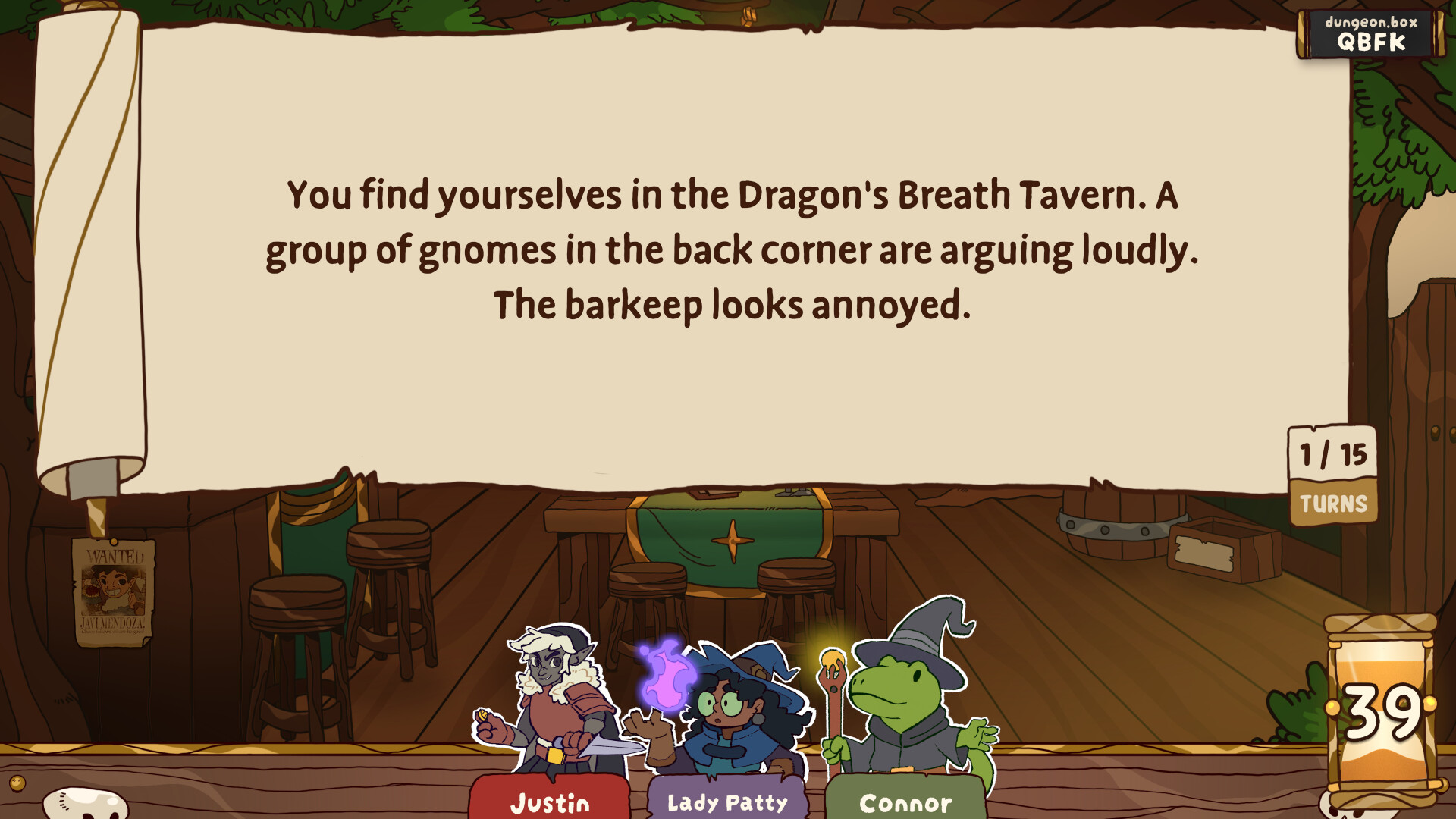
DungeonBox
Join from a phone browser, suggest what your character should attempt and vote on the group’s next move. Dice decide the result in this party storytelling game for up to eight players.
More details
Everyone joins from a phone browser and types what their character should attempt. The suggestions appear on the shared screen, the group votes, and a dice roll decides whether the chosen move works. A human or computer dungeon master provides the scene. You spend the session proposing ideas, persuading the group and reacting when the dice undo the plan. Expect a party storytelling game for up to eight players, with phones as controllers and voting as part of the play. A room code handles joining.
Before you download
When does Steam Next Fest October 2026 end?
26 October at 10:00 a.m. Pacific, or 18:00 in Berlin. The festival runs from 19–26 October.
Will every demo disappear when Next Fest ends?
Demo windows vary by developer. Check the linked Steam listing for each game; the festival dates do not establish an individual download deadline.
Are these hands-on reviews?
No. This selection explains the games using developer information and official footage. Full-game features shown in trailers may differ from the content available in each demo.
Sources
Game descriptions and demo details are based on the linked official Steam listings and developer announcements checked for the video on 22 October 2026. The video uses official trailer footage. Valve: Steam Next Fest October 2026 dates. These links are the place to check current demo availability.
Images: official screenshots from the linked Steam listings; © their respective rights holders. Full-game screenshots may show content outside the demo.