SuperReap demo: one more unlock, then one more question
SuperReap's demo keeps the unlocks coming. My impressions and a developer interview on the full game, mole builds, progression and its AI soundtrack.

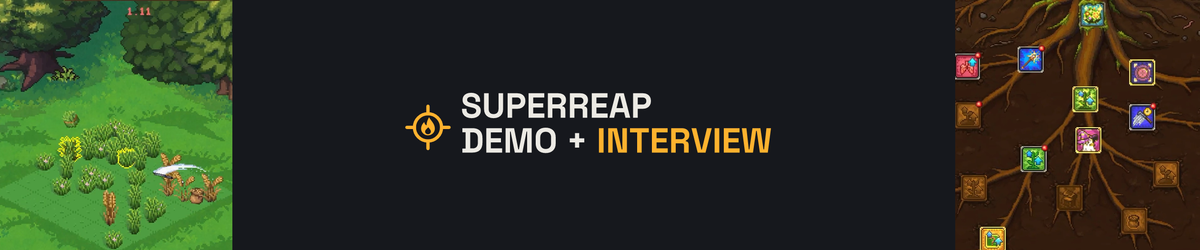
The SuperReap demo is a cozy active incremental harvesting game with a convincing 'just one more round' loop. If you enjoy short harvesting runs, upgrades and discovering new options, this is a good little game to try. I spent some time with the demo, reached its farm and asked ZoomGames Studio about the full release. Here are my impressions and a written developer interview on progression, card builds and the soundtrack.
This is a demo impression and a written developer interview. I have not played the full game. Steam currently lists a planned release of 10 November 2026.
A small game with a good reason to keep playing
At first glance, SuperReap looks like something you can settle into without much effort. You swing a scythe through overgrown crops, gather resources and spend them on improvements. Tool upgrades, talents and skill cards shape what you can do on the next run. Its warm pixel art and cute, fitting music make that easy rhythm inviting.
The harvesting happens in short, timed bursts. Early in my recording, the field has only a small patch of plants; later, the same clearing holds a much busier mix of crops. Between attempts, the results screen shows what I gathered, and I can decide where to spend it before going back in. That quick return to the field makes an upgrade easy to test: change something, reap again, see the difference.
The action stays simple. Much of the appeal comes from changing what happens around the scythe, rather than learning an elaborate set of moves. It is a good fit when you want something easy to pick up, with decisions between those short runs.
A skill tree that makes one more round tempting
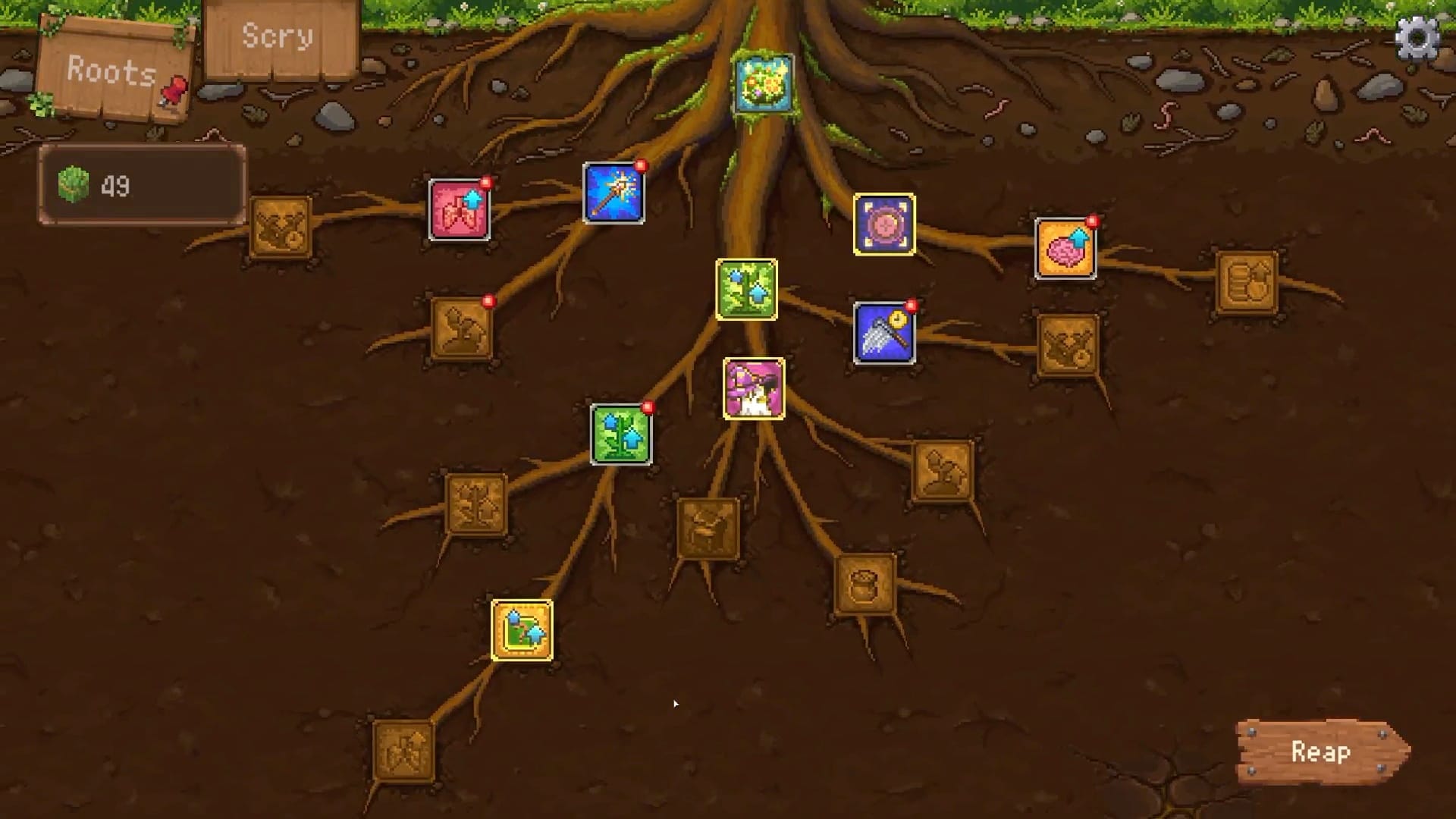
What kept me playing was the skill tree. Unlock a node and another branch appears, giving you something new to investigate. My reaction was less about needing a bigger number and more about wanting to see what else I could find. That is a good hook for a small game: the next discovery gives the familiar harvesting loop somewhere to go.
The Roots upgrades give that curiosity a practical side. In my session, More the Merrier increased the number of plants that spawn, Swing Faster improved tool rotation speed and damage frequency, and Bonus Sprout introduced a chance to grow another plant when harvesting. Those are different ways to improve a run: more to cut, a faster tool, or plants returning as you work. Unlocking wheat later added another crop and a second resource to consider when buying upgrades.
The demo felt surprisingly complete to me. That is praise, although it also left me wondering how the full release expands the systems already in the demo. I wanted to know whether the new animals and mechanics would keep arriving, and whether the cards could support a build focused on something specific, such as moles.
Cards make the field more interesting
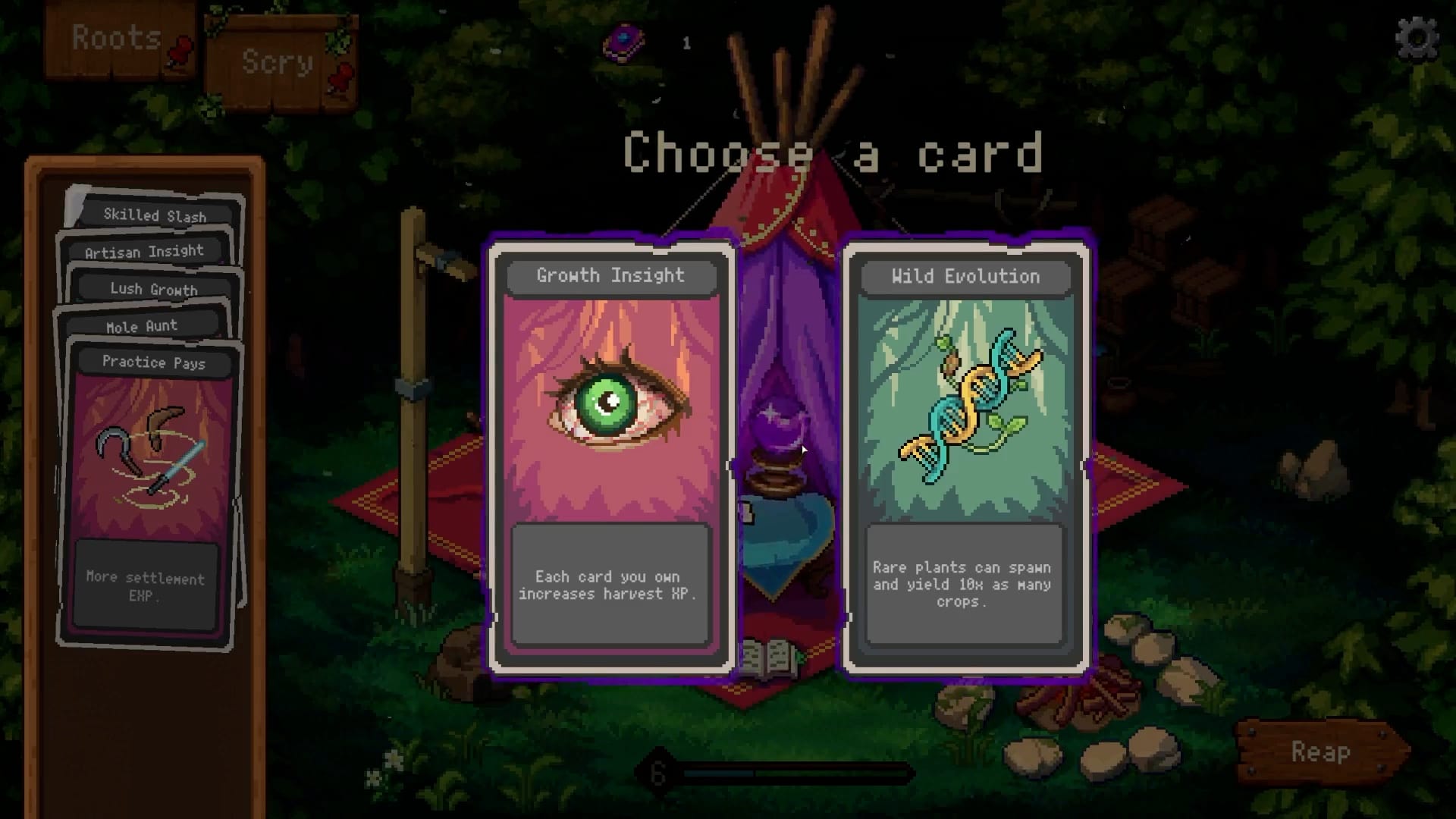
The card choices add another layer alongside the Roots tree. Scry offers two cards, and the cards I choose accumulate in a stack across my runs. I picked Wild Evolution, which allows rare plants to spawn and yield ten times as many crops. The glowing plants that subsequently appeared gave me something new to spot in the clearing, rather than just another number on the upgrade screen.
The helpers are a good example of how these choices change the harvesting. Lush Growth gives each harvest a small chance to begin with 50 extra plants, while Mole Aunt and Mole Uncle can bring in a mole that harvests an area. In my later runs, mole effects were triggering alongside the scythe. They give the otherwise straightforward field a little more activity and personality.
There are also choices that point towards combinations. I was offered Mole Carnival, which makes moles more likely to appear as you collect more of them, and Growth Insight, which increases harvest XP for each card you own. I chose other options at those points, so I have not tested either combination thoroughly. Seeing them offered was enough to make my question about specialised builds more concrete: the demo already gives you reasons to think about how cards might work together.
The farm is already in the demo
After reaching the farm myself, I found its mechanics neat as well. The demo has a complete loop that keeps pulling me towards just one more round: harvest crops, use the resources to improve my options, then return to harvesting to see what those changes do. The farm adds another reason to keep exploring. Restoring the little farmyard and meeting its animal friends sit alongside the harvesting and upgrades. The demo includes chickens, while my recorded runs also show moles and a scarecrow helping in the field.
The farm or garden is already part of the demo. Farming itself is therefore not a new feature reserved for the full release.
I sent those questions to Max at ZoomGames Studio. The answers below are from our written interview; claims about the full version are the developer's plans. Questions have been edited for clarity; Max's answers are reproduced as supplied.
What does the full SuperReap game add?
Where did the harvesting idea come from?
How are new animals and mechanics paced?
Max describes a broader progression curve, without specifying a mechanic count or exactly how late new systems unlock. Those are things I want to look at in the full game.
Can you specialise in a mole build?
The mole example is confirmed. Whether particular cards unlock other cards, and how different finished builds become, remains something to explore rather than a settled answer.
How was SuperReap's music made?
That explains the process behind the music I enjoyed in the demo: it was generated with Suno under the producer's direction. Max's answer does not identify the producer by name.
My demo verdict, and what I want to explore next
For me, the SuperReap demo is a 7/10: a good small game, with an accessible loop and enough curiosity around its unlocks to keep me playing. Its simple approach works for the kind of game it is. Reaching the farm reinforced that impression: this is a complete little loop of harvesting, improving and coming back for another round. The music and presentation suit it, and the growing skill tree gave me a reason to keep looking ahead.
If you enjoy relaxed incremental games where new options gradually open up, the free demo is worth trying. It lets you judge the harvesting loop for yourself before the full release.
I will definitely check out the full game and spend more time with it. The main things I want to explore are how the extra environments and challenges change the routine, how long new mechanics keep arriving, and how distinct a specialised card build can become. This demo rating is not a review of the unreleased full game.
Try the SuperReap demo on Steam or visit the full game's Steam page. Interview answers supplied by Max at ZoomGames Studio on 10 October 2026.
Sources: my SuperReap demo recording and play notes; Steam demo, full game and demo progression discussion with a developer reply; written answers from Max at ZoomGames Studio.