
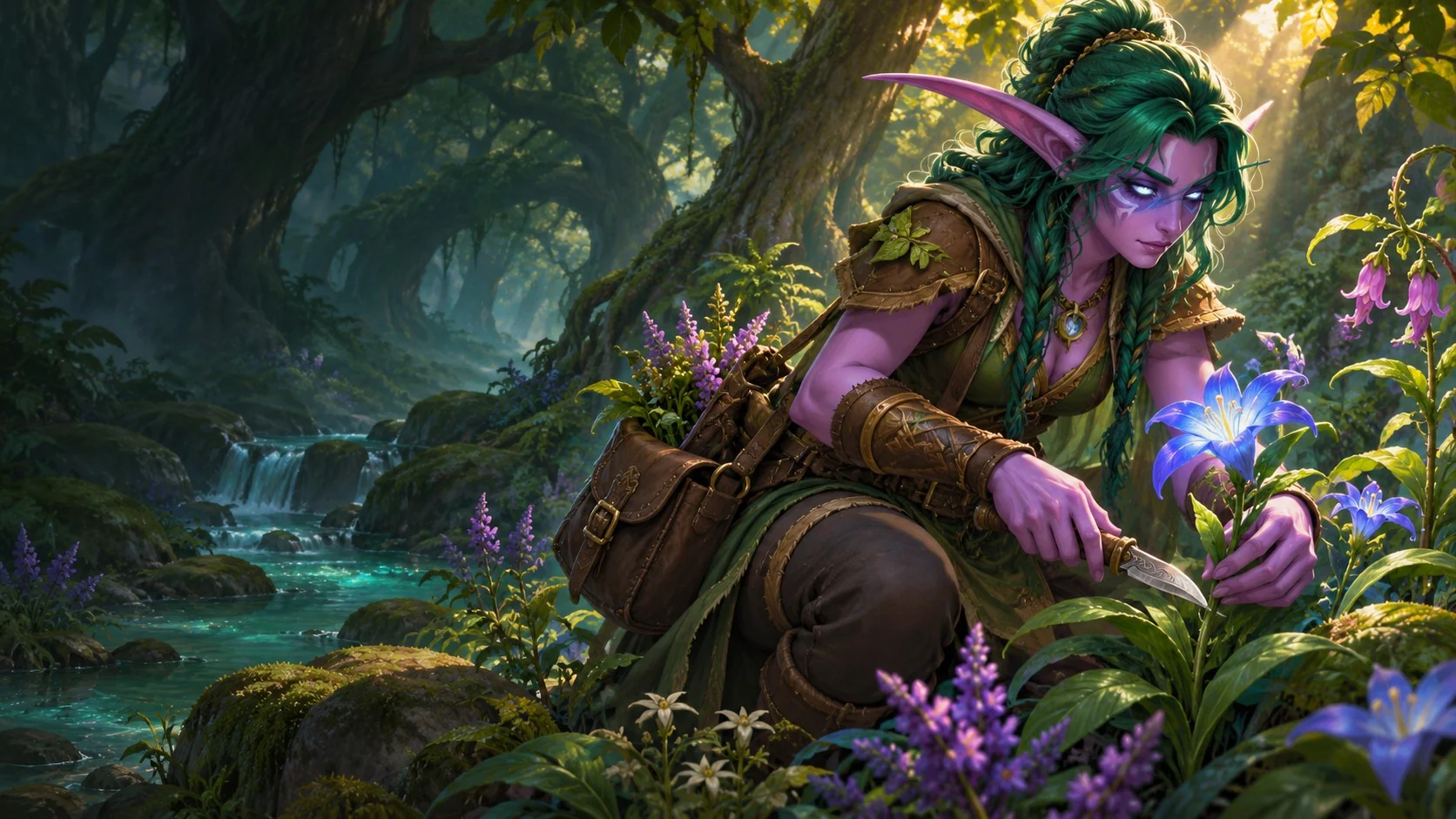
WoW Forever Herbalism guide: gathering, herbs and useful pairings
Learn Herbalism in WoW Forever: tracking herbs, choosing routes, supplying Alchemy and First Aid, and using the Incense Candle at camp.

Herbalism is a primary gathering profession in WoW Forever. This guide explains how to start, train the next rank and keep useful materials. Herbalism works best when you gather for a purpose. Pick one recipe or material tier you want to supply, then choose a safe quest route that contains it. Running toward every herb marker can turn a short quest session into a long journey with very little useful stock.
On this page
- Herbalism trainers and the next skill cap
- Find Herbs: track herbs and inspect the node
- How to learn Herbalism and start picking herbs
- What to keep for Alchemy and First Aid
- Build a route around habitats
- Measure useful stock, not just distance
- Herbalism with a second gathering profession
- Incense Candle: Intellect at the campsite
- Herb seeds, Greenhouse and Seed Hybridizer
- New herbs, scarce materials and Death Lotus
- Herbalism skill boosts and enchanting recipes
- Herbalism recipes and useful daily goals
Materials to recognize


Used by Alchemy

 Minor Mana Potion
An example use for your gathering materials. The craft belongs to Alchemy.
 Herbalism trainers and the next skill cap
The Forever trainer reference lists four ranks: Apprentice caps at 75, Journeyman at 150, Expert at 225 and Artisan Herbalism at 300. The next ranks require 50, 125 and 200 Herbalism respectively. Train before reaching your cap so your gathering session can keep advancing.
Starting options include Tannysa in Stormwind City, Reyna Stonebranch in Ironforge and Firodren Mooncaller in Darnassus. Horde options include Jandi in Orgrimmar, Komin Winterhoof in Thunder Bluff and Martha Alliestar in Undercity. Starting-zone teachers and city trainers are useful for different journeys; check the available rank when you arrive.
A starting quest can also offer the Wild Harvest manual. Check its description and your free primary slots before selecting it. Learning the profession and training a higher cap are separate steps; a manual intended for an apprentice is not an automatic trip to 300.
 Find Herbs: track herbs and inspect the node
Turn on Find Herbs in the profession window and look for a nearby herb on the minimap. Reach the plant, check the Herbalism skill requirement and interact with it. Your character level does not replace the required gathering skill. If a herb node is unavailable, read the requirement before taking a long detour to another plant of the same type.
After switching activities or tracking another resource, check tracking again. A quiet minimap may reflect the selected tracking ability rather than an empty zone. Comparing Herbalism and Mining routes also means comparing their separate skill levels; access to ore veins says nothing about which herbs you can collect.
How to learn Herbalism and start picking herbs
Learn Herbalism, activate Find Herbs and interact with plants your skill allows you to collect. Herbalism does not require a gathering tool. Icy Veins' Forever Herbalism reference describes the tracking and gathering rules.
Your first check is simple: can you actually gather the plants in the area you are entering? If not, develop the skill in a safer area before moving on. A character's combat level and a gathering skill are different kinds of progress.
What to keep for  Alchemy and
 First Aid
Alchemy is the direct primary-profession partner. Forever's First Aid also uses herbs for healing potions, so your supply can serve both crafts.
| Material goal | What to check before gathering |
|---|---|
Early Alchemy | Peacebloom,  Silverleaf,  Mageroyal or  Earthroot in the selected recipe |
A First Aid potion | The exact herb, vial and skill requirement in its recipe |
Selling herbs | Current buyer prices and saleable stack sizes |
A later craft | Whether the recipe needs a particular herb rather than any herb of that tier |
This is a planning table, not a claim that every plant has the same habitat or value. Check the recipe before assigning your full stock to one profession.
Build a route around habitats
The community reference identifies plants in different environments, including coastal Stranglekelp and Grave Moss near graveyards. A map full of herb markers does not mean every location supplies the ingredient you need.
Choose a loop with a clear return point, enough bag space and enemies you can handle. If competition makes the loop unproductive, change the area or gather during another activity. Do not keep running the same empty circuit because a static map labels it efficient.
Measure useful stock, not just distance
For your first farming session:
- Record its duration, including travel, combat and bag-clearing time.
- Count the herbs you actually keep for the selected recipe.
- Compare the result with the price of buying those herbs.
This gives you a personal decision rather than an advertised gold-per-hour figure.
When selling, keep the supply for your next planned craft first. Otherwise you can sell useful herbs today and buy the same materials back tomorrow at a worse price.
Herbalism with a second gathering profession
If you prefer selling resources to crafting, Herbalism can share your two primary slots with another gathering profession. Choose around what your normal activities provide.  Skinning can fit beast quests;
 Mining adds a different resource hunt. More possible materials also means more bag management and detours.
 Incense Candle: Intellect at the campsite
Herbalism's early Incense Candle grants Intellect and overlaps with Arcane Intellect. Coordinate the camp contribution with the group rather than counting it as an extra stacking Mage buff. Shared rules are in Blizzard's camping article.
Choose Herbalism when gathering ingredients fits the way you explore. If you dislike leaving the road for materials, buying a small regular supply may suit you better than maintaining a profession you never use. ## Herbalism skill and herb nodes: build a usable progression
Start with Peacebloom and Silverleaf, which the leveling reference lists at skill 1. Gather regularly during early quests instead of waiting until your character has moved far beyond the starting zone. That makes it easier to keep gathering useful plants along the way.
Choose an ingredient before choosing a zone
Look up the exact herb required by your next potion or enchantment. Wild Steelbloom, Purple Lotus, Ghost Mushroom and Mountain Silversage are different items with different habitats and skill requirements. A high-level plant does not substitute for an earlier herb simply because it is rarer.
For routes through places such as Silverpine Forest, Redridge Mountains, Stonetalon Mountains or Arathi Highlands, compare your actual quest destination, enemies and bag space first. A distant farming recommendation may supply the wrong ingredient for you. The same approach applies later in Searing Gorge, Burning Steppes or the Plaguelands: identify the material, then verify current nodes and safety.
Herb seeds, Greenhouse and Seed Hybridizer
The Forever campsite reference lists Greenhouse at skill 140 for growing herbs from seeds, and Seed Hybridizer at 300 for multiplying or combining seeds. These are later campsite projects, separate from your first gathering loop.
When comparing Commonplace Herb Seeds with Uncommon Herb Seeds, inspect the item's planting requirement and the actual blueprint. Keep seed tiers separate until you know which one your next craft uses. A plan to grow herbs later is not a reason to spend all your early training money on seeds now.
Planting supplies are a different budget
Ordinary herbs supply your next consumable. Seeds and campsite equipment support a later growing setup. Set aside the materials for an immediate craft before committing the same stock to another goal. Check the shared camp conditions and the blueprint rather than assuming every seed can be planted anywhere.
New herbs, scarce materials and Death Lotus
The Forever herb overview identifies Marefoil, Demonsage and Death Lotus for new high-level crafting. It explicitly leaves their gathering locations and requirements incompletely documented. This guide therefore does not invent a Death Lotus farming loop or promise a particular drop rate.
Frilled Lichen is another named material worth checking rather than discarding as ordinary low-value loot. Match scarce materials to the exact recipe, including enchanting recipes that may draw on Herbalism. The word rare describes availability; it does not establish a guaranteed Auction House sale price.
Black Lotus and endgame herbs
Do not treat Black Lotus and Death Lotus as the same item. If a recipe specifies one, collect or buy that exact herb. Before visiting a dangerous region for endgame herbs, compare your effective Herbalism skill, combat readiness and the cost of buying the small amount you need.
Herbalism skill boosts and  enchanting recipes
An Herbalism glove enchant can help meet a nearby gathering threshold. Check the actual bonus and the requirements of the gloves before buying. The boost reference distinguishes ordinary and Advanced Herbalism enchants, alongside other boosts. A boost does not replace training the next rank.
Compare the upgrade with the points you could earn on accessible plants. Buying an enchant can make sense when it opens a useful material, while gathering a few more nearby herbs can be simpler for a small shortfall. Keep equipment eligibility in mind before copying somebody else's glove setup.
Herbalism recipes and useful daily goals
The immediate goal is a supply you can use: herbs for healing potions, materials for Alchemy, a campsite item or a stack to sell. Select one before setting out. Separate that stock from herbs earmarked for First Aid so two plans do not both spend the same stack.
A useful end-of-session check is whether the route delivered the ingredient you wanted. If it did, note how much travel and combat it took. If it did not, change the route or buy the missing amount. This gives your next session a concrete purpose instead of following every minimap marker indefinitely.
Compare all professions and choose a pair · WoW Forever hub
Hero: original AI-generated illustration for Crit Pick, not gameplay or official artwork. Game icons: Blizzard Entertainment. Item and spell identities checked against Wowhead Forever; guide references retain their original sources. Icons are game assets, not gameplay screenshots.