Kingdom Two Crowns review: the kingdom I keep returning to
Kingdom Two Crowns after roughly 70 hours: beautiful pixel art, satisfying farms and a calm building loop with a sharp edge. Our verdict: 8/10.

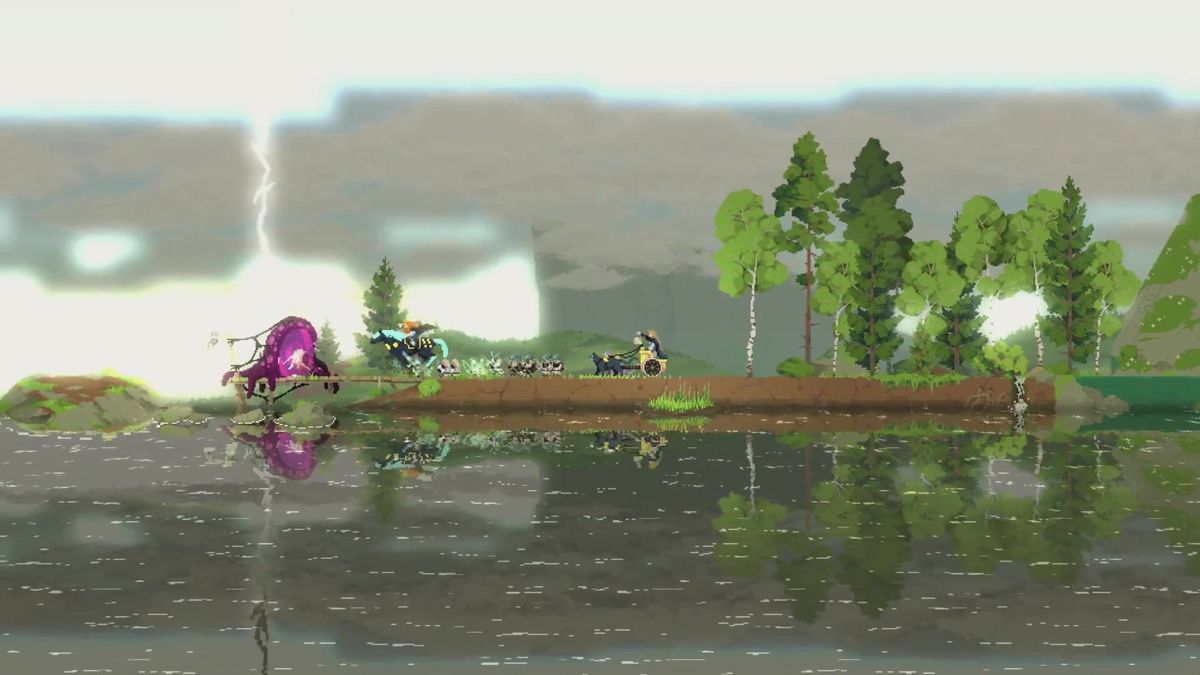
I come back to Kingdom Two Crowns at least once a year for the art style and the gameplay. After roughly 70 hours, I still enjoy building up a kingdom, and the campaigns each play a little differently. Those differences give me a reason to start another run. It earns an 8/10 from me. Just don't mistake its calm stretches for a promise that nothing will go wrong.
You ride through a side-scrolling landscape, spend coins to recruit people and build, then rely on your subjects to keep the kingdom running and defend it from the Greed, creatures that attack at night. There is very little distance between an economic decision and a defensive one. Money spent on expansion is money you cannot spend elsewhere, and a larger settlement still needs people to support it.
You can play alone or rule alongside a second monarch in co-op. The game supports local and online cooperation; check the options on your platform before buying it for a particular setup.
Small controls, proper resource management
This is a micro-strategy game rather than a city builder with a long construction menu. Your monarch moves through the kingdom on a mount, and coins turn decisions into actions: recruit villagers, build walls, improve defenses or invest in farms. Exploration takes you beyond that protection, where forests and ruins hold upgrades and new possibilities.
You are preparing a kingdom to fight, rather than personally swinging a sword through every wave. Archers, knights and siege weapons form part of its defenses. That does not mean the monarch is always passive: some campaigns give you abilities and artifacts that change how you can help. The important distinction is that your subjects still matter. A powerful unlock does not replace the economy supporting the kingdom.
Cooperative play gives two monarchs a way to share those jobs. One can explore while the other stays closer to the settlement, rather than one player handling every journey. My husband and I play together, and those shared decisions are part of what makes our campaigns memorable. Sometimes we coordinate well. Sometimes we give ourselves a new problem.
The pixel art still gets me
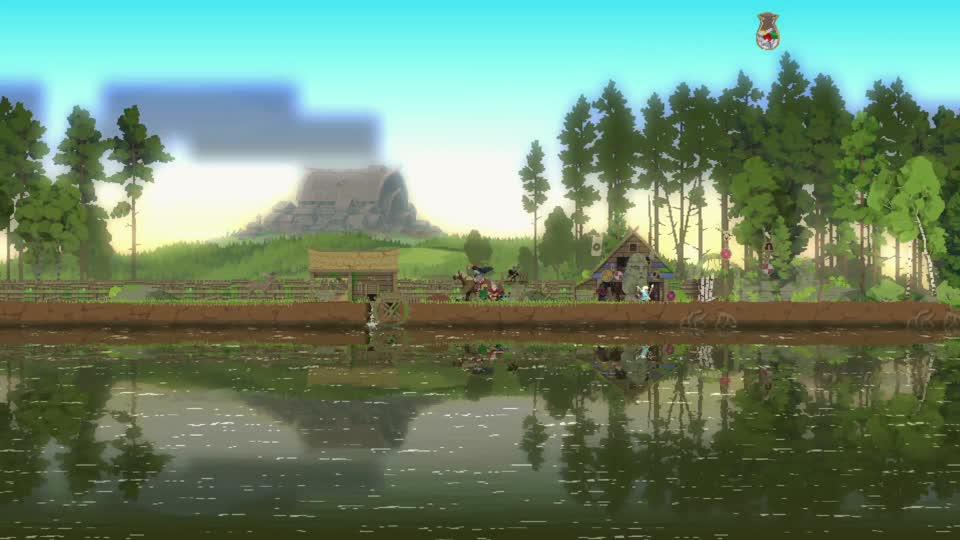
The graphics get a separate 10/10 from me. The Norse Lands screenshots show why: a huge stone figure behind a small rider, light catching the water, and buildings reflected below the shoreline. The kingdom occupies a thin strip of the screen, but the landscape makes it feel part of somewhere much larger.
That atmosphere matters to the repetition. You will spend a lot of time riding through these places. For me, looking at them remains part of the pleasure, even when the practical reason for the journey is simply to collect money or get back to something I need.
Farmers, coins and the next upgrade
Farmers are one of the things I value most. An economy that produces money for you changes what you can afford to think about. Instead of treating every purchase as a crisis, you can start weighing up the next expansion or upgrade.
That is where the simple controls become interesting. Hiring people and putting coins into the kingdom is easy to understand; deciding what deserves those coins takes more thought. The important choice is often what you can safely postpone.
Shrines are another highlight. Their upgrades feel like substantial power spikes, which gives exploration a purpose beyond filling out a map. Finding something that improves the kingdom makes the trip worthwhile.
Somewhat cozy, sometimes tricky
Kingdom Two Crowns sits in an odd place between a relaxing building game and a defense game. I enjoy that combination. There is satisfaction in watching a settlement work, but the Greed keeps you from treating the island as a decorative project.
Even loose coins have a defensive use. Letting Greed take money can buy time. Keeping a few coins with you can therefore matter just as much as spending them on the kingdom.
Expansion needs care around recruitment camps. Clearing the forest to push farther out can cost you the camp you were relying on. You learn to look at what you are removing, not just where the next wall could go. Things will go wrong while you work out how the kingdom works. For me, that is part of playing it.
They took our dog. We took it personally.
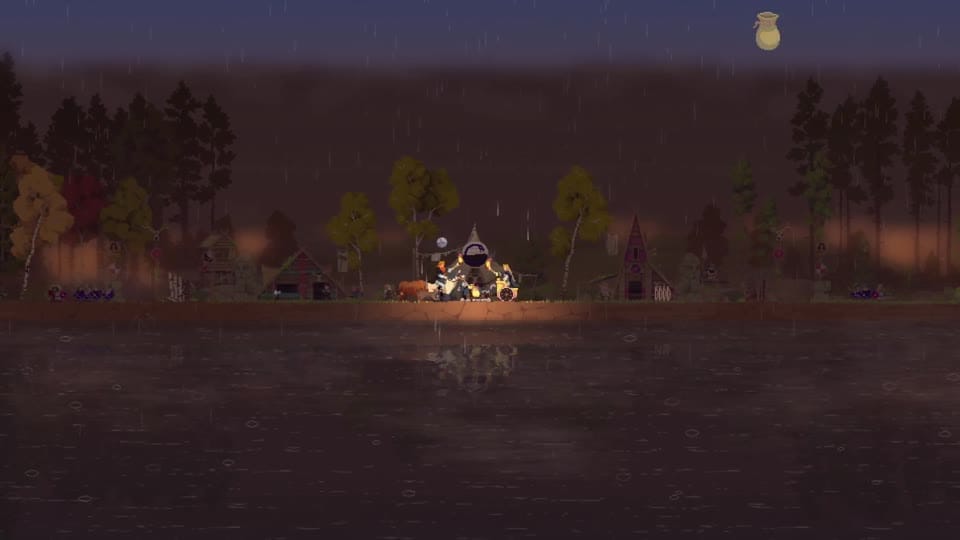
On our very first run in the base game, my husband and I had no idea what we were doing. By the second island, the Greed had stolen our gems and our dog. That was enough. We went into rage mode, pushed on until we could build the bomb, and started blowing up one Greed hideout after another.
A later Shogun campaign went much the same way. We were careless, the Greed took our hermit, and we had our next project. Get the bomb. Blow them up.
Those are the moments I remember when I come back. Something usually goes wrong, but it gives us a reason to regroup and carry on. A stolen dog can turn a vague plan to build a kingdom into a very specific grudge.
Returning to earlier islands is part of the campaign
Progress is not a straight trip from one island to the next. You return to earlier islands as new upgrades open up, bringing what you have learned and unlocked back to places you already know.
I see those journeys as part of the game. The islands stay connected to the campaign instead of becoming places you discard as soon as you sail away. Riding, collecting coins, checking the settlement and deciding where to go next all belong to the same rhythm.
More than a different background
The base game includes Shogun and Dead Lands alongside the medieval setting. Shogun adds ninja and the Kirin mount; Dead Lands draws on Bloodstained, with unique monarch abilities and creatures such as the beetle steed. These settings give a return visit more to offer than another view of the same buildings.
Norse Lands goes further as a separate campaign, with god powers, Berserkers and a sixth island. Its citizens, including builders and farmers, can also take part in defending the kingdom. Winter makes survival planning important, too. That is worth knowing if the artwork is what draws you in: a beautiful snowy kingdom is still a kingdom you have to defend. For me, that combination of scenery, useful discoveries and occasional difficulty is the appeal. Someone looking for uninterrupted cozy building may find the pressure less welcome.
Verdict: 8/10
The art style and the gameplay are what keep bringing me back to Kingdom Two Crowns. Building a small kingdom still feels good, farmers make the economy satisfying, and each campaign plays a little differently. I like returning to that familiar loop with a few changes to figure out.
You need to enjoy figuring things out and dealing with the consequences when a plan falls apart. If you want uninterrupted cozy building, the Greed will have other ideas. I like having those problems to solve, especially with my husband beside me. Seventy hours later, we still manage to give ourselves new ones.
Based on approximately 70 hours played on PC (Steam). Overall score: 8/10. Visuals: 10/10.