RimWorld review: a 1,200-hour love letter
Twelve hundred hours, a half-burned colony, and one organ trade I don't discuss. After a decade, almost nothing else generates stories like RimWorld does.

This RimWorld review arrives from the wrong end of 1,200 hours: it is still the only game I open meaning to play for twenty minutes and close again at three in the morning, mildly upset about a half-bat colonist.
It is a story generator wearing a colony sim as a coat, and after a decade almost nothing else does the thing it does.
This is a full review after 1,200 hours, written for colony-sim and strategy players — newcomers weighing the jump and veterans deciding whether it still holds. The short answer: RimWorld is an acclaimed sci-fi colony sim built on emergent storytelling, where an AI storyteller and deep, interlocking systems mean no two playthroughs are the same. It carries a steep learning curve, a passionate modding community, and the kind of depth that runs well past a hundred hours a colony. It rarely goes on sale. The long answer is below.
The case
At its core you manage a handful of shipwrecked survivors on a procedurally generated planet, balancing food, healthcare, and research while an AI storyteller decides what goes wrong next. But it is, quietly, four games sharing one engine.
Part strategy game, part story generator
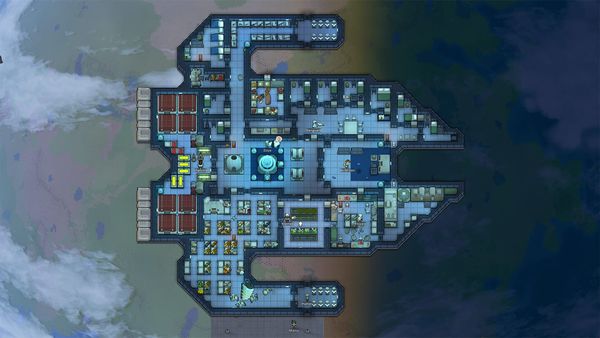
Vanilla RimWorld is a sci-fi colony sim — a game where you manage a group of survivors rather than control a single hero. A handful of them crash-land on an unfamiliar patch of land on a half-terraformed planet, and the whole game is what you make of them. You choose where to settle when you begin — sweltering equatorial jungle, dry rim desert, or a frozen tundra a short walk from the north pole — and the biome quietly becomes the strategy game running underneath the story.
The starting scenario sets the rest:
- Crashlanded — three colonists and a wrecked pod, the default way in.
- The Lost Tribe — five tribal colonists, low tech, more bodies to lose.
- Rich Explorer — one wealthy colonist with good gear and no backup.
- Naked Brutality — one person, no clothes, no tools, one problem after another.
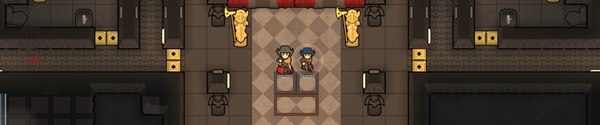
But the bones are flexible. With a setting tweak and a couple of mods, the same engine becomes a medieval holdfast with a wall and a lord, a high-fantasy colony of mages, or a dusty western town that wants a saloon before it wants a hospital. If you have heard RimWorld called an approachable Dwarf Fortress, that is fair — the same DNA, far gentler on the eyes. The skeleton never changes. Everything you hang on it does.
As a strategy game it is dense without being fussy. You are constantly balancing complex systems — food supply, healthcare, research, power, and the temperature of every room — while the planet interferes. No two playthroughs land the same way: a different scenario, a different set of colonists, a different sequence of random events, which is why people who have played for years still start a new one.
The intelligent AI storyteller
The real trick is the intelligent AI storyteller — a system that watches your colony and dynamically tunes which random events happen and how hard they land, so the pacing feels authored rather than random. RimWorld never hands you a plot; it hands you a director. Cassandra Classic builds tension like a screenwriter who has read your save file and knows exactly when you got comfortable. Phoebe lets you breathe and grow a real colony before she remembers she has a job to do. Randy Random does not believe in pacing — Randy once gave me a heatwave, a single rabid squirrel, and a mortar raid inside the same in-game day, then sent a friendly trade caravan to stand in the middle of it selling marble statues while the wheat burned. That is the engine: it generates stories out of whatever it decides should happen next.
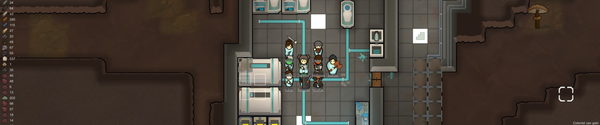
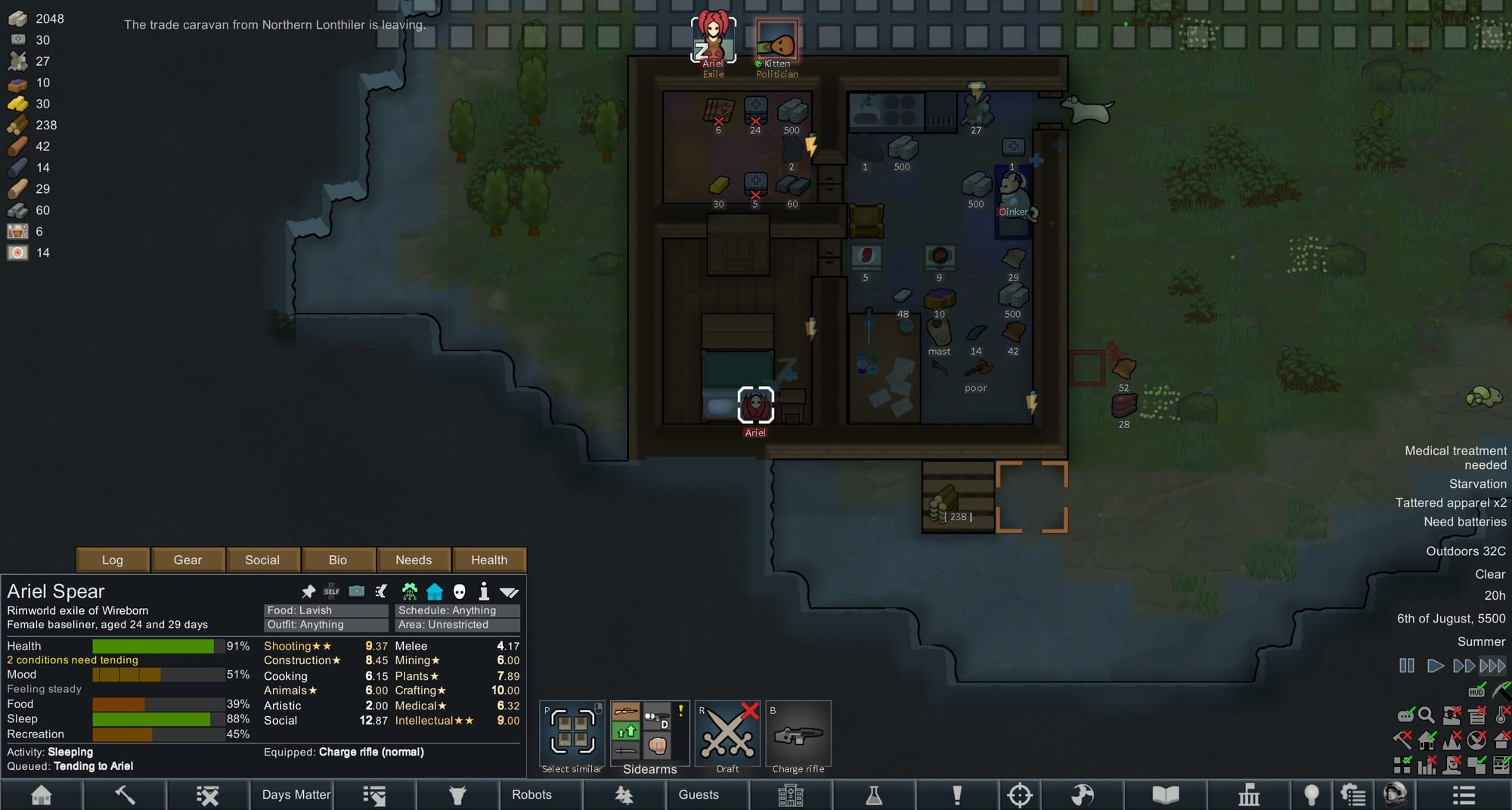
Underneath the storyteller, the game is quietly simulating psychology for every colonist, each one a small bundle of traits, skills, moods, and interpersonal relationships, and it lets all of them collide without asking permission. You do not get direct control of a single character — you set priorities and the other colonists make their own sense of it. My best cook was a pyromaniac, a perfectly fine arrangement right up until the afternoon she decided the kitchen was the most beautiful flammable thing she had ever met. One pawn refuses to eat without a table. Another sinks into a three-day funk because someone tracked blood across the floor he finished mopping an hour ago, or because the food was, in his professional opinion, an insult. None of it is scripted. All of it is yours.
The world does not end at your wall. Other factions live out on the map — some friendly, some a pirate raid waiting for a bad night — and the threats are not only people: toxic fallout, heatwaves, blight, and the occasional volcanic winter are the natural disasters the planet keeps in reserve. You can form caravans and send colonists across the world to trade, to attack, or to complete quests for an ally who will remember the favour. Combat is tactical rather than twitchy: you can pause at any moment to think, and a fight turns on your colonists' skills, cover, and positioning — a tidy firing line or a desperate melee combat in a breached doorway — far more than on reflexes. When it goes wrong it goes wrong at the level of the body part, with shattered legs and infected wounds and surgery you may not be skilled enough to perform. The smartest defence I own is a kill-box, a few turrets, and a healthy fear of fire.
The stories you'll end up telling
That is the part that hooks people and never lets go: emergent storytelling — stories that arise from systems colliding rather than from a script — is the entire pitch, and it is what produces the memories. You do not play RimWorld stories, you generate them. A few of mine, since you asked.
The trade caravan. A mechanoid cluster once dropped directly on top of a trade caravan passing through my map. I decided to save them, we fought the machines off together, and against the odds we managed to keep most of the traders alive. Then I did the only sensible thing a host can do: I sold the survivors the gear off their own fallen friends, at a fair markup, while the bodies were still warm. They thanked me for it. RimWorld is, fundamentally, a game about community.
The doctor I don't discuss. I tell people I do not play dark. This is mostly true. There was, however, a stretch where I had an unusually gifted doctor and an unusually flexible idea of which body part counted as "spare," and that colony funded its entire research tree on an organ trade I would prefer my other colonies never hear about. Cannibalism, no. The human-leather hat factory, never. But everyone has one save they do not bring up at parties.
The mushroom apocalypse. The worst day I have ever had in this game opened with roughly 120 walking mushrooms pouring across the map. The mushrooms were a mod's doing; the rabid charge was pure vanilla — every one of them had caught scaria, RimWorld's stock disease for turning a calm creature into a manhunter on a short clock. They reached the guests first, since I run Hospitality and there are usually visitors drifting through my halls, and the guests did not survive the introduction. Six of my ten colonists went down. The single guest still standing chose that exact moment to suffer a mental break and beat my cook to death — a half-bat colonist I had been quietly proud of, on the grounds that keeping one non-human pawn alive felt like an achievement. By the time the fungus cleared, half the base had burned: partly to the mushrooms, partly to my own colonists having their breakdowns in the middle of mine. I rebuilt from the ash. That was a Tuesday.
A run lasts a hundred hours, give or take — assuming I don't forget to research the defenses because, in the moment, the bathroom felt more important.
— my entire RimWorld career, accurately summarizedThis is the love and the curse of it. RimWorld has an uncanny instinct for punishing the exact system you ignored. I have lost colonies with heated marble floors, a sculpture gallery, and a genuinely lovely en-suite, all because I am a builder first and a survivor a distant second, and the wall was still a row of sandbags and good intentions when the tribe arrived. The game does not care that the dining room had a 92 impressiveness rating. The game cares that you have one turret.
The modding community, and how it runs
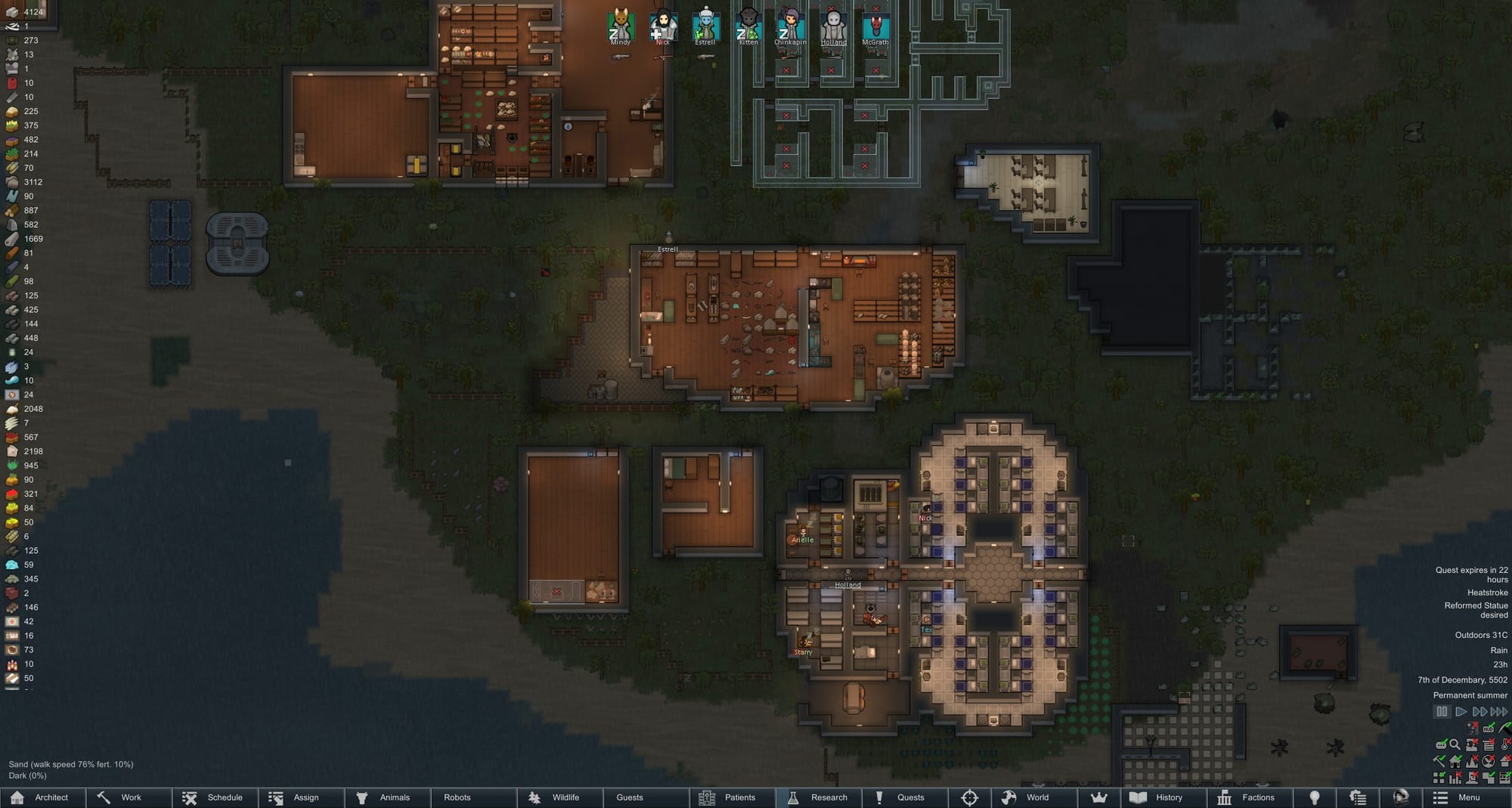
And then there is the Workshop. RimWorld's modding community is one of the kindest and most prolific I have ever lived in — nearly a decade of people building, documenting, and patching for the sheer joy of it, which is a large part of why people love RimWorld for such a very long time. I am, by any honest accounting, a mod addict; my load order is longer than the base game's credits, and a "clean run" in my house means the game launched on the first attempt. Mods will take it anywhere you point: more medieval, more sci-fi, vampires, a working colony economy, prettier pawns, or one more storage shelf because the last forty were not enough. The "Vanilla Expanded" series alone adds numerous new gameplay features across dozens of modules, and the scene is mod-friendly enough that its biggest teams are funded directly by their own players on Patreon. It is the depth the base game ships with, and then some — one of the best games of its kind made more or less endless.
What surprises people is where all of that runs. I play most of my hours on a Steam Deck, with a 160-mod load order, and it holds together — steady framerate, reasonable load times, the entire colony in my hands on the couch. A heavily-modded colony sim running cleanly on a handheld is not something I expected, and it is a large part of why my hour count looks the way it does. RimWorld is a 2D game that respects your hardware, which is rarer than it should be.
The catch
None of this is gentle with a newcomer. The interface is dense, the tooltips assume you already know what they mean, and your first colony will die in a way you do not understand, to a threat you did not see being assembled three days earlier. That is normal. It is also a wall, and some people bounce off it.
I want to be honest about how long that wall lasts, because I am the evidence. Getting in was genuinely hard for me. At three hundred hours I was still making the same mistakes I made in my first week, and at twelve hundred I will still, every so often, forget to build a defensive wall before the raid timer runs out. I play between Strive to Survive and Losing is Fun — the top of that range being RimWorld's own name for the difficulty where forgetting the wall ends the colony. The name is not a warning. It is a job description.
The community has a healthy attitude about that, for what it is worth: failure is treated as a story you learn from, not a verdict on you. That framing is the only reason I am still here after losing as many colonies as I have.
It eats time the way a black hole eats light. "One more thing" is not a sentence in RimWorld, it is a way of life — one more research project, one more wall section, one more pawn to recruit. The twenty-minute session is a myth I keep telling myself at the start of every twenty-minute session.
And the things themselves are slow. Big projects take genuinely big stretches of real time — walling off an entire island, which I do because I am like this, is the better part of a real-world day of hauling, building, hauling, and waiting on a mason who keeps wandering off to eat. Some of that is the scale I pick. The rest is the game's honest pace: it asks for patience before a plan pays off, and if you want fast feedback loops, that wait will test you.
If you go heavy on mods the way I do, you have signed up for a second game running quietly behind the first one: load orders, dependency chains, and the particular heartbreak of a major patch dropping the night before a free weekend and breaking forty mods at once. It is part of the hobby. It is not always a fun part.
The darkness is also optional, and you should know it is there before you hand the game to a friend. Organ harvesting, slavery, cannibalism, human-leather hats — all of it is in the box if you want it. I mostly stay out of it, with the one accounting exception filed above under saves I do not discuss in public. But the game will not stop you, and it does not pretend the option isn't on the table.
As I mentioned, it runs well in ordinary play; the one place performance strains is the very late game, and it is worth being precise about why. A colony with hundreds of pawns, animals, and stockpiled socks pushes the tick rate, and the simulation slows — that is a single-threaded-CPU reality, not a platform one. The same colony that runs cleanly for fifty hours can become the thing testing your machine by its hundredth. It is the price of the depth, not a fault in how it runs.
Who it's for
This is not a game you recommend to everyone. It is a game you recommend to a very specific person, and when you find that person you do not let them leave.
- You tinker. You read tooltips for fun and tune systems until they sing.
- You want to create your own stories, not be handed one.
- You have, at some point, spent a real hour naming and re-naming a cat.
- You are a mod addict, or would like to find out whether you are one.
- You want a tight, guided story with a clear win screen at the end.
- Dense interfaces and management menus make you tired, not curious.
- You truly only have twenty minutes — the game disagrees, in writing.
If you are the kind of player who would rather build a better bathroom than a better wall, fully aware the raid is already on its way — welcome home. You will be fine. You will lose a cook you were quietly proud of. You will rebuild from the ash the same night. That is not a flaw in the game. That is the game.
Questions
Is RimWorld worth it in 2026?
Honestly, yes — with one condition: you have to enjoy systems. Ludeon Studios still supports it, the base game alone holds a very long time of play, and there is almost certainly a future expansion or two on the way. For most people the value is obvious; if the price gives you pause, do not count on a big sale — RimWorld rarely discounts, and when it does the cut is small, usually ten to twenty percent.
Do I need the DLCs to enjoy it?
No. The base game is complete and self-contained — start there. The five paid expansions add big systems on top, but none is a patch for a missing game:
- Royalty — psycasts, royal titles, and a quest layer.
- Ideology — belief systems that reshape how a colony behaves.
- Biotech — children, gene-modding, and your own mechanoids.
- Anomaly — a horror-themed containment campaign.
- Odyssey — the newest, built around spaceship travel and exploration.
Buy them when the base loop has its hooks in you, which it will.
Which expansion should I get first?
Depends on what you want more of. Ideology, for example, reshapes what your colony believes and changes runs the most. Biotech adds children, gene-modding, and your own mechanoid army. Royalty layers in psycasts and a quest structure. Pick the fantasy that excites you and start there.
Is it too hard for a beginner?
It has a real learning curve, but it is fair once it clicks. For your first playthrough, drop the difficulty setting a notch and pick the Phoebe storyteller for a gentler pace, accept that your first colony is a tutorial in disguise, and lean on the community guides. For the most part, by your fourth colony the panic has turned into a plan.
Can I play it without the grim stuff?
Yes. The darkest content — cannibalism, organ harvesting, slavery — is something you opt into, not something the game forces on you. I have never touched any of it across more than a thousand hours and never felt I was missing the point. You set the tone.
Is there a RimWorld Console Edition?
Yes — RimWorld Console Edition brings the game to PlayStation and Xbox with a controller layout, and it is a fair way in if you do not play on PC. The catch worth mentioning: it trails the PC version on updates, and mods are PC-only — the modding community does not reach console — so the PC build is still where the deepest experience lives.
How many hours will I actually get?
A lot. A single committed run runs from tens of hours into the low hundreds, and most players have several runs in them. I am at 1,200 hours and I do not consider myself finished. Plan accordingly, and maybe warn the people you live with.